
HYDROCARBON REFRIGERANT ENVIRONMENTAL COMPLIANCE MALAYSIA
Hydrocarbon refrigerant environmental compliance in Malaysia is becoming an increasingly important topic as the HVACR (Heating, Ventilation, Air Conditioning, and Refrigeration) industry transitions toward more sustainable, energy-efficient, and environmentally responsible cooling solutions. Hydrocarbon refrigerants such as R290 (propane), R600a (isobutane), and R1270 (propylene) are widely recognized as natural refrigerants with very low Global Warming Potential (GWP) and zero ozone depletion potential. Because of their excellent thermodynamic properties and minimal environmental impact, they are increasingly being adopted in commercial refrigeration, air conditioning systems, and industrial cooling applications. However, their use also requires strict adherence to environmental safety standards and regulatory compliance in Malaysia to ensure safe handling and sustainable implementation.
In Malaysia, hydrocarbon refrigerant environmental compliance is guided by national environmental regulations enforced by the Department of Environment (DOE), as well as international agreements such as the Montreal Protocol and Kigali Amendment. These frameworks encourage the reduction of high-GWP refrigerants and promote the adoption of environmentally friendly alternatives like hydrocarbons. Although hydrocarbon refrigerants are eco-friendly, they are classified as flammable substances, which means proper installation, servicing, storage, and recovery procedures must be followed to ensure safety. Compliance involves not only environmental protection but also occupational safety, requiring technicians to be properly trained and certified before handling these refrigerants in real-world HVAC systems.
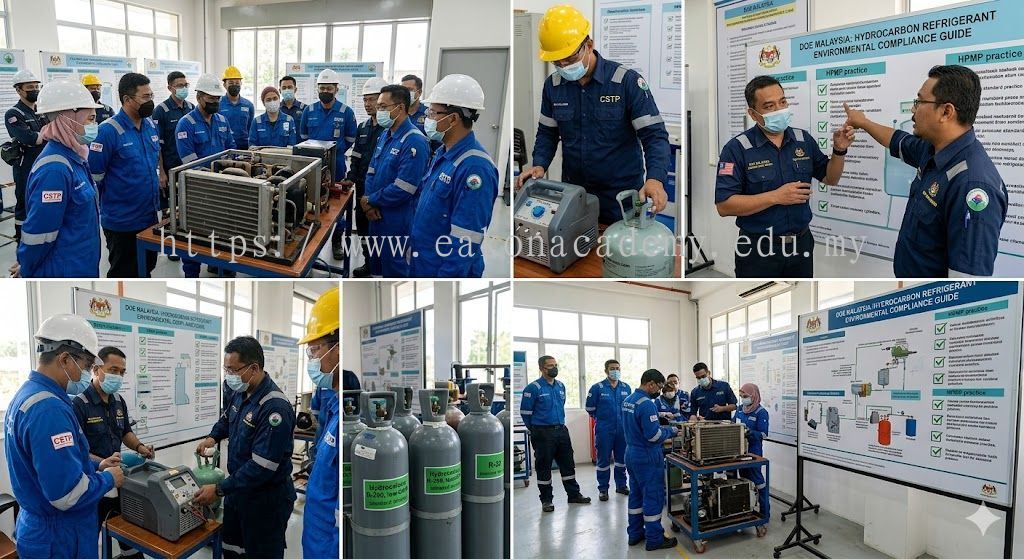
A key component of hydrocarbon refrigerant compliance in Malaysia is technician competency and professional training. Proper education ensures that HVACR professionals understand the unique characteristics of hydrocarbon refrigerants, including their flammability, pressure behavior, leak detection methods, and safe charging procedures. Without proper training, improper handling can lead to safety hazards, system failures, and non-compliance with DOE regulations. Therefore, structured training programs play a crucial role in preparing skilled technicians who can work safely and efficiently with natural refrigerants. Institutions such as Eakon Academy provide specialized HVACR training that supports environmental compliance while equipping learners with practical knowledge aligned with industry standards.
Hydrocarbon refrigerants also contribute significantly to energy efficiency and environmental sustainability. Compared to conventional synthetic refrigerants, hydrocarbons typically offer higher energy performance, allowing HVAC systems to operate with reduced electricity consumption. This leads to lower operating costs and reduced carbon emissions, making them a preferred choice for environmentally conscious businesses. However, achieving these benefits depends heavily on proper system design, installation, and maintenance in compliance with Malaysian environmental and safety regulations. Leak prevention, ventilation requirements, and correct refrigerant charging practices are all essential elements of compliance that ensure both safety and efficiency.
In addition to environmental benefits, hydrocarbon refrigerant compliance supports Malaysia’s broader sustainability and green technology goals. As industries move toward low-carbon operations, the HVACR sector plays a critical role in reducing greenhouse gas emissions and improving energy efficiency in buildings and industrial facilities. Businesses that adopt compliant hydrocarbon refrigerant systems not only contribute to environmental protection but also enhance their corporate sustainability profile and meet increasing regulatory expectations. Compliance also reduces the risk of penalties and ensures alignment with national environmental policies, making it an essential consideration for HVAC contractors, engineers, and facility managers.
In conclusion, hydrocarbon refrigerant environmental compliance in Malaysia represents a critical balance between environmental responsibility, safety, and technological advancement in the HVACR industry. By following DOE regulations, adopting proper safety practices, and investing in professional training through institutions such as Eakon Academy, industry professionals can ensure safe handling of hydrocarbon refrigerants while contributing to a more sustainable and energy-efficient future. This compliance-driven approach not only strengthens technical expertise but also supports Malaysia’s long-term environmental and climate objectives.
More detail about EAKON ACADEMY SDN BHD Malaysia
