
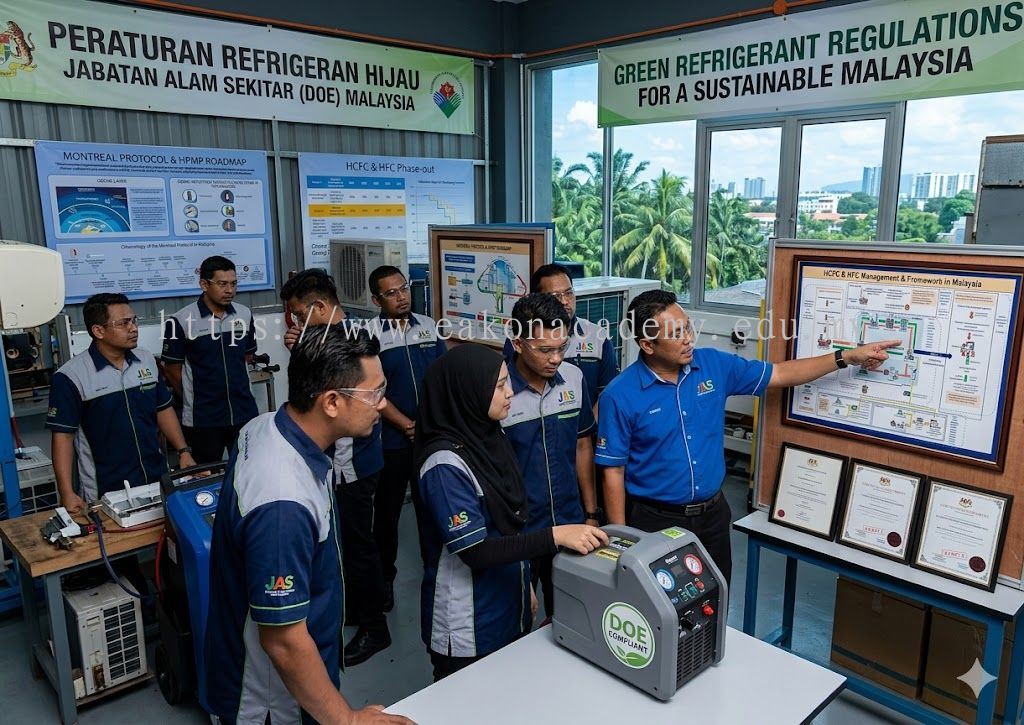
GREEN REFRIGERANT REGULATIONS MALAYSIA
Green refrigerant regulations in Malaysia are becoming increasingly important as the nation moves toward stronger environmental protection policies, energy efficiency standards, and climate-friendly industrial practices. These regulations are closely aligned with global efforts under the Montreal Protocol and Kigali Amendment, which aim to phase down high Global Warming Potential (GWP) refrigerants and promote the adoption of environmentally friendly alternatives. In Malaysia, the Department of Environment (DOE) plays a key role in enforcing refrigerant management standards, ensuring that HVACR (Heating, Ventilation, Air Conditioning, and Refrigeration) professionals comply with safe handling, recovery, recycling, and leakage control procedures. Understanding and implementing green refrigerant regulations is essential for technicians, engineers, and companies involved in air conditioning and refrigeration systems to remain compliant and competitive in today’s evolving industry.
The shift toward green refrigerants focuses on reducing harmful substances such as CFCs, HCFCs, and high-GWP HFCs, replacing them with more sustainable alternatives like HFOs, natural refrigerants (ammonia, CO , hydrocarbons), and low-GWP blends. These environmentally responsible refrigerants help reduce ozone depletion and significantly lower greenhouse gas emissions. In Malaysia, compliance with DOE guidelines is not only a legal requirement but also a commitment to environmental sustainability and corporate responsibility. Companies that adopt green refrigerant practices benefit from improved energy efficiency, reduced operational costs, and enhanced reputation in both local and international markets.
Training and certification in refrigerant handling are essential components of Malaysia’s green transition strategy. Proper education ensures that technicians understand refrigerant recovery techniques, leak prevention methods, and safe disposal procedures in accordance with environmental safety standards. Institutions like Eakon Academy play a vital role in providing industry-relevant training programs that support DOE compliance and international best practices. Through structured learning, participants gain practical knowledge on how to handle modern refrigerants safely while adhering to environmental regulations and workplace safety requirements.
Green refrigerant regulations also support Malaysia’s long-term sustainability goals, including carbon reduction targets and energy-efficient building initiatives. HVACR systems are among the largest contributors to energy consumption in commercial and residential buildings, and improper refrigerant management can significantly increase environmental impact. By enforcing strict guidelines on refrigerant use, recovery, and recycling, Malaysia is actively reducing its carbon footprint and promoting a cleaner, greener future. Businesses that align with these regulations not only contribute to environmental protection but also improve system performance and reliability.
As industries continue to evolve, compliance with green refrigerant regulations in Malaysia is becoming a standard requirement rather than an option. Contractors, service providers, and facility managers must stay updated with DOE-approved practices and continuously upgrade their skills to meet industry expectations. Investing in certified training and adopting sustainable refrigerant solutions ensures long-term compliance, operational efficiency, and environmental stewardship.
In conclusion, green refrigerant regulations in Malaysia represent a critical step toward sustainable industrial development and environmental protection. By embracing eco-friendly refrigerants, following DOE guidelines, and participating in professional training programs offered by institutions such as Eakon Academy, industry professionals can contribute to a greener future while strengthening their technical expertise and business competitiveness in the HVACR sector.
More detail about EAKON ACADEMY SDN BHD Malaysia
