Several Reasons for Crystal Oscillator Failure and No Oscillating
Several Reasons for Crystal Oscillator Failure and No Oscillating
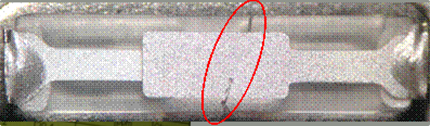
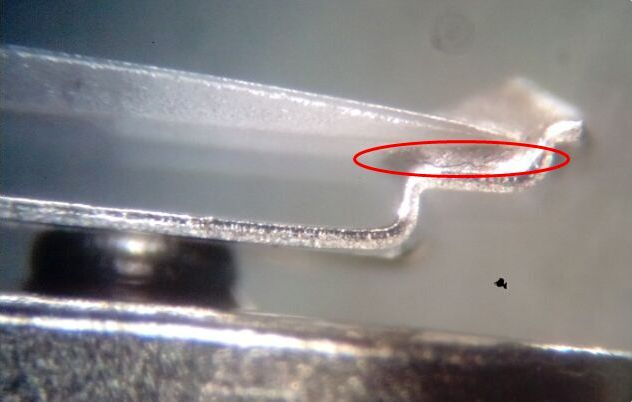
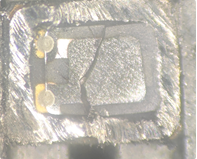
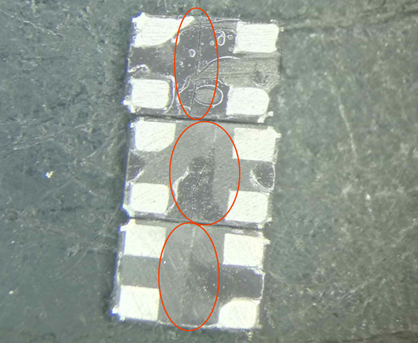
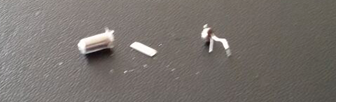
Generally, the reasons for crystal oscillators failing to oscillate are summarized as follows: 1. Chip Breakage Analysis: The chemical composition of the chip is silicon dioxide, the same as glass. It is a brittle and fragile material. Under the influence of significant impact, drops, strong vibrations (such as ultrasound), or rapid temperature changes, it may crack or break. Solutions: 1) Chip breakage is an irreversible physical phenomenon, making it a stable and permanent defect. Although it can cause the crystal oscillator to fail to oscillate, it is relatively easy to identify. Jingnuowei crystal oscillators undergo full inspection before shipment to eliminate such defective products. 2) Customers are advised to strictly adhere to the "do not use if dropped" principle during crystal oscillator transportation. During transportation, the product should be reinforced with protective packaging to prevent damage from excessive impact. 2. Conductive Adhesive Breakage Analysis: An open circuit causes the crystal oscillator to fail to oscillate or oscillate intermittently. This indicates that the conductive adhesive is of substandard quality. Solution: Jingnuowei crystal oscillators use imported, stable, high-quality adhesive, which can avoid this problem. 3. Excessive Resistance Analysis: This results in insufficient current to drive the chip to vibrate normally. Prolonged storage of the crystal oscillator or an unclean internal space allows small water droplets or impurities to adhere to the chip surface, causing instability or malfunction. For example, the 49U sealed space is larger than other packages, making the chip more susceptible to contamination during prolonged operation, leading to frequency deviation and increased resistance, resulting in insufficient stability. Solution: We recommend customers choose smaller crystal oscillators and avoid prolonged storage. Jingnuowei crystal oscillators have an internal vacuum, filled with nitrogen, ensuring a clean internal space. 4. Hidden contamination on the product's electrode surface causes variations in electrical parameters after production. Analysis: Dirty soldering workbench Solution: We recommend customers perform cleaning before the end of each work session. Cleaning method: Use a lint-free cloth dampened with alcohol to clean the machine and workbench, with the shift supervisor supervising the inspection. 5. Crystal oscillator base fracture Analysis: A fractured crystal oscillator base results in the crystal oscillator being subjected to destructive physical force, causing the internal chip to break due to stretching or twisting, thus stopping the oscillator. (Internal chip fracture) (Crystal oscillator base fracture) Solutions: 1) It is recommended that customers add a preheating process to the board before crystal oscillator mounting to avoid the possibility of instantaneous heat deformation of the board causing destructive physical impact on the crystal oscillator base. 2) It is recommended that customers strictly adhere to the "Do not use if dropped" principle during crystal oscillator operation, including in warehouses and production lines. If dropped, stepped on, or otherwise damaged, the crystal oscillator must not be used. 6. Crystal oscillator failure due to improper soldering operations. Analysis: Dissection revealed that the crystal chip was damaged, causing the crystal oscillator to stop oscillating. Solution: For the cylindrical crystal oscillator oscillator oscillator oscillator oscillator failure issue, it is recommended that customers limit the soldering of the crystal oscillator leads to areas at least 1.0mm above the fiber optic cable, and avoid soldering the outer casing. Furthermore, heating the leads at high temperatures or for extended periods can damage the silver plating on the internal crystal chip, leading to problems such as excessive resistance. Therefore, please ensure that the heating temperature of the leads is controlled below 300°C, and the heating time is controlled within 5 seconds (the heating temperature of the outer casing should be controlled below 150°C). Additionally, during soldering, never forcefully pull on the crystal oscillator leads to prevent damage to the fiber optic base, which could cause the internal chip to come into contact with the casing and become damaged.