
Industrial Refrigeration Nitrogen Purging Brazing Method for Clean, Strong and Leak-Free HVAC Systems
Industrial refrigeration nitrogen purging brazing method is a highly important technical process used in HVAC and refrigeration system installation to ensure clean, strong, and oxidation-free copper pipe joints. In industrial refrigeration systems, where equipment operates under high pressure, continuous load, and strict performance requirements, proper nitrogen purging during brazing is essential to maintain system efficiency, safety, and long-term reliability. This method helps prevent internal contamination and ensures high-quality brazed joints suitable for demanding industrial applications.
The industrial refrigeration nitrogen purging brazing method begins with proper system preparation and copper pipe cleaning. Technicians must accurately measure, cut, and deburr copper pipes to ensure precise joint fitting. All pipe surfaces must be thoroughly cleaned to remove oil, moisture, dust, and oxidation. Clean surfaces are essential for achieving strong metallurgical bonding during the brazing process. In industrial HVAC systems, even small contaminants can weaken joints and reduce long-term system performance.
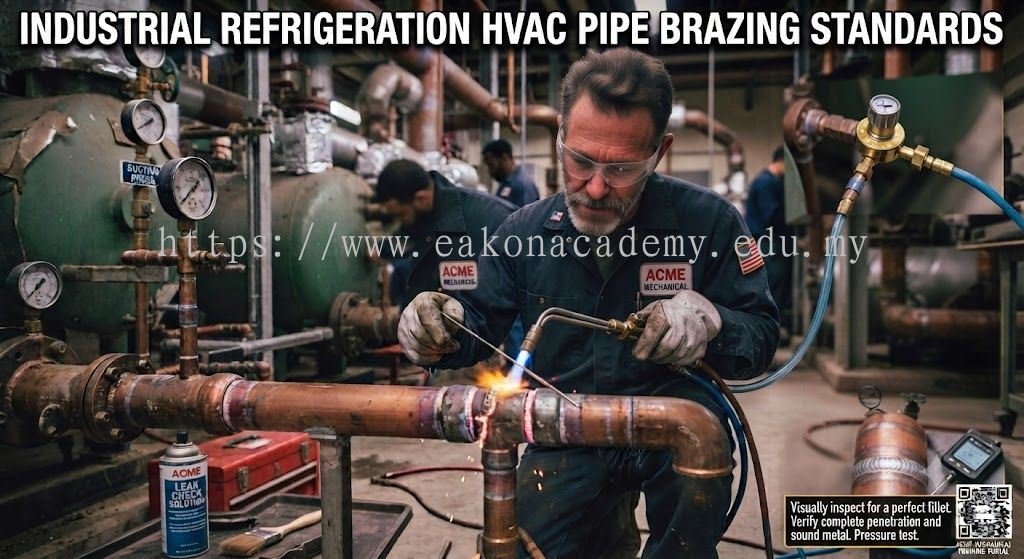
A key step in this method is the setup of nitrogen purging before brazing begins. A controlled low-pressure flow of nitrogen gas is introduced into the piping system to displace oxygen inside the copper tubes. This prevents oxidation that occurs when high heat is applied during brazing. Without nitrogen purging, internal scale and carbon deposits can form inside the pipe, restricting refrigerant flow and damaging critical components such as compressors, expansion valves, and heat exchangers.
Controlled heat application is another essential part of the industrial refrigeration nitrogen purging brazing method. Technicians typically use high-temperature torch systems such as oxy-acetylene equipment to achieve the required brazing temperature. Heat must be applied evenly around the joint area to ensure proper temperature distribution. Once the correct temperature is reached, brazing filler rod is introduced and flows into the joint through capillary action, forming a strong, sealed, and pressure-resistant connection suitable for industrial HVAC systems.
Nitrogen flow must be carefully regulated throughout the brazing process. Too little flow may allow oxidation to occur, while excessive flow can disturb the brazing process. Proper balance ensures that the internal environment remains clean and oxygen-free while maintaining stable brazing conditions. This controlled purging process is what makes industrial refrigeration nitrogen purging brazing method highly effective for high-performance HVAC systems.
In addition to nitrogen purging, proper selection of brazing filler materials is also important. Technicians typically use silver-based brazing alloys or high-strength rods designed for high-pressure refrigeration applications. These materials provide excellent bonding strength, corrosion resistance, and durability under extreme operating conditions. Correct filler selection ensures long-lasting joint integrity and stable system performance.
Post-brazing inspection and pressure testing are critical steps in this method. After brazing is completed, technicians must carefully inspect all joints for uniform appearance, proper penetration, and structural integrity. Industrial systems also require pressure testing using nitrogen or inert gases to confirm system tightness and detect even the smallest leaks. These quality control procedures ensure safe, efficient, and reliable HVAC operation.
Training institutions such as Eakon Academy emphasize industrial refrigeration nitrogen purging brazing method as part of their advanced HVAC and refrigeration training programs. Students are trained through hands-on practice in nitrogen setup, controlled brazing, pipe preparation, and system testing. This ensures they gain real-world skills required in industrial environments.
Furthermore, proper nitrogen purging significantly improves system efficiency, reduces maintenance costs, and enhances long-term reliability. Clean internal piping ensures smooth refrigerant flow, reduced energy loss, and improved cooling performance in industrial refrigeration systems. This results in better operational efficiency and extended equipment lifespan.
In conclusion, the industrial refrigeration nitrogen purging brazing method is essential for achieving high-quality, leak-free, and durable HVAC systems. It combines precise preparation, controlled nitrogen flow, expert heat application, and strict inspection procedures to ensure professional installation standards. For HVAC technicians, mastering this method is vital for building a successful career in industrial refrigeration and large-scale cooling system applications.
更多 EAKON ACADEMY SDN BHD 相关资料 Malaysia
