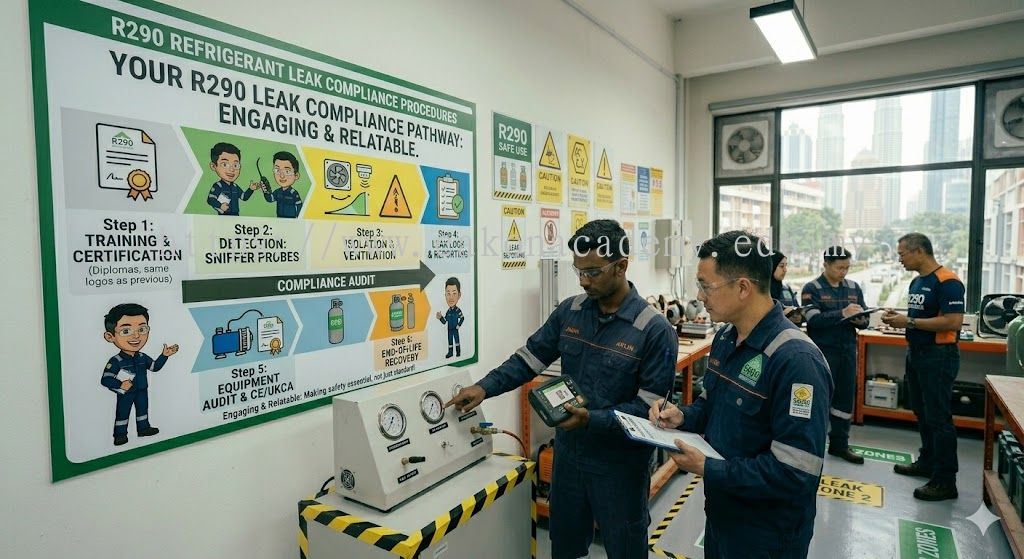
R290 REFRIGERANT LEAK COMPLIANCE PROCEDURES: HVAC-R SAFETY PROTOCOLS, DETECTION METHODS AND ENVIRONMENTAL PROTECTION STANDARDS
R290 refrigerant leak compliance procedures refer to the structured safety protocols, technical methods, and regulatory requirements used to detect, manage, and repair refrigerant leaks in HVAC-R systems that utilize propane (R290). As the industry continues to move toward environmentally friendly and low-GWP (Global Warming Potential) refrigerants, R290 has become a widely adopted solution due to its high energy efficiency, strong cooling performance, and reduced environmental impact. However, because R290 is classified as a flammable hydrocarbon refrigerant, strict leak compliance procedures are essential to ensure operational safety, prevent fire hazards, and maintain environmental protection in residential, commercial, and industrial HVAC applications.
A key aspect of R290 refrigerant leak compliance procedures is early detection and accurate diagnosis. Technicians must use approved hydrocarbon-compatible leak detection equipment capable of identifying even the smallest refrigerant leaks in compressors, evaporators, condensers, piping systems, and valves. Regular inspection schedules are required to ensure that systems remain leak-free and operate efficiently. Early detection is critical because even minor leaks can reduce cooling performance, increase energy consumption, and create potential safety risks due to the flammable nature of R290 gas.
Another important component of R290 refrigerant leak compliance procedures is immediate system response and isolation. When a leak is detected, technicians must follow strict safety protocols that include shutting down the HVAC system, isolating the affected section, and preventing further refrigerant release. Proper ventilation must be ensured in the working environment to avoid the accumulation of flammable vapors. All ignition sources, including sparks, open flames, and non-explosion-proof electrical equipment, must be eliminated before any repair work begins. Grounding and bonding procedures are also required to prevent static electricity discharge during leak handling operations.
Refrigerant recovery is a critical step in R290 leak compliance procedures. Before repairs can be performed, remaining refrigerant must be safely extracted using certified recovery equipment designed for flammable gases. The recovered refrigerant must be stored in approved cylinders that meet international safety standards. This process ensures that no R290 is released into the atmosphere during maintenance or repair, supporting both safety and environmental protection requirements.
Repair and system integrity verification are also essential elements of leak compliance procedures. Once the leak source is identified, technicians must repair or replace the faulty component, such as damaged piping, seals, or compressor parts. After repairs are completed, pressure testing and vacuum procedures must be conducted to confirm that the system is fully sealed and safe for operation. Only after passing these tests can the system be recharged with the correct amount of R290 refrigerant and returned to service.
Environmental compliance is a major focus of R290 refrigerant leak procedures. Although R290 has a very low global warming potential, regulations still require strict control of refrigerant emissions. Proper documentation and record-keeping of leak incidents, repairs, and refrigerant recovery activities are often required under Department of Environment (DOE) regulations and international HVAC standards. These records ensure transparency and support global sustainability efforts.
From an educational and professional perspective, understanding R290 refrigerant leak compliance procedures is essential for HVAC-R technicians. Institutions such as Eakon Academy Malaysia provide structured training programs that teach leak detection techniques, safety protocols, system diagnostics, and environmental compliance standards. Through hands-on training and theoretical instruction, learners gain the skills needed to handle refrigerant leaks safely and effectively in real-world environments.
Furthermore, adherence to R290 refrigerant leak compliance procedures improves system safety, enhances energy efficiency, and ensures environmental protection. Proper leak management reduces operational risks, prevents accidents, and extends system lifespan. As the HVAC-R industry continues to evolve toward greener and more regulated technologies, expertise in leak compliance procedures is becoming increasingly valuable, offering strong career opportunities while ensuring safer, more efficient, and environmentally responsible refrigeration operations worldwide.
更多 EAKON ACADEMY SDN BHD 相关资料 Malaysia