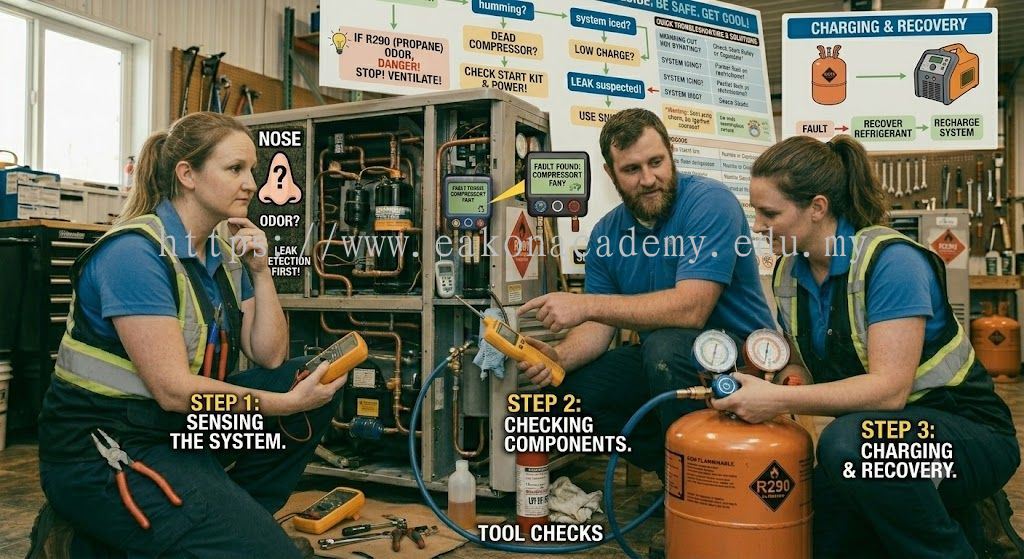
R290 Troubleshooting Step by Step Guide for HVAC Technicians and Refrigeration System Maintenance
R290 troubleshooting step by step is an essential technical guide for HVAC technicians, refrigeration engineers, air conditioning contractors, and maintenance professionals who work with modern propane refrigerant systems. As the HVAC industry continues to adopt environmentally friendly and energy-efficient cooling solutions, R290 systems are becoming increasingly important due to their low global warming potential (GWP), zero ozone depletion potential (ODP), and high energy efficiency performance. However, because R290 is classified as an A3 flammable refrigerant, proper troubleshooting procedures must be followed carefully to ensure both system reliability and workplace safety. At eakonacadem.edu.my, HVAC training programmes are designed to provide structured knowledge in R290 system troubleshooting, step-by-step diagnostic methods, refrigerant handling, and safe servicing practices for modern refrigeration systems.
R290 troubleshooting step by step involves a systematic process that allows HVAC technicians to identify faults accurately, diagnose system performance issues, and apply correct repair solutions. A structured approach helps reduce guesswork, improve efficiency, and ensure that all components of the refrigeration system are evaluated properly. This method is especially important in R290 systems because incorrect handling or improper diagnosis can lead to performance loss or safety risks.
The first step in R290 troubleshooting is performing a complete visual inspection of the system. Technicians must examine compressors, condensers, evaporators, refrigerant piping, electrical connections, sensors, and airflow systems. This initial step helps identify visible issues such as refrigerant leakage, damaged components, loose connections, corrosion, or poor installation practices. A careful visual inspection provides valuable clues for further diagnostic steps.
The second step involves checking system operation and performance conditions. HVAC technicians must evaluate whether the system is cooling properly, monitor temperature differences, and observe system cycling behaviour. Symptoms such as insufficient cooling, long compressor run times, or unstable temperatures indicate potential faults that require deeper analysis.
The third step in R290 troubleshooting is measuring system pressure and temperature readings. Using proper diagnostic tools, technicians must check suction pressure, discharge pressure, evaporator temperature, and condenser temperature. These readings help determine whether the refrigerant charge is correct and whether the system is operating within normal parameters. Abnormal readings often indicate issues such as refrigerant imbalance, airflow restrictions, or compressor inefficiency.
The fourth step focuses on refrigerant analysis. Technicians must evaluate superheat and subcooling values to determine the condition of the refrigeration cycle. Incorrect refrigerant charge, leakage, or contamination can significantly affect system performance. Accurate refrigerant analysis ensures proper system operation and prevents unnecessary component damage.
The fifth step involves compressor evaluation. The compressor is the heart of the R290 system, and any malfunction can affect overall performance. Technicians must inspect electrical current, discharge temperature, vibration levels, and pressure response. Compressor issues may result from electrical faults, overheating, or mechanical wear, and early detection is essential for preventing major system failure.
The sixth step in R290 troubleshooting step by step is checking airflow and heat exchange performance. Condenser and evaporator coils must be inspected for dirt, blockage, or airflow restrictions. Proper airflow is essential for efficient heat transfer and system stability. Cleaning and maintenance of these components help restore optimal cooling performance.
The seventh step involves electrical system inspection. Technicians must test wiring, sensors, control boards, capacitors, and safety devices to ensure proper electrical operation. Electrical faults are a common cause of system failure and must be diagnosed accurately using appropriate testing tools.
Safety is a critical part of every step in R290 troubleshooting because propane refrigerant is classified as an A3 flammable refrigerant. Technicians must ensure proper ventilation, avoid ignition sources, use correct recovery methods, and follow strict safety procedures during all diagnostic and repair activities. Professional training ensures HVAC technicians can safely manage R290 systems while maintaining high technical standards.
The use of proper HVAC diagnostic tools is essential throughout the troubleshooting process. Technicians may use digital manifold gauges, temperature probes, leak detectors, electrical testers, and refrigerant charging scales to gather accurate system data. These tools help improve diagnostic precision and ensure effective repair decisions.
As demand for sustainable refrigeration systems continues to grow, technicians with R290 troubleshooting step by step knowledge are becoming increasingly valuable. Businesses and facility operators require skilled professionals who can diagnose and repair systems efficiently while ensuring safety and performance. Proper troubleshooting skills help improve energy efficiency, reduce downtime, and extend equipment lifespan.
At eakonacadem.edu.my, HVAC and ACMV training programmes are designed to equip technicians, contractors, and industry learners with practical knowledge of modern refrigeration systems. Learning R290 troubleshooting step by step enables professionals to build strong diagnostic skills, improve technical accuracy, and confidently service next-generation HVAC systems. Through structured training in system analysis, refrigerant management, safety procedures, and preventive maintenance, HVAC professionals can deliver high-quality and reliable service solutions.
Whether you are an HVAC technician, refrigeration specialist, maintenance worker, or someone developing expertise in sustainable cooling technology, mastering R290 troubleshooting step by step provides essential knowledge for career growth. Professional training helps technicians improve system reliability, enhance energy efficiency, reduce repair costs, and support the transition toward safer and more environmentally responsible HVAC solutions in Malaysia and beyond.
More detail about EAKON ACADEMY SDN BHD Malaysia