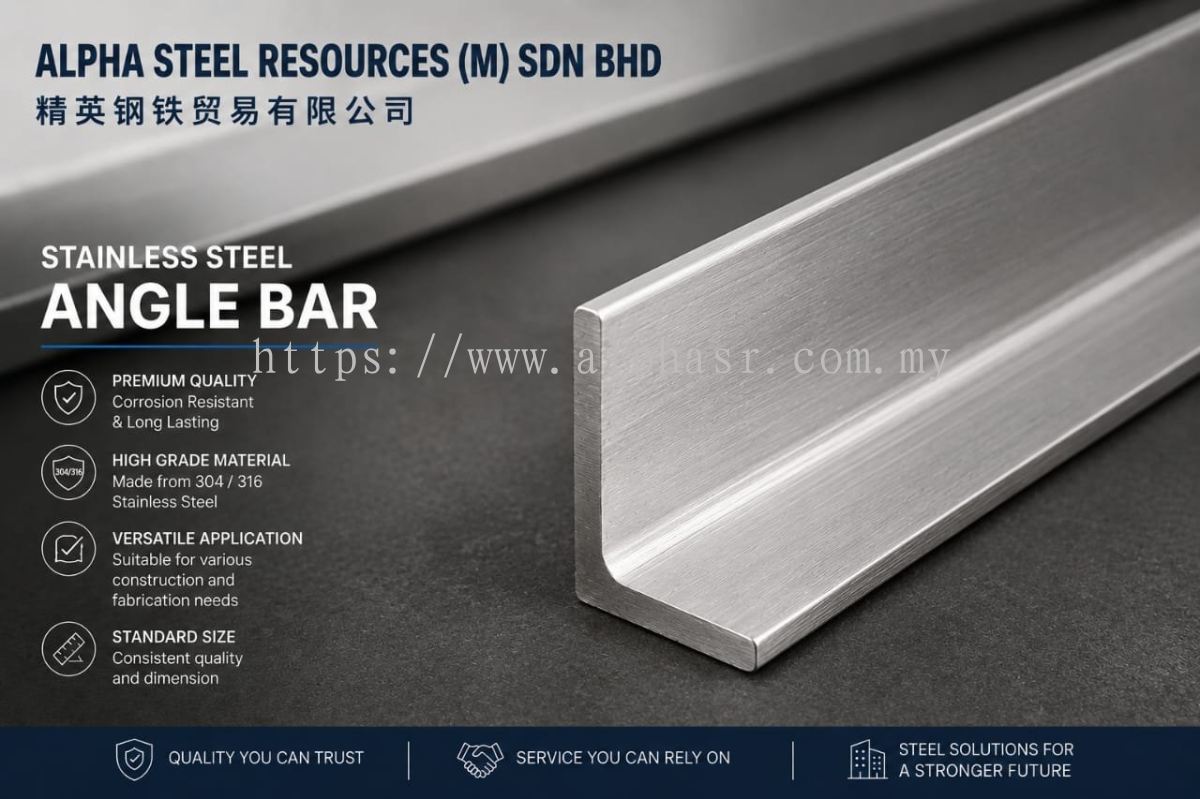
Description
Advantages
-
Excellent corrosion resistance in normal atmospheric conditions, freshwater, and many industrial environments.
-
Good strength-to-weight ratio for frames, supports, brackets, and fabrication work.
-
Good weldability and formability, making fabrication easier.
-
Low maintenance compared with carbon steel because they do not require painting for corrosion protection.
-
Attractive appearance, making them suitable for architectural applications.
Limitations
-
Not ideal for highly corrosive chloride environments (coastal marine areas, saltwater exposure, some chemical plants). In these cases, SS316 is usually preferred.
-
Lower yield strength than some structural carbon steels, so larger sections may be needed for heavily loaded structures.
-
Higher material cost than mild steel.
Typical Applications
-
Equipment frames and supports
-
Food processing facilities
-
Architectural trim and structural elements
-
Handrails and guardrails
-
Chemical and water treatment equipment
-
General fabrication and machinery supports
Structural Performance
For structural use, efficacy is determined by:
-
Angle size (e.g., 25×25×3 mm, 50×50×5 mm, etc.)
-
Load type (compression, tension, bending)
-
Span length
-
Connection details
-
Safety factors required by the design code
If you're evaluating an SS304 angle bar for a specific project, provide:
-
Angle dimensions (e.g., 50×50×5 mm)
-
Length/span
-
Expected load
-
Environment (indoor, outdoor, coastal, chemical exposure)
and I can help assess whether SS304 is suitable and estimate its structural adequacy.
More detail about Alpha Steel Resources (M) Sdn Bhd