
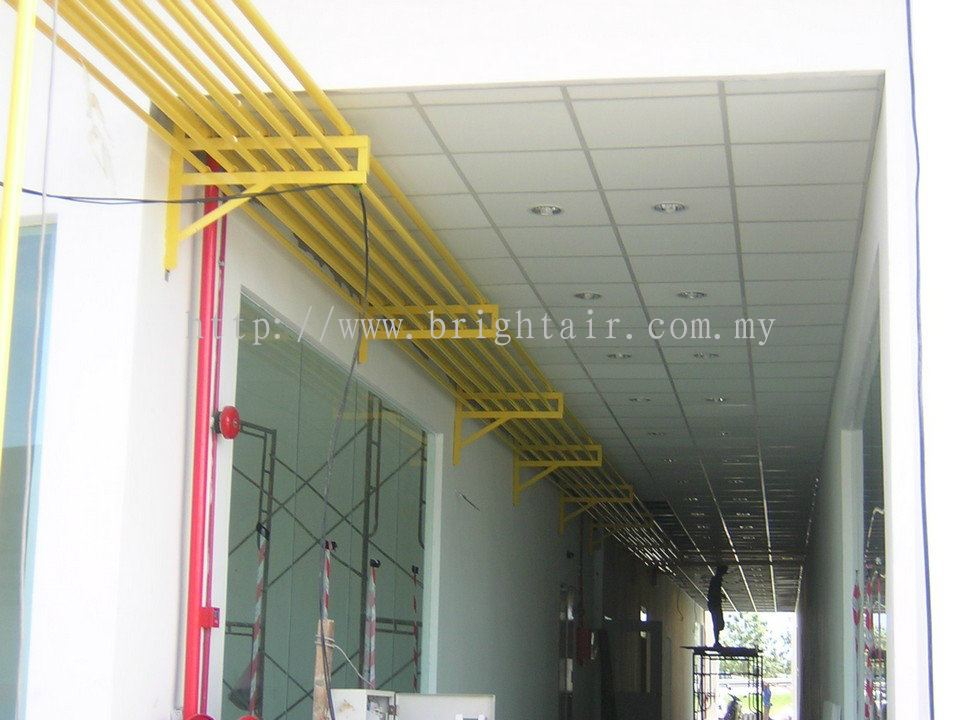
Gas Piping System

Gas Piping System

Category: Industrial Piping System Available
For more information, visit our official website at brightair.com.my

Description

Utilities & Process Lines • Gas Piping Works

Gas Piping System

Install a safe, reliable Gas Piping System for industrial and commercial facilities—covering planning, material selection, installation, testing, and maintenance for natural gas (NG) and LPG service lines.

Leak Control
Proper jointing, supports, and pressure testing help reduce gas leak risks.
Code-Compliant Design
System routing, materials, and safety devices selected to meet site standards and regulations.
Stable Supply
Correct sizing and pressure regulation support consistent burner and equipment performance.

What is a Gas Piping System used for?

A Gas Piping System transports fuel gas safely from the main supply or storage (NG pipeline or LPG tank manifold) to end-use equipment. The system includes isolation valves, pressure regulation, and branch distribution to ensure the correct flow and pressure at each consumption point.

Well-planned gas piping improves safety and reliability by reducing pressure drops, minimizing leak points, and making isolation/maintenance faster during shutdowns.

Why choose a properly engineered gas piping network?

Fuel gas is a critical utility. A correct design helps protect people and assets while ensuring your burners and process equipment operate consistently.

Improved Safety & Control

Isolation valves and safe routing make emergency response and maintenance more effective.

  • Clear isolation points and zoning
  • Reduced leak risk with proper joints
  • Controlled pressure regulation

Reliable Burner Performance

Stable pressure and flow help avoid flame instability and production interruptions.

  • Correct pipe sizing for demand
  • Reduced pressure drop at branches
  • More consistent combustion

Maintenance-Friendly Layout

Good access and labeling reduce downtime during inspection and shutdown works.

  • Accessible valves and regulators
  • Clear labeling and flow direction
  • Planned supports and expansion allowance
Typical applications:
  • Boilers and steam generators
  • Ovens, dryers, and furnaces
  • Burners for process heating
  • Commercial kitchens and canteens
  • Hot water systems and heaters
  • Gas manifold and distribution headers

How does a Gas Piping System installation work?

Gas piping projects follow a controlled workflow—planning the route, selecting materials and safety components, installing with qualified workmanship, then testing and commissioning to verify leak integrity and operating pressure.

Project scope (typical)

  1. Site survey (equipment load, routing, ventilation, access).
  2. Design & sizing (flow demand, pipe diameter, pressure drop).
  3. Safety components (regulators, shut-off valves, strainers, vent points).
  4. Installation (supports, welding/threading as specified, labeling).
  5. Testing (pressure test, leak check, purge procedures as required).
  6. Commissioning (verify regulator set points and equipment performance).

What you get

  • Stable gas delivery to each equipment point
  • Reduced leakage risk through verified testing
  • Clear isolation for maintenance and emergency response

Important: Gas piping must be installed and tested in accordance with applicable codes, authority requirements, and site safety procedures.

What maintenance does a Gas Piping System need?

Routine inspection helps keep gas systems safe. Maintenance typically focuses on leak checks, valve/regulator function, supports, and ensuring that ventilation and access around gas equipment remain unobstructed.

Routine checks

  • Perform scheduled leak checks at joints and valves
  • Inspect pipe supports, clamps, and corrosion points
  • Confirm valve operation and clear labeling

If you detect unusual odor, shut off safely (if trained) and follow emergency procedures immediately.

Regulator & equipment checks

  • Verify regulator set pressure remains stable
  • Check strainers/filters where installed
  • Inspect flexible connectors for wear (if used)

A small pressure change can affect combustion quality and efficiency.

Good practice: Keep an updated line diagram and valve index. During shutdowns, it speeds up isolation and reduces the chance of wrong-valve operations.

FAQ

Common questions about gas line installation, safety components, and compliance.

Natural gas is typically supplied via pipeline at regulated pressures, while LPG is stored in tanks and vaporized before distribution. Both require correct sizing, regulation, and safety devices—design details depend on supply pressure, consumption rate, and site layout.

Common devices include manual shut-off valves, pressure regulators, emergency shut-off (where required), pressure gauges, strainers, and properly routed vents/reliefs. Requirements vary by code and equipment type.

Testing typically includes a pressure test and a leak check at joints and valves using approved methods. The exact procedure, test media, and duration depend on applicable codes, authority requirements, and project specifications.

Common causes include undersized piping, regulator issues, clogged strainers, high simultaneous demand, or restrictions in branch lines. A site assessment can identify whether the issue is sizing, component condition, or balancing.

Note: Always follow your facility’s safety procedures and local regulations for gas piping, testing, and commissioning.

More detail about BrightAir Engineering Sdn Bhd
BrightAir Engineering Sdn Bhd
BrightAir Engineering Sdn Bhd Plant Mechanical Engineering Works in Penang, Pollution Control Engineering Malaysia, Fluid & Gas Piping System in Butterworth ~ BrightAir Engineering Sdn Bhd
Contact Us flagMalaysia