
Mosquito Control is essential for protecting public health and maintaining comfort, as certain mosquito species can transmit diseases such as dengue and West Nile virus, while others are primarily a nuisance. Everyone can play a role in reducing mosquito populations.
Key control methods include:
While local authorities often manage large-scale mosquito control programs, individuals can contribute significantly by eliminating breeding sites around their homes to help prevent mosquito infestations.
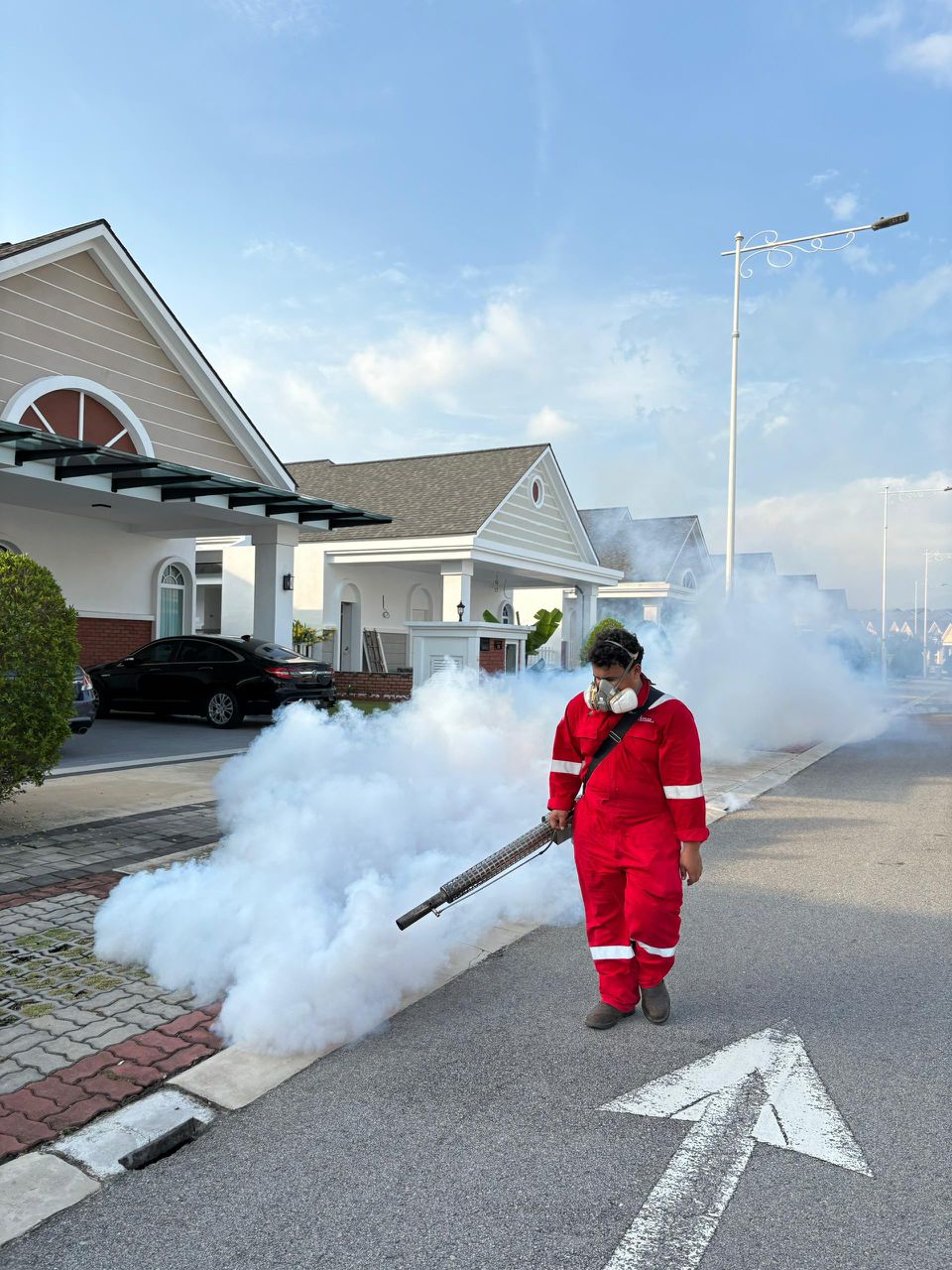
Mosquito Fogging is a pest control technique that disperses a fine mist of insecticide into the air to eliminate mosquitoes. The mist settles on surfaces, killing mosquitoes upon contact. Fogging is most effective during dawn and dusk when mosquitoes are most active, ensuring maximum exposure to the insecticide. However, factors such as temperature, humidity, and wind speed can significantly influence the treatment’s effectiveness.
ULV Misting (Water-Based) for mosquito control is a technique that uses Ultra-Low Volume (ULV) misting to disperse a specially formulated chemical in fine droplets over open areas. The system generates large volumes of air at low pressure, turning the liquid into tiny droplets that spread effectively throughout the environment. This method is particularly useful for covering large areas where mosquito breeding sites are difficult to locate. It is efficient, as only small amounts of pesticide are required to achieve control. For safety, no unauthorized personnel should be present in the treated area for at least four hours after misting.
.png)
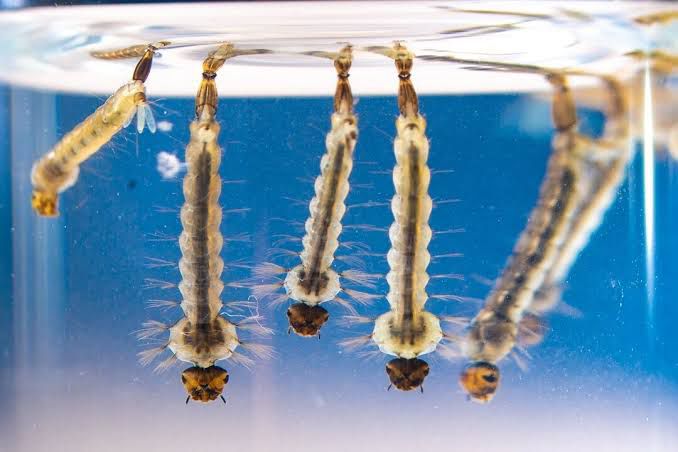
Larviciding is a mosquito control method that targets the aquatic immature stages of mosquitoes. It involves regularly applying microbial or chemical insecticides to water bodies or containers where mosquitoes breed, aiming to eliminate larvae and pupae before they mature into adults.
Mosquito Control Spraying is a method that applies a layer of insecticide to surfaces, such as walls, where mosquitoes are likely to rest. When mosquitoes come into contact with the treated surfaces, the insecticide adheres to them and effectively eliminates them, helping to reduce mosquito populations and prevent bites.
.png)
 Malaysia

