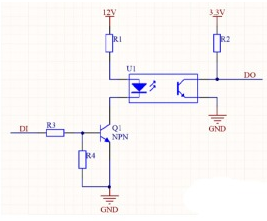
Optocouplers are widely used in a variety of applications, from power supplies to communication systems, thanks to their ability to provide electrical isolation. Despite their ubiquity, there are some common misconceptions about their characteristics and uses. This article will debunk some of the most common misconceptions to help engineers and enthusiasts make more informed decisions. Misconception 1: Optocouplers have a short lifespan. Fact: While the LEDs inside an optocoupler degrade over time, advancements in LED materials and manufacturing processes have significantly improved their lifespan. Modern optocouplers are designed for a lifespan of several decades under normal operating conditions. Proper thermal management and operation within recommended current levels can further extend their lifespan. Misconception 2: Optocouplers are too slow for modern applications. Fact: Early optocouplers had limited speeds and were only suitable for low-frequency applications. However, today's high-speed optocouplers can achieve data rates exceeding 10 Mbps, making them suitable for industrial communication protocols such as CAN and RS-485. Optocouplers specifically optimized for speed are even used in high-speed digital systems. Myth 3: Optocouplers can only be used for signal isolation. Fact: While signal isolation is the primary function, optocouplers have a variety of applications: Switching: They can control power transistors or thyristors in high-voltage systems. Feedback circuits: Commonly found in switching power supplies (SMPS). Linear isolation: Dedicated linear optocouplers are used for analog signal isolation. Myth 4: Optocoupler circuit design is complex. Fact: Optocoupler circuits are relatively simple. Most manufacturers provide detailed datasheets with recommended circuit configurations, including current-limiting resistors and bias networks. Reference designs and evaluation boards simplify implementation. Myth 5: Optocouplers are obsolete. Fact: While digital isolators offer compelling advantages in certain applications, optocouplers remain irreplaceable in scenarios requiring high-voltage isolation, low cost, and robustness in noisy environments. They coexist with digital isolators, rather than being completely replaced. Optocouplers have undergone significant changes, overcoming many limitations that lead to misconceptions. Understanding their true capabilities ensures their effective use in appropriate applications. Engineers should rely on accurate information and up-to-date specifications when designing with optocouplers.