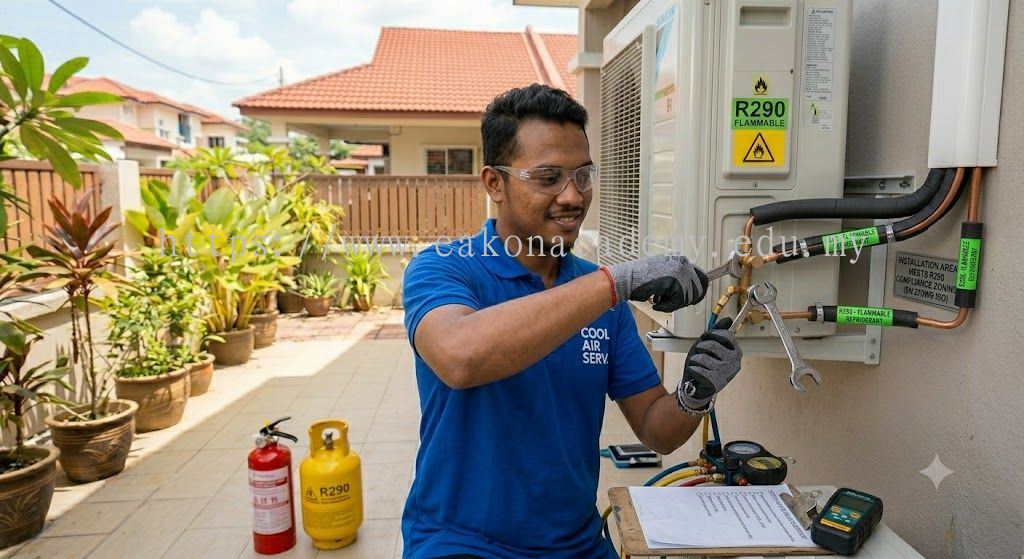
R290 FLAMMABLE REFRIGERANT INSTALLATION FOR SAFE, CONTROLLED, AND COMPLIANT HVAC-R SYSTEM DESIGN
R290 flammable refrigerant installation is a specialized HVAC-R process that focuses on the safe and efficient setup of refrigeration and air conditioning systems using propane (R290) as a natural refrigerant. As the HVAC industry continues to transition toward environmentally friendly refrigerants with low global warming potential (GWP), R290 has become a widely adopted solution due to its excellent energy efficiency, cost-effectiveness, and sustainability advantages. However, because R290 is classified as a flammable refrigerant, its installation requires strict safety procedures, precise engineering, and compliance with international standards. At eakonacadem.edu.my, we focus on providing professional HVAC education and technical training that supports correct and safe R290 flammable refrigerant installation practices.
The first stage of R290 flammable refrigerant installation involves careful system design and risk assessment. HVAC engineers must ensure that the system is designed with appropriate refrigerant charge limits, proper ventilation planning, and safe equipment selection. In addition, installation locations must be evaluated to minimize exposure to ignition sources. Proper design is essential to reduce risks associated with flammable refrigerants while ensuring optimal system performance and energy efficiency.
The second stage focuses on site preparation and safety control. Before installation begins, technicians must prepare the working environment by ensuring adequate ventilation and eliminating any potential ignition sources such as sparks, open flames, or unprotected electrical equipment. Because R290 is highly flammable, maintaining a controlled and safe installation environment is a critical requirement. Personal protective equipment (PPE) such as anti-static clothing, gloves, and safety goggles must be used throughout the installation process.
The third stage of R290 flammable refrigerant installation involves the physical assembly of HVAC components. This includes installing compressors, condensers, evaporators, and connecting refrigerant piping systems. All joints and connections must be carefully brazed or welded to ensure leak-free performance. Proper insulation of refrigerant lines is also necessary to improve system efficiency and prevent energy loss. Precision during installation is essential to ensure long-term safety and reliability.
Vacuuming and pressure testing are critical steps in flammable refrigerant installation procedures. After system assembly, technicians must perform vacuum evacuation to remove moisture, air, and contaminants from the refrigerant lines. This is followed by pressure testing using dry nitrogen to detect any leaks or weak points in the system. These steps ensure that the system is fully sealed, clean, and safe for refrigerant charging.
Refrigerant charging in R290 flammable refrigerant installation must be carried out with extreme care and accuracy. The correct amount of refrigerant must be added according to manufacturer specifications to ensure safe and efficient system operation. Due to the flammable nature of R290, charging must be done using approved tools and controlled procedures to avoid overcharging or leakage risks.
System commissioning and testing are the final stages of installation. Technicians evaluate system performance by checking cooling efficiency, pressure levels, airflow, and temperature control. Leak detection tools are used to verify that no refrigerant is escaping from the system. Any issues identified during testing must be corrected before the system is approved for operation.
At eakonacadem.edu.my, we emphasize the importance of training HVAC professionals in R290 flammable refrigerant installation techniques. Proper education ensures that technicians understand safety protocols, installation procedures, and system design requirements. Skilled professionals are essential for maintaining safe and efficient HVAC operations involving flammable refrigerants.
Furthermore, correct installation practices help reduce environmental impact by minimizing refrigerant leakage and improving energy efficiency. Properly installed R290 systems operate more efficiently, consume less energy, and support global sustainability goals by reducing greenhouse gas emissions.
In conclusion, R290 flammable refrigerant installation is essential for ensuring safe, efficient, and compliant HVAC-R system performance. By following structured procedures including design, safety preparation, installation, testing, and commissioning, technicians can minimize risks and maximize system reliability. This comprehensive approach strengthens HVAC training and makes it a key focus area for education platforms like eakonacadem.edu.my.
更多 EAKON ACADEMY SDN BHD 相关资料 Malaysia