
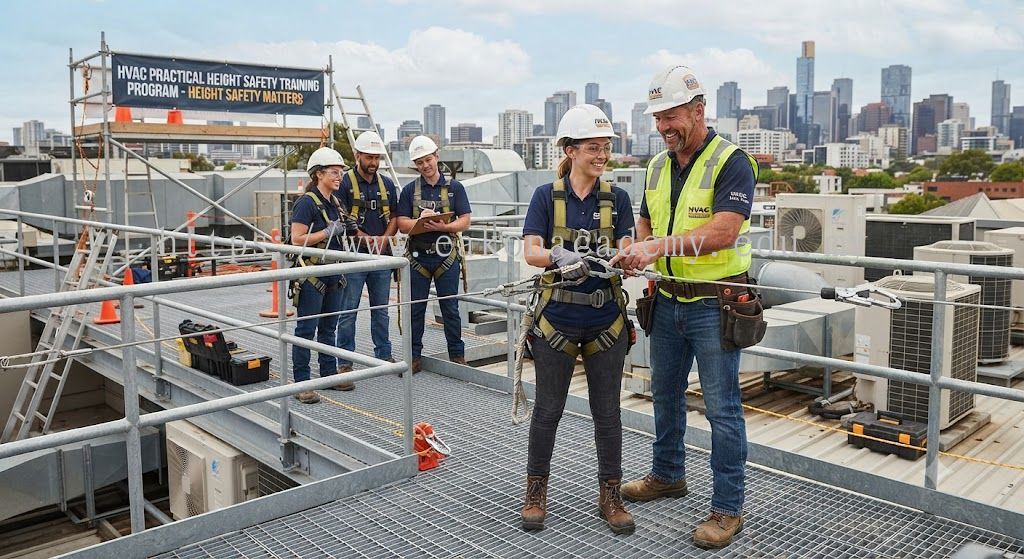
HVAC Practical Height Safety Training Program: Hands-On Safety Skills for Technicians Working at Elevated Locations
HVAC practical height safety training program is a specialised hands-on training course designed to provide air conditioning technicians, HVAC installers, maintenance personnel, and contractors with practical knowledge and real workplace skills for performing HVAC activities safely at elevated locations. In the HVAC industry, technicians are often required to work at height during air conditioning installation, servicing, repair, and maintenance activities, including rooftop unit servicing, outdoor condenser installation, ceiling-mounted system maintenance, commercial HVAC projects, and industrial cooling system operations. These tasks involve various safety challenges such as falls from height, unsafe ladder practices, improper access methods, electrical hazards, refrigerant handling risks, dropped tools, and equipment handling difficulties. A professional HVAC practical height safety training program focuses on hands-on learning, allowing technicians to understand real working conditions, apply proper safety procedures, and develop confidence when performing elevated HVAC tasks. At Eakon Academy (eakonacadem.edu.my), we provide industry-focused HVAC training programs that combine practical exercises with safety knowledge to help technicians, contractors, and supervisors improve competency in working-at-height procedures, fall prevention methods, PPE usage, risk assessment, and professional HVAC installation practices.
The main objective of HVAC practical height safety training is to develop technicians who can apply safety knowledge effectively in real working environments. Unlike theoretical safety awareness programs, practical height safety training allows participants to experience actual safety procedures through demonstrations, equipment practice, and workplace simulations. This approach helps HVAC professionals understand how to manage risks, use safety equipment correctly, and make safer decisions when performing installation and maintenance activities at height.
A key part of practical height safety training for HVAC technicians is workplace hazard identification and risk assessment. Before starting elevated work, technicians must learn how to inspect the work area and identify potential hazards. Common risks include unstable ladders, slippery rooftop surfaces, unprotected edges, limited access areas, overhead structures, electrical systems, refrigerant components, heavy equipment lifting, and falling objects. Through practical exercises, technicians learn how to assess site conditions, identify hazards, and apply suitable control measures before beginning HVAC work.
Hands-on fall prevention and fall protection training is an important component of an HVAC practical height safety training program. Technicians learn how to properly use safety harnesses, lanyards, lifelines, anchor points, and other fall protection equipment. Practical demonstrations help participants understand correct fitting procedures, equipment inspection methods, safe movement techniques, and proper working positions when performing elevated HVAC tasks. This knowledge helps reduce the risk of serious falls and workplace injuries.
Safe access equipment practice is another essential element of practical HVAC height safety training. HVAC technicians may use ladders, scaffolding, scissor lifts, boom lifts, and mobile elevated work platforms (MEWPs) during installation and servicing activities. Training provides practical guidance on equipment inspection, safe setup, correct operation, and proper positioning. By practising safe access techniques, technicians become more confident and competent when working in different elevated environments.
Practical training also covers electrical safety awareness for HVAC technicians working at height. HVAC installation and servicing activities often involve electrical components such as compressors, motors, control panels, isolators, and wiring systems. Participants learn practical safety procedures including power isolation, lockout and tagout (LOTO), voltage testing, and electrical hazard identification. These practices help prevent electrical accidents during elevated HVAC operations.
Refrigerant handling safety is another important area included in HVAC practical height safety training. Technicians may perform refrigerant recovery, leak testing, pressure testing, vacuum procedures, and charging activities while working in elevated locations. Practical training helps participants understand safe refrigerant handling methods, correct tool usage, and proper equipment management to ensure safe and reliable HVAC servicing.
Tool safety and dropped object prevention are critical skills developed through practical height safety training. HVAC technicians often carry tools, gauges, and installation equipment while working above ground level. Hands-on training teaches participants how to organise tools, use tool bags, secure equipment with tool lanyards, and maintain a safe working area to prevent objects from falling and causing injuries.
Personal protective equipment (PPE) application is a fundamental part of practical HVAC height safety training. Participants learn how to properly select, inspect, and use PPE including safety helmets, safety footwear, gloves, eye protection, high-visibility clothing, and fall protection equipment. Practical PPE training ensures technicians understand how safety equipment supports their protection during real work situations.
Emergency response and rescue awareness are also included in a professional HVAC practical height safety training program. Technicians learn how to respond to emergencies such as falls, equipment failure, electrical incidents, refrigerant leaks, and workplace injuries. Practical demonstrations help improve emergency preparedness, communication skills, and response awareness.
Continuous improvement through practical safety training, workplace assessments, and refresher programs helps HVAC companies maintain high safety standards. Technicians who receive hands-on height safety training are better prepared to manage workplace risks, improve installation quality, and perform professional HVAC services safely.
At Eakon Academy (eakonacadem.edu.my), we are committed to developing competent HVAC professionals through practical and industry-focused training programs that combine technical expertise with hands-on safety experience. Our courses cover HVAC practical height safety training program procedures, working-at-height practices, fall prevention techniques, safety harness usage, ladder safety, elevated work platform awareness, risk assessment, PPE compliance, electrical safety, refrigerant handling, and emergency response procedures. By participating in a professional HVAC practical height safety training program, HVAC technicians and contractors can strengthen their practical safety skills, improve workplace compliance, reduce operational risks, and deliver reliable air conditioning installation and maintenance services. Practical height safety training is essential for protecting technicians, improving HVAC industry standards, and building a safer and more professional future for the HVAC and refrigeration sector.
More detail about EAKON ACADEMY SDN BHD Malaysia
