
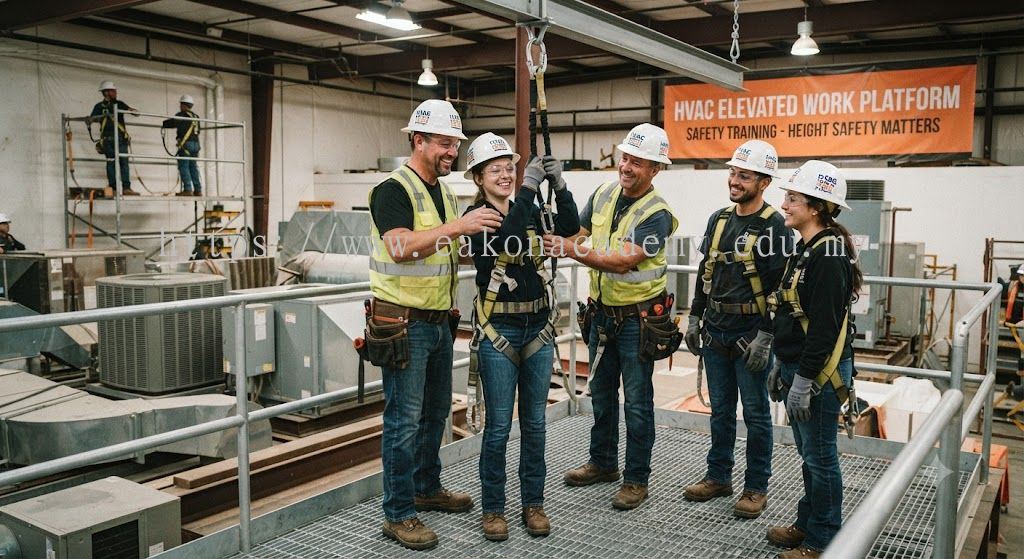
HVAC Elevated Work Platform Safety Training: Professional Safety Skills for Technicians Operating at Height
HVAC elevated work platform safety training is a specialised professional training program designed to provide air conditioning technicians, HVAC installers, maintenance personnel, and contractors with the essential knowledge and practical skills required to safely operate and work around elevated work platforms during HVAC installation, servicing, and maintenance activities. In the modern HVAC industry, technicians often need to access high-level equipment locations such as rooftops, commercial buildings, industrial facilities, ceiling areas, and external structures. Elevated work platforms (EWPs) such as scissor lifts, boom lifts, and mobile access platforms provide efficient solutions for working at height, but improper operation can create serious risks including falls, equipment instability, electrical hazards, and workplace accidents. A professional HVAC elevated work platform safety training program helps technicians understand safe operating procedures, hazard identification, equipment inspection, fall protection requirements, and workplace safety practices. At Eakon Academy (eakonacadem.edu.my), we provide industry-focused HVAC training programs that help technicians, contractors, and supervisors improve their competency in elevated work platform operation, working-at-height safety, risk assessment, PPE compliance, and professional HVAC maintenance procedures.
The main objective of HVAC elevated work platform safety training is to develop competent technicians who understand how to safely use access equipment while performing HVAC activities at height. HVAC installation and servicing work often requires technicians to reach difficult areas where traditional access methods may not be suitable. Proper elevated work platform training ensures technicians understand equipment capabilities, operational limitations, safety requirements, and correct procedures before beginning work.
A key component of elevated work platform safety training for HVAC technicians is understanding different types of access equipment. Technicians may use various platforms including scissor lifts, boom lifts, vertical lifts, and mobile elevated work platforms depending on the working environment. Training helps technicians understand the functions, applications, and safety considerations of each type of equipment. Selecting the correct elevated platform improves efficiency while reducing workplace risks.
Workplace hazard identification and risk assessment are essential topics covered in HVAC elevated work platform safety training. Before operating any elevated platform, technicians must evaluate the work environment and identify potential hazards. Common risks include uneven ground conditions, overhead obstructions, electrical lines, unstable surfaces, poor weather conditions, equipment overload, and nearby workplace activities. Through professional training, HVAC technicians learn how to assess these hazards and implement effective control measures before operating elevated equipment.
Pre-use inspection and equipment safety checks are important elements of elevated work platform training. Technicians learn how to inspect platforms, controls, safety devices, tyres, hydraulic systems, emergency lowering systems, and other important components before operation. Regular inspections help identify equipment problems early and prevent failures that may lead to accidents. Proper inspection practices support safer and more reliable HVAC work operations.
Safe operating procedures are another important part of HVAC elevated work platform safety training. Technicians learn correct methods for positioning equipment, operating controls, maintaining stability, managing loads, and moving platforms safely. Training also highlights the importance of following manufacturer instructions, workplace procedures, and safety guidelines when using elevated access equipment.
Fall protection awareness is a critical component of elevated work platform training. Although EWPs provide access to elevated areas, technicians must still understand the importance of personal fall protection measures. Training covers proper use of safety harnesses, lanyards, anchor points, and other protective equipment where required. Understanding fall protection requirements helps technicians reduce the risk of serious injuries while working at height.
Electrical safety awareness is also included in HVAC elevated work platform safety training. HVAC technicians may operate elevated platforms near electrical equipment, power supplies, and building services. Training helps technicians recognise electrical hazards, maintain safe distances, and apply proper safety procedures to reduce electrical risks during installation and maintenance activities.
Tool control and dropped object prevention are important safety practices for technicians using elevated work platforms. HVAC work often involves carrying tools, gauges, and components while working above ground level. Training teaches technicians how to secure tools properly, use tool bags, and prevent objects from falling and creating hazards for people below.
Emergency response procedures are another essential part of professional elevated work platform safety training. Technicians learn how to respond to emergencies such as equipment malfunction, platform failure, falls, medical incidents, and unexpected workplace conditions. Training includes emergency planning, communication methods, rescue awareness, and incident reporting procedures.
Personal protective equipment (PPE) compliance is a fundamental requirement for HVAC technicians operating elevated work platforms. Training helps technicians understand the correct use of safety helmets, safety footwear, gloves, eye protection, high-visibility clothing, and fall protection equipment. Proper PPE selection and usage provide additional protection during elevated HVAC operations.
Continuous safety improvement helps HVAC organisations maintain strong workplace standards. Regular training, equipment inspections, toolbox meetings, and refresher courses ensure technicians continue following safe elevated work platform procedures. A safety-focused workforce improves productivity, reduces accidents, and enhances professional service quality.
At Eakon Academy (eakonacadem.edu.my), we are committed to developing skilled HVAC professionals through practical and industry-focused training programs that combine technical expertise with workplace safety awareness. Our courses cover HVAC elevated work platform safety training, EWP operation safety, working-at-height procedures, fall prevention methods, risk assessment, PPE requirements, ladder safety, electrical safety, refrigerant handling, and emergency response practices. By participating in professional HVAC elevated work platform safety training, HVAC technicians and contractors can improve their operational skills, strengthen workplace safety compliance, reduce installation and maintenance risks, and deliver high-quality HVAC services. Effective elevated work platform training is essential for protecting technicians, improving industry safety standards, and creating a safer working environment within the HVAC and building services industry.
More detail about EAKON ACADEMY SDN BHD Malaysia
