
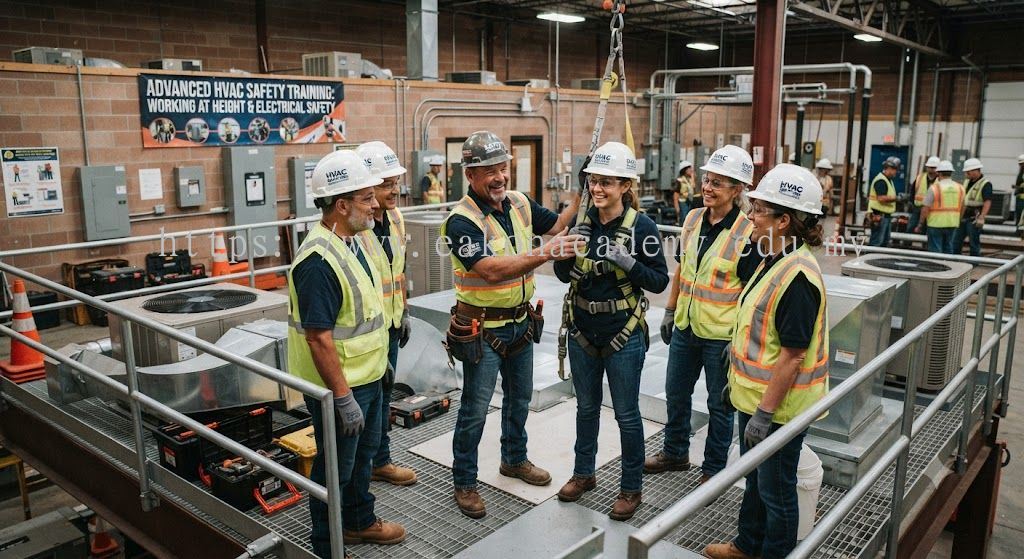
Advanced HVAC Safety Training for Technicians: Professional Skills Development for Safe HVAC Operations
Advanced HVAC safety training for technicians is a professional development program designed to enhance the safety knowledge, technical awareness, and workplace competency of HVAC professionals involved in installation, servicing, maintenance, troubleshooting, and repair activities. In today’s HVAC industry, technicians are required to work with complex air conditioning systems, electrical components, refrigerants, mechanical equipment, and challenging working environments. These tasks often involve potential hazards such as electrical exposure, refrigerant handling risks, machinery hazards, chemical exposure, and working at height. Advanced HVAC safety training for technicians helps professionals understand effective safety practices, risk control methods, emergency procedures, and industry best practices to perform HVAC work safely and efficiently. At Eakon Academy (eakonacadem.edu.my), we provide industry-focused HVAC training programs that help technicians, contractors, and supervisors strengthen their technical capabilities while developing strong workplace safety awareness.
The main purpose of advanced HVAC safety training is to prepare technicians to identify, evaluate, and control workplace hazards before performing HVAC activities. Modern HVAC systems require technicians to have more than basic installation and maintenance knowledge. They must understand how to apply safety procedures when handling electrical systems, refrigerants, tools, equipment, and complex mechanical components. Proper safety training enables technicians to make informed decisions, reduce workplace risks, and improve the overall quality of HVAC service operations.
A major component of advanced HVAC safety training for technicians is comprehensive hazard identification and risk assessment. Before starting any HVAC task, technicians should understand how to inspect the work environment and identify potential dangers. Common HVAC hazards include electrical shock, refrigerant leaks, pressure-related risks, sharp metal components, rotating machinery, heavy equipment handling, confined spaces, and elevated work areas. Through advanced safety training, technicians learn how to conduct workplace assessments, implement control measures, and follow safe work procedures to prevent accidents.
Working-at-height safety is another important area covered in advanced HVAC technician training. Many HVAC professionals perform servicing activities on rooftops, ceiling areas, external building structures, and elevated platforms. These environments create additional risks including falls, unstable access equipment, and dropped objects. Technicians learn proper fall prevention methods, safe access procedures, ladder safety practices, elevated work platform operation, and the correct use of personal protective equipment (PPE). Understanding working-at-height safety helps technicians complete maintenance activities with greater confidence and reduced risk.
Electrical safety training is an essential part of advanced HVAC safety programs. HVAC technicians frequently work with electrical components such as compressors, motors, control systems, capacitors, circuit boards, and power connections. Advanced training helps technicians understand electrical hazards, safe isolation procedures, lockout and tagout (LOTO), voltage testing methods, and electrical troubleshooting safety. These practices reduce the risk of electrical accidents and improve technician protection during servicing activities.
Refrigerant safety and environmental responsibility are also key topics in advanced HVAC safety training. Technicians must understand safe refrigerant recovery, leak detection, pressure testing, charging procedures, cylinder handling, and storage requirements. Proper refrigerant management helps protect technicians from exposure risks while supporting environmental protection and regulatory compliance. Advanced knowledge in refrigerant handling improves technician professionalism and service reliability.
Safe tool usage and equipment handling are important elements of advanced HVAC safety training. HVAC technicians use various specialised tools, including gauges, recovery machines, vacuum pumps, electrical testing equipment, and installation tools. Training helps technicians understand correct tool selection, inspection procedures, safe operation methods, and proper storage practices. Effective tool management reduces workplace injuries and improves productivity.
Personal protective equipment (PPE) awareness is another important area of advanced HVAC safety training. Technicians learn how to select, inspect, maintain, and correctly use PPE such as safety helmets, gloves, safety footwear, eye protection, hearing protection, respiratory protection, and fall protection equipment. Proper PPE usage provides additional protection against workplace hazards and supports safer HVAC operations.
Emergency response and incident management are also included in professional HVAC safety training. Technicians should understand how to respond effectively to emergencies such as electrical accidents, refrigerant leaks, equipment failure, fire hazards, and workplace injuries. Training covers emergency procedures, communication methods, first aid awareness, rescue planning, and incident reporting requirements. Effective emergency preparation improves workplace readiness and reduces the impact of unexpected situations.
Continuous improvement is essential in maintaining high safety standards within the HVAC industry. Advanced HVAC safety training encourages technicians to develop a strong safety culture through regular inspections, toolbox meetings, refresher training, and continuous learning. Well-trained technicians are better prepared to manage workplace challenges and deliver professional HVAC services.
At Eakon Academy (eakonacadem.edu.my), we are committed to developing highly skilled HVAC professionals through practical and industry-focused training programs. Our courses cover advanced HVAC safety training for technicians, working-at-height safety, electrical safety procedures, refrigerant handling practices, hazard assessment, PPE compliance, emergency response, and professional HVAC maintenance techniques. By participating in advanced HVAC safety training for technicians, HVAC professionals can improve workplace safety, strengthen technical competency, reduce operational risks, and deliver reliable air conditioning services. Advanced safety knowledge is essential for building a professional HVAC workforce and achieving long-term success in the heating, ventilation, and air conditioning industry.
More detail about EAKON ACADEMY SDN BHD Malaysia
