
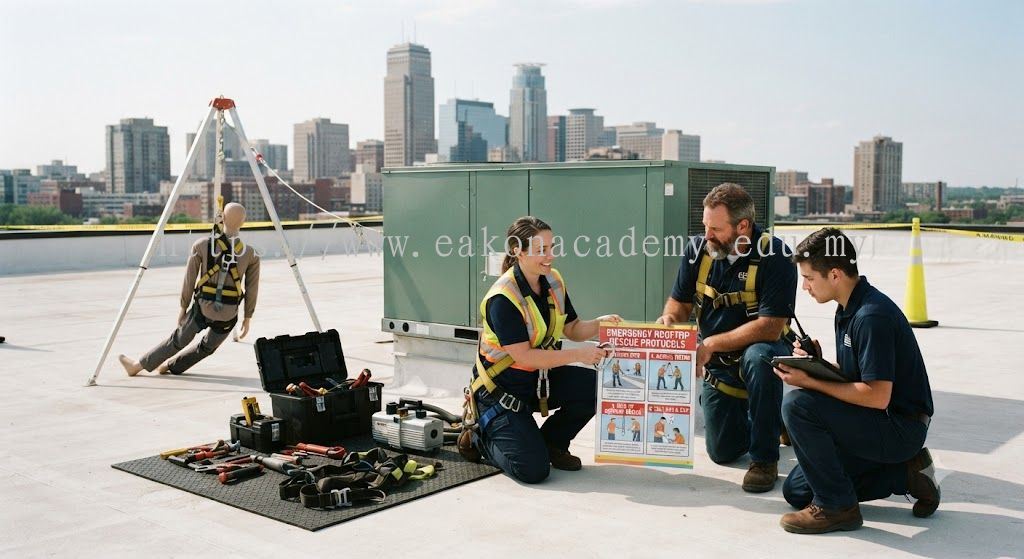
HVAC Emergency Fall Prevention Procedures: Essential Safety Training for Technicians Working at Height
HVAC emergency fall prevention procedures are critical safety practices designed to protect air conditioning and refrigeration technicians when performing installation, maintenance, repair, and inspection work in elevated environments. HVAC technicians frequently work on rooftops, ladders, ceiling spaces, external building structures, and elevated platforms where unexpected situations may increase the risk of falls and workplace injuries. Having proper emergency prevention procedures allows technicians to respond effectively, reduce hazards, and maintain safer working conditions. At Eakon Academy, professional HVAC training focuses on developing technician safety awareness, emergency preparedness, and practical skills required for safe working at height within the air conditioning industry.
Working at height in HVAC operations involves various risks that require proper planning and preventive measures. Technicians may encounter hazards such as unstable surfaces, damaged access equipment, sudden weather changes, equipment failure, electrical risks, and unsafe working conditions. Without proper emergency fall prevention procedures, these situations can lead to serious accidents and operational disruptions. A comprehensive HVAC safety training program helps technicians understand how to identify potential dangers, prepare emergency responses, and apply suitable control measures before beginning elevated work activities.
A key element of HVAC emergency fall prevention procedures is conducting a detailed risk assessment before performing any high-level task. Technicians and supervisors should evaluate the work area, identify possible hazards, and determine appropriate safety solutions. This includes checking ladder conditions, inspecting rooftop access areas, evaluating anchor points, preparing personal protective equipment (PPE), and establishing communication methods between team members. Proper preparation reduces risks and ensures that technicians are ready to handle unexpected situations during HVAC installation and maintenance work.
Emergency planning is an important part of preventing serious injuries during elevated HVAC activities. Technicians should understand rescue procedures, emergency communication methods, and the correct steps to follow if a fall or equipment failure occurs. A well-prepared emergency plan helps teams respond quickly and efficiently while minimizing the impact of accidents. Professional HVAC safety training teaches technicians how to remain aware of their surroundings and make safer decisions when working in challenging environments.
The correct use of fall protection equipment is another essential aspect of HVAC emergency fall prevention procedures. Safety harnesses, lanyards, lifelines, anchor systems, and protective equipment must be properly selected, inspected, and used according to safe working practices. Technicians should understand how to check equipment conditions before use and recognize signs of damage or failure. Proper training ensures that HVAC professionals can confidently use fall protection systems during elevated installation, servicing, and repair activities.
Safe ladder practices and access equipment management also play an important role in emergency fall prevention. Many HVAC tasks require technicians to access high locations for outdoor unit installation, refrigerant piping work, and equipment maintenance. Incorrect ladder positioning, unsafe climbing methods, and improper use of elevated work platforms can increase accident risks. Training helps technicians understand correct equipment setup, safe movement techniques, and emergency actions when working at height.
Another important factor in HVAC emergency safety is effective communication between workers. Team coordination, clear instructions, and proper reporting of hazards help prevent accidents before they occur. Technicians should communicate potential risks, equipment problems, and changing work conditions to ensure everyone understands the safety requirements at the job site.
For HVAC companies, implementing effective emergency fall prevention procedures improves workplace protection, reduces accident risks, and strengthens overall service quality. Well-trained technicians are better prepared to manage unexpected situations while maintaining professional HVAC standards. A strong safety culture also demonstrates a company’s commitment to protecting employees and delivering reliable services to customers.
Eakon Academy provides professional HVAC training programs designed to equip technicians with technical knowledge, safety skills, and practical experience required in today’s HVAC industry. Through comprehensive training, participants can improve their understanding of HVAC emergency fall prevention procedures, working-at-height safety, hazard control methods, and emergency response practices. Developing strong safety capabilities helps create a more skilled HVAC workforce while supporting safer air conditioning and refrigeration operations throughout Malaysia.
More detail about EAKON ACADEMY SDN BHD Malaysia
