
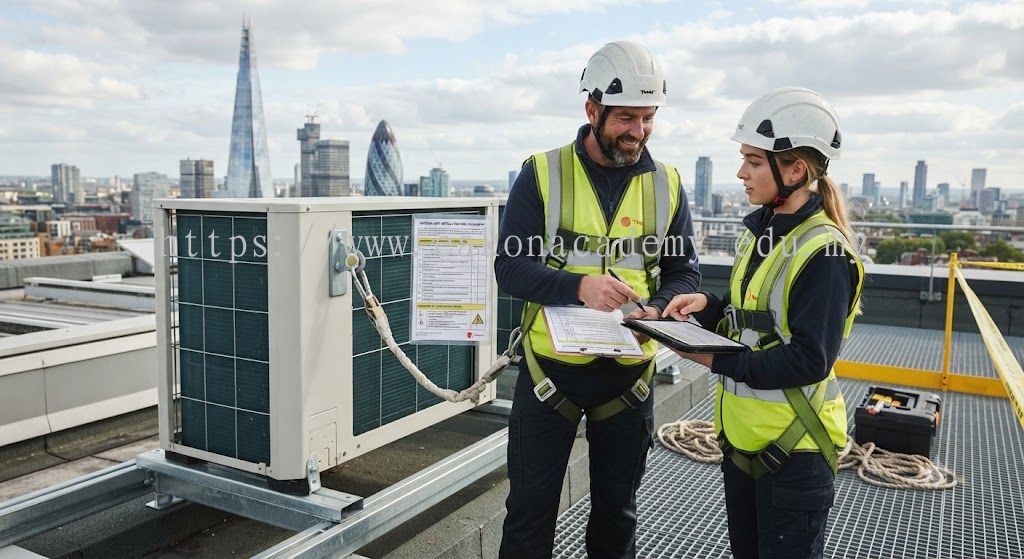
Air Conditioning Outdoor Unit Installation Risk Assessment for Safe and Professional HVAC Work
Air conditioning outdoor unit installation risk assessment is an important safety practice that helps HVAC technicians identify potential hazards, evaluate workplace risks, and implement effective control measures before installing outdoor condenser units. Outdoor unit installation often involves challenging work environments, including elevated locations, external building walls, rooftops, balconies, and restricted access areas. Conducting a proper risk assessment ensures that air conditioning installation activities are completed safely, efficiently, and according to professional HVAC safety standards.
At Eakon Academy, eakonacadem.edu.my, HVAC training programmes focus on developing practical knowledge and safety awareness for technicians involved in air conditioning installation and maintenance. A comprehensive air conditioning outdoor unit installation risk assessment enables technicians and contractors to understand the importance of planning before starting work. By identifying possible hazards early, HVAC professionals can reduce the risk of falls, equipment damage, electrical incidents, incorrect installation procedures, and workplace injuries.
Installing an outdoor air conditioning unit requires careful evaluation of multiple safety factors. Technicians must assess the installation location, mounting structure, working height, lifting requirements, access conditions, and surrounding environment. Common risks during outdoor unit installation include unstable working platforms, unsafe ladder usage, improper lifting techniques, falling objects, sharp metal edges, electrical hazards, extreme weather conditions, and insufficient working space. A detailed risk assessment helps determine the correct safety measures needed to control these hazards effectively.
A professional air conditioning outdoor unit installation risk assessment begins with a thorough site inspection. HVAC technicians should check whether the wall, bracket, or support structure can safely carry the weight of the outdoor unit. The condition of mounting brackets, fixing points, and installation surfaces must be verified before installation begins. For high-level installations, technicians must also assess the need for fall protection equipment, safe access systems, and additional support from trained personnel.
Proper handling and lifting procedures are another important aspect of outdoor unit installation safety. Air conditioning outdoor units can be heavy and difficult to position, especially in restricted areas or elevated locations. Risk assessment helps technicians determine suitable lifting methods, teamwork requirements, and the correct use of tools and equipment. This reduces the possibility of muscle injuries, dropped equipment, and damage to the air conditioning system during installation.
Safety equipment and personal protective equipment (PPE) play a significant role in reducing installation risks. HVAC technicians should use appropriate safety helmets, gloves, protective footwear, eye protection, and fall protection equipment when required. Proper ladder setup, secure working platforms, and safe tool management are essential practices that support safer outdoor unit installation operations. Through effective risk assessment, technicians can create a controlled working environment and complete projects with greater confidence.
For HVAC contractors and air conditioning professionals in Malaysia, understanding outdoor unit installation risk assessment is essential for improving workplace safety and service quality. Residential, commercial, and industrial air conditioning projects often involve different installation challenges that require proper planning and professional judgement. A strong safety assessment process helps companies reduce accidents, improve productivity, and maintain high standards of HVAC installation performance.
Eakon Academy provides professional HVAC training designed to enhance technical skills, safety knowledge, and industry competency. Learning air conditioning outdoor unit installation risk assessment methods allows technicians to better understand hazard identification, preventive measures, safe installation procedures, and workplace safety responsibilities. These skills are valuable for anyone involved in air conditioning installation, servicing, and maintenance.
By applying proper risk assessment techniques, HVAC technicians can perform outdoor unit installation more safely while delivering reliable and professional services. Visit eakonacadem.edu.my to explore HVAC training programmes that support safer installation practices, improved technical capability, and higher standards within the air conditioning industry in Malaysia.
More detail about EAKON ACADEMY SDN BHD Malaysia
