
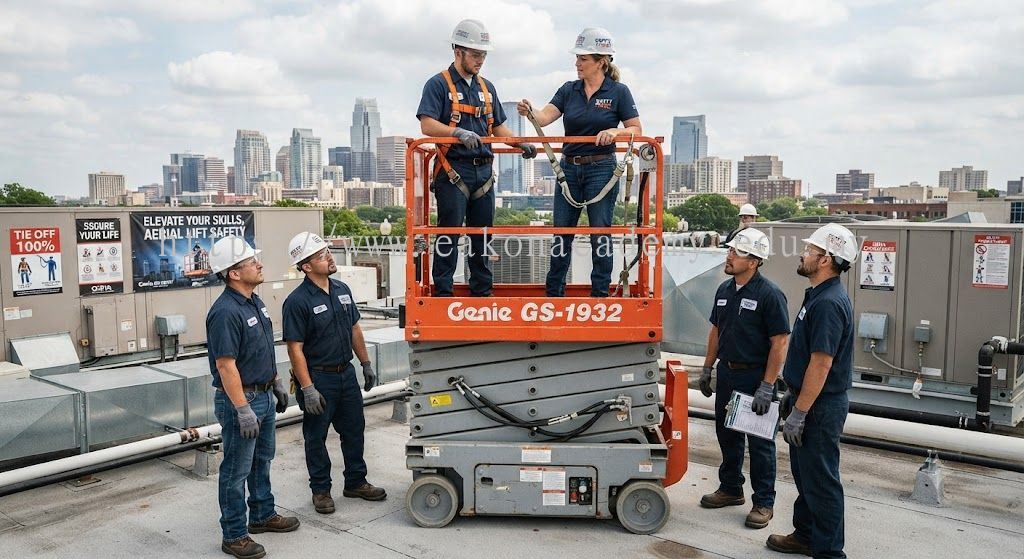
Air Conditioning Servicing Aerial Lift Safety Guide: Best Practices for Safe HVAC Maintenance at Height
Air conditioning servicing frequently requires HVAC technicians to perform maintenance, inspections, troubleshooting, and repairs in elevated locations where standard ladders are no longer the safest or most efficient option. Commercial buildings, factories, shopping malls, warehouses, hospitals, office towers, and industrial plants often have air conditioning equipment installed on rooftops, suspended ceilings, elevated platforms, or hard-to-reach mechanical rooms. In these situations, using an aerial lift provides a safer and more stable working solution. An air conditioning servicing aerial lift safety guide is an essential resource for HVAC professionals who want to improve workplace safety, reduce risks, and perform servicing tasks efficiently. At Eakon Academy (eakonacadem.edu.my), we emphasize practical safety training and industry best practices to help technicians develop the knowledge and confidence required to operate aerial lifts safely while servicing air conditioning systems across Malaysia.
Aerial lifts, also known as Mobile Elevated Work Platforms (MEWPs), include boom lifts, articulated boom lifts, telescopic boom lifts, vertical mast lifts, and scissor lifts. These machines allow technicians to safely access elevated air conditioning equipment while providing a stable work platform for carrying tools and replacement parts. However, operating an aerial lift without proper knowledge can lead to serious accidents such as falls, tip-overs, collisions, electrical contact, or dropped objects. Following a comprehensive aerial lift safety guide helps HVAC technicians understand the correct operating procedures, recognize workplace hazards, and minimize risks before beginning any servicing activity.
One of the first principles covered in an air conditioning servicing aerial lift safety guide is conducting a thorough risk assessment before work begins. Every servicing location presents different hazards that must be identified and controlled. Technicians should inspect the surrounding environment for uneven ground, overhead power lines, overhead structures, nearby machinery, pedestrian traffic, restricted spaces, and weather conditions that could affect safe aerial lift operation. Proper planning allows technicians to select the most suitable lift, establish safe work zones, and prevent unexpected incidents that may disrupt servicing operations.
Equipment inspection is another critical component of aerial lift safety. Before using any aerial lift, HVAC technicians should perform a detailed pre-operation inspection to ensure the machine is safe and fully functional. This includes checking hydraulic systems, tyres, outriggers, emergency lowering controls, guardrails, safety alarms, brakes, steering functions, batteries or fuel systems, and platform controls. Identifying mechanical issues before operation helps prevent equipment failure while working at height and reduces the likelihood of workplace accidents during air conditioning servicing.
Proper operator training is essential for safe aerial lift use. HVAC technicians should understand how each type of lift operates, including movement controls, platform positioning, weight limitations, load distribution, emergency procedures, and safe travel techniques. Different servicing tasks may require different types of aerial lifts depending on ceiling height, workspace limitations, and equipment accessibility. Professional aerial lift safety training ensures technicians know how to select the appropriate equipment for each job while maintaining maximum stability throughout the servicing process.
Personal Protective Equipment (PPE) also plays a vital role in aerial lift safety. HVAC technicians should wear appropriate safety helmets, protective footwear, gloves, eye protection, and high-visibility clothing while servicing air conditioning equipment. When required by the lift manufacturer or workplace safety procedures, technicians should also wear full-body safety harnesses connected to approved anchor points within the aerial lift platform. Proper PPE provides additional protection against falls and other workplace hazards while ensuring compliance with occupational safety standards.
An effective air conditioning servicing aerial lift safety guide also emphasizes maintaining platform stability throughout the servicing operation. Technicians should never exceed the platform's maximum load capacity or use the lift as a crane to hoist heavy equipment beyond its designed limits. Tools and materials should be properly secured to prevent falling objects that may endanger workers below. The lift should always be positioned on stable ground, and outriggers should be fully deployed whenever required by the equipment manufacturer. Maintaining stability significantly reduces the risk of tip-over incidents and improves overall workplace safety.
Weather conditions can have a major impact on aerial lift safety. Strong winds, heavy rain, lightning, or poor visibility increase the risk of accidents while working at height. HVAC technicians should continuously monitor environmental conditions and suspend servicing activities whenever weather conditions exceed the safe operating limits specified by the aerial lift manufacturer. Understanding environmental hazards helps protect both personnel and equipment while preventing unnecessary workplace incidents.
Communication and teamwork are equally important during elevated servicing work. Air conditioning servicing often involves multiple technicians working together to inspect, repair, or replace HVAC components. Clear communication between aerial lift operators, ground personnel, supervisors, and other contractors helps coordinate safe movement, establish exclusion zones, and prevent collisions with nearby equipment or workers. Effective teamwork contributes to smoother servicing operations while maintaining high safety standards on busy commercial and industrial worksites.
Routine servicing of rooftop condensing units, VRF systems, chillers, ducted air conditioning systems, ventilation equipment, and cooling towers often requires technicians to remain at height for extended periods. An aerial lift provides a secure platform that improves both safety and productivity by allowing technicians to perform inspections, cleaning, component replacement, refrigerant servicing, electrical troubleshooting, and preventive maintenance more efficiently than traditional access methods. When combined with proper training and safe operating procedures, aerial lifts become an invaluable tool for professional HVAC servicing.
At Eakon Academy (eakonacadem.edu.my), we are dedicated to developing skilled HVAC professionals through industry-focused technical and safety training. Our air conditioning servicing aerial lift safety programs combine theoretical instruction with practical hands-on experience, ensuring technicians understand safe operating procedures, hazard recognition, equipment inspection, emergency response, and regulatory compliance. By investing in professional aerial lift safety education, HVAC technicians strengthen their technical competency, improve workplace safety, reduce operational risks, and enhance their career opportunities within Malaysia's growing air conditioning industry. Whether servicing residential, commercial, or industrial HVAC systems, following a comprehensive aerial lift safety guide is essential for achieving safe, efficient, and high-quality maintenance operations while protecting both workers and valuable equipment.
More detail about EAKON ACADEMY SDN BHD Malaysia
