
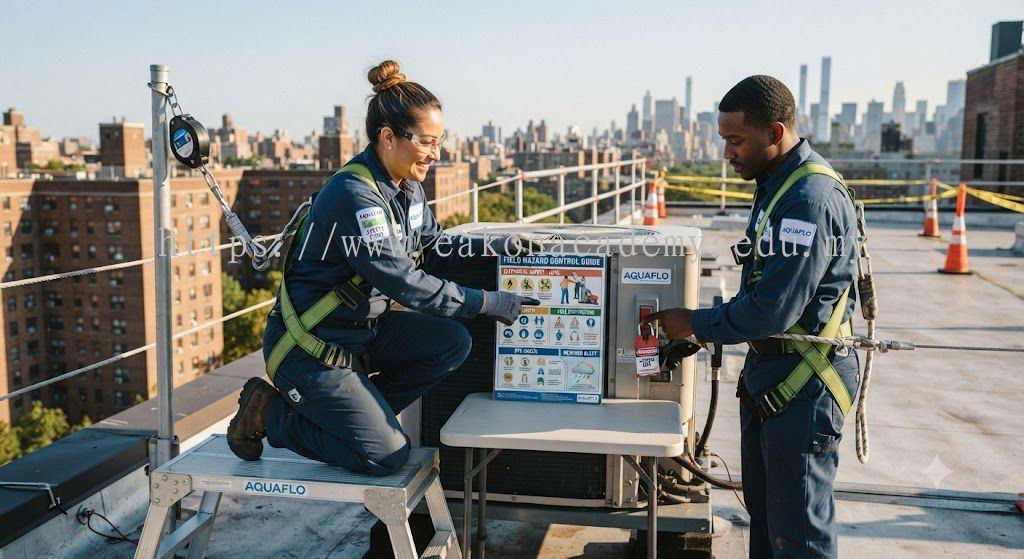
Air Conditioning Maintenance Hazard Control Guide: Essential Safety Management Practices for HVAC Technicians
Air conditioning maintenance involves multiple technical procedures that require careful planning, proper tools, and effective hazard control measures to ensure technician safety. HVAC professionals are responsible for servicing, inspecting, repairing, and maintaining various air conditioning systems, including residential split units, commercial HVAC systems, VRF and VRV systems, chillers, and industrial cooling equipment. During these activities, technicians may encounter hazards such as electrical risks, refrigerant exposure, sharp components, moving machinery, working at height, hot surfaces, and improper tool usage. Implementing a proper air conditioning maintenance hazard control guide helps technicians identify potential dangers, apply effective preventive measures, and create safer working conditions. At Eakon Academy (eakonacadem.edu.my), our HVAC training programmes focus on developing competent technicians who understand both technical maintenance skills and essential workplace safety practices required in the HVAC industry.
Hazard control begins with a detailed workplace risk assessment before any air conditioning maintenance task starts. Technicians should evaluate the working environment, identify possible hazards, and determine appropriate control measures before handling equipment. Important factors to consider include electrical systems, refrigerant pressure, equipment condition, access limitations, working height, surrounding activities, weather conditions, and emergency requirements. A proper risk assessment allows technicians to select suitable personal protective equipment (PPE), prepare the correct tools, and follow safe work procedures throughout the maintenance process.
One of the most significant hazards during air conditioning maintenance is electrical risk control. HVAC systems contain electrical components such as compressors, motors, capacitors, circuit boards, contactors, and control wiring. Accidental contact with live electrical parts can result in serious injury or equipment damage. To control electrical hazards, technicians should isolate power supplies before maintenance, apply lockout/tagout procedures where required, verify electrical isolation using approved testing equipment, and use insulated tools and electrical protection equipment. Proper electrical safety practices are essential for preventing shocks, burns, and electrical accidents.
Another important area of hazard control involves refrigerant handling safety. Air conditioning maintenance often requires refrigerant recovery, leak testing, vacuuming, charging, and system pressure checks. Incorrect refrigerant handling can create risks such as exposure, pressure-related accidents, environmental damage, and equipment failure. Technicians should use suitable refrigerant recovery machines, leak detectors, pressure gauges, charging scales, protective gloves, and safety glasses. Understanding refrigerant characteristics, safe handling methods, and ventilation requirements helps reduce risks during maintenance activities.
Working at height is another common hazard faced by air conditioning technicians. Maintenance activities involving rooftop units, ceiling-mounted systems, commercial equipment, and outdoor condensers may require elevated access. Proper hazard control requires the use of suitable fall protection equipment, including full-body harnesses, shock-absorbing lanyards, anchor points, safety helmets, and appropriate access equipment. Ladders should be inspected before use and placed on stable surfaces, while elevated work platforms should only be operated by trained personnel. Effective height safety procedures help prevent serious fall-related injuries.
Personal protective equipment (PPE) is an essential part of air conditioning maintenance hazard control. Technicians should wear appropriate safety equipment based on the task being performed. Safety helmets protect against falling objects and accidental impacts, while safety glasses protect against dust, debris, refrigerant splashes, and metal particles. Safety gloves reduce the risk of cuts from sheet metal, copper piping, and sharp components, while safety footwear improves stability and protects against dropped equipment. Selecting the correct PPE ensures technicians have reliable protection during maintenance activities.
Tool and equipment management is also an important hazard control measure. HVAC technicians use various tools, including multimeters, vacuum pumps, pressure gauges, torque wrenches, drilling tools, and pipe-cutting equipment. Damaged or incorrect tools can increase accident risks and affect service quality. Technicians should inspect tools before use, follow manufacturer instructions, perform regular maintenance, and store equipment properly after completing work. Well-maintained tools improve safety, accuracy, and efficiency.
Mechanical hazards must also be controlled during air conditioning maintenance. Moving components such as fans, motors, belts, and compressors can cause injuries if equipment is operated unexpectedly during servicing. Technicians should ensure systems are properly shut down before inspection or repair work begins. Warning signs and communication between team members help prevent accidental operation while maintenance activities are in progress.
Heat and fire hazards should also be considered, especially during brazing and pipe repair activities. HVAC technicians working with gas torches and high-temperature equipment must control ignition sources, use appropriate protective equipment, maintain good ventilation, and keep fire extinguishing equipment available when necessary. Proper brazing safety procedures reduce the risk of burns, fires, and property damage.
Good housekeeping practices are another effective hazard control method. Maintenance areas should be kept clean, organised, and free from unnecessary obstacles. Tools, cables, hoses, and materials should be arranged properly to prevent slips, trips, and falls. A well-organised workplace allows technicians to move safely and complete maintenance tasks more efficiently.
Emergency preparation is an important part of hazard control management. HVAC technicians should understand procedures for responding to electrical accidents, refrigerant leaks, fires, falls, and equipment failures. Worksites should have suitable first aid equipment, emergency communication methods, and rescue procedures available. Regular safety training and emergency drills improve technician readiness and reduce the impact of unexpected incidents.
Continuous safety improvement is essential for maintaining high standards in HVAC maintenance. Technicians should receive regular training on hazard identification, risk assessment, PPE usage, electrical safety, refrigerant management, working at height, and emergency response procedures. A strong safety culture helps organisations reduce accidents, improve productivity, and maintain professional service standards.
At Eakon Academy (eakonacadem.edu.my), we are dedicated to providing professional HVAC training that develops technicians with both technical expertise and strong safety awareness. Our programmes cover air conditioning installation, servicing, troubleshooting, maintenance procedures, hazard control methods, workplace safety, PPE requirements, refrigerant handling, electrical protection, and working-at-height practices. Through practical hands-on training, students learn how to identify hazards, apply effective control measures, and perform HVAC work safely in real-world environments. By following a complete Air Conditioning Maintenance Hazard Control Guide, HVAC technicians can reduce workplace risks, improve maintenance quality, protect themselves and others, and build successful careers in the professional air conditioning industry.
More detail about EAKON ACADEMY SDN BHD Malaysia
