
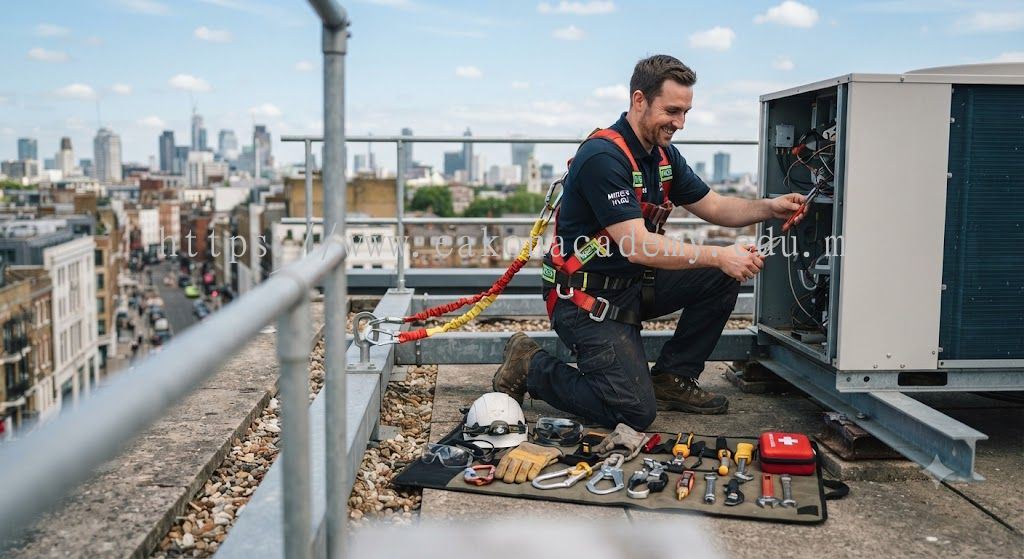
HVAC Fall Protection Equipment Standards: Essential Safety Requirements for Working at Height in the Air Conditioning Industry
Working at height is a routine requirement for HVAC professionals involved in the installation, servicing, maintenance, inspection, and repair of air conditioning systems. Whether technicians are installing rooftop package units, servicing VRF and VRV systems, maintaining chillers, replacing outdoor condenser units, or working on commercial ventilation systems, they are regularly exposed to fall hazards that require effective safety controls. Understanding HVAC fall protection equipment standards is essential for protecting workers, reducing workplace accidents, ensuring legal compliance, and maintaining high professional standards throughout the heating, ventilation, air conditioning, and refrigeration (HVACR) industry. Proper fall protection equipment, combined with risk assessments, practical training, and safe work procedures, forms the foundation of a safe working environment. At Eakon Academy (eakonacadem.edu.my), we incorporate industry-recognised fall protection practices into every HVAC training programme, helping technicians develop the technical skills and safety awareness required for successful careers in Malaysia's growing HVAC sector.
HVAC fall protection equipment standards are designed to minimise the risk of falls and reduce the severity of injuries if a fall occurs. A complete fall protection system typically includes a full-body safety harness, shock-absorbing lanyard, self-retracting lifeline (SRL), certified anchor point, connectors such as locking carabiners, and, where necessary, horizontal or vertical lifeline systems. Every component must be compatible with the others, inspected regularly, and used according to manufacturer instructions. These systems should also comply with recognised international standards such as EN, ANSI, OSHA, or equivalent national requirements, as well as Malaysia's Occupational Safety and Health (OSH) regulations where applicable. Using certified equipment helps ensure reliability, durability, and effective protection during elevated HVAC work.
The full-body safety harness is the most important component of any fall protection system. Unlike traditional waist belts, which can cause serious injuries during a fall, full-body harnesses distribute impact forces across the shoulders, chest, thighs, and pelvis, significantly reducing the likelihood of severe trauma. HVAC technicians should inspect harnesses before every use, checking for worn webbing, damaged stitching, cracked buckles, bent D-rings, corrosion, cuts, UV degradation, or signs of excessive wear. Harnesses that have arrested a fall should be removed from service immediately and replaced according to manufacturer recommendations. Proper harness fitting and adjustment are equally important because an improperly worn harness may not function correctly during a fall.
Shock-absorbing lanyards and self-retracting lifelines are equally important under recognised HVAC fall protection equipment standards. Shock-absorbing lanyards reduce the force transmitted to the worker by gradually absorbing energy during fall arrest. Self-retracting lifelines automatically extend and retract with worker movement while minimising slack and reducing fall distance. These devices provide excellent mobility for technicians working on rooftops, elevated work platforms, or complex commercial HVAC installations. Twin-leg lanyards may also be used to maintain continuous attachment when moving between anchor points, reducing exposure to fall hazards during repositioning.
Certified anchor points are essential because they provide the secure structural attachment for the entire fall protection system. HVAC technicians should only connect to anchor points specifically engineered and certified for fall arrest loads. Structural steel members, permanent roof anchor systems, engineered lifeline systems, and approved temporary anchorage devices are appropriate when installed correctly. Refrigerant piping, electrical conduits, cable trays, temporary handrails, ductwork, or lightweight building components should never be used as anchor points because they are not designed to support fall arrest forces. Professional HVAC training teaches technicians how to identify approved anchorage systems and evaluate structural integrity before beginning elevated work.
Another important aspect of HVAC fall protection equipment standards is conducting a comprehensive workplace risk assessment before work begins. Air conditioning technicians should identify hazards such as fragile roofs, unstable structures, slippery surfaces, overhead electrical lines, adverse weather conditions, restricted access, falling object risks, and insufficient fall clearance. The assessment should determine whether fall arrest systems, fall restraint systems, guardrails, elevated work platforms, scaffolding, or other engineering controls are most appropriate for the work environment. Effective planning significantly reduces accident risks while improving operational efficiency.
Safe access equipment forms another key element of working-at-height safety. Elevated work platforms (EWPs), including boom lifts and scissor lifts, often provide safer alternatives to ladders for commercial HVAC projects. Operators should complete pre-use inspections, understand emergency controls, verify platform load capacities, and wear fall protection equipment whenever required by the manufacturer or workplace procedures. Ladders should only be used when appropriate and must be inspected for structural defects, positioned on firm level surfaces, and secured to prevent movement. Maintaining three points of contact while climbing and avoiding overreaching further reduces fall risks.
Regular inspection and maintenance of fall protection equipment are essential to comply with recognised safety standards. Harnesses, lanyards, self-retracting lifelines, connectors, helmets, anchor devices, and rescue equipment should be stored in clean, dry conditions away from chemicals, excessive heat, direct sunlight, moisture, and sharp objects that could damage the materials. Routine inspections before every use, combined with scheduled detailed inspections by competent personnel, help identify worn or defective equipment before failures occur. Proper inspection records also support workplace compliance and demonstrate a commitment to safety management.
Emergency rescue planning is another critical requirement under modern fall protection standards. Every HVAC project involving work at height should include a documented rescue plan that identifies rescue equipment, trained rescue personnel, communication procedures, emergency access routes, and first aid arrangements. Suspension trauma can develop rapidly after a fall, making prompt rescue essential. Technicians should receive practical training in emergency response, casualty handling, rescue equipment operation, and suspension trauma awareness to ensure effective response during real emergencies.
Personal Protective Equipment (PPE) complements the fall protection system and should always be used during elevated HVAC work. Safety helmets with chin straps protect against falling objects and remain secure during movement. Safety boots with anti-slip soles and steel toe protection improve stability on rooftops, ladders, and elevated platforms. Cut-resistant gloves, safety glasses, high-visibility clothing, and insulated electrical PPE provide additional protection against the various hazards encountered during air conditioning installation and maintenance. Selecting PPE appropriate for the task helps create multiple layers of workplace protection.
Continuous professional development is essential because fall protection technologies, HVAC equipment, and workplace safety regulations continue to evolve. Employers should provide regular refresher training covering harness inspection, anchor point selection, fall clearance calculations, elevated work platform safety, rescue planning, hazard identification, and safe work procedures. Ongoing competency development improves technician confidence, reduces workplace incidents, strengthens regulatory compliance, and promotes a proactive safety culture throughout the organisation.
At Eakon Academy (eakonacadem.edu.my), we are committed to producing highly skilled HVAC professionals who understand that workplace safety is inseparable from technical excellence. Our comprehensive HVAC training programmes combine practical air conditioning installation, servicing, troubleshooting, and maintenance skills with specialised education in work-at-height safety, fall protection systems, personal protective equipment, anchor point selection, elevated work platform operation, emergency rescue procedures, and workplace risk assessment. Students receive valuable hands-on experience using industry-standard fall protection equipment under the guidance of experienced instructors, preparing them for successful careers across residential, commercial, and industrial HVAC sectors. By understanding and applying recognised HVAC Fall Protection Equipment Standards, technicians can minimise workplace risks, comply with Malaysian occupational safety requirements, improve operational efficiency, protect lives, and deliver professional air conditioning services with confidence, reliability, and the highest standards of safety.
More detail about EAKON ACADEMY SDN BHD Malaysia
