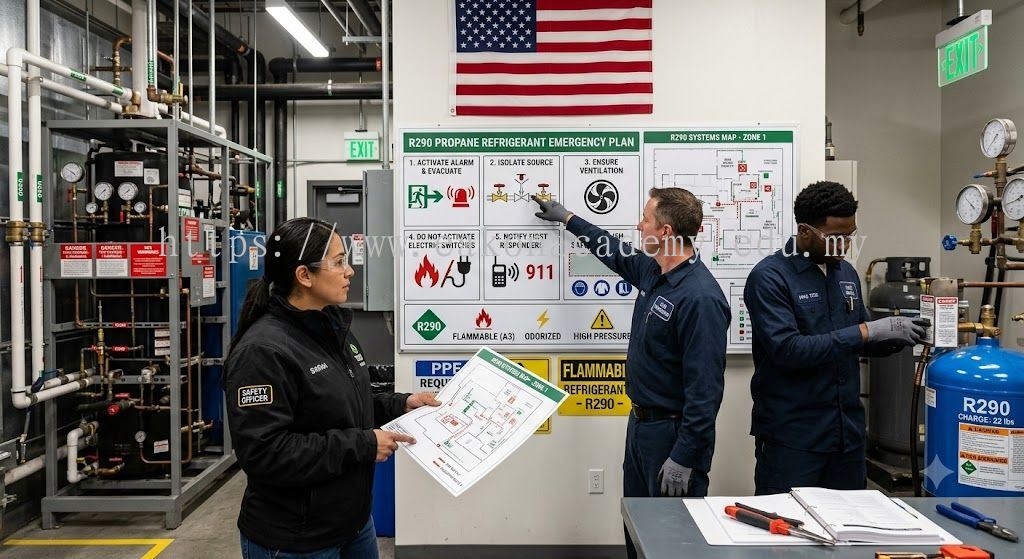
PROPANE REFRIGERANT EMERGENCY PLAN – HVAC SAFETY STRATEGY, R290 RISK MANAGEMENT, AND INDUSTRIAL RESPONSE PROCEDURES
A propane refrigerant emergency plan is an essential safety framework in modern HVAC and refrigeration systems, especially with the widespread use of R290 (propane) as an environmentally friendly but highly flammable refrigerant. As industries shift toward low-GWP (Global Warming Potential) alternatives, propane has become a preferred choice for residential, commercial, and industrial cooling systems due to its high efficiency and low environmental impact. However, its flammability requires strict emergency planning, structured response procedures, and trained personnel to ensure safe operation and minimize risks. Understanding and implementing a propane refrigerant emergency plan is critical for technicians, engineers, and HVAC training institutions focused on safety and compliance.
A well-developed propane refrigerant emergency plan begins with risk identification and hazard assessment. Since propane is highly flammable, even a small leak can create a dangerous environment if exposed to ignition sources. The plan must clearly define potential risks, including gas leakage, equipment failure, improper handling, and ventilation issues. Early detection systems such as hydrocarbon gas detectors play a vital role in identifying leaks before they escalate into emergencies. These detection systems should be installed in strategic locations within refrigeration plants or enclosed mechanical rooms where propane systems operate.
Once a propane leak is detected, the emergency plan outlines immediate response actions. The first and most important step is eliminating all ignition sources, including electrical switches, open flames, and static-producing equipment. The next step involves shutting down the refrigeration system using emergency stop controls and isolating the affected section by closing service valves. Proper ventilation must then be activated to disperse accumulated gas safely and reduce the risk of ignition. These actions must be performed quickly and efficiently to prevent escalation into fire or explosion incidents.
Personal safety procedures are also a core component of a propane refrigerant emergency plan. Technicians must be equipped with appropriate personal protective equipment (PPE), including anti-static clothing, gloves, safety goggles, and flame-resistant gear. Only trained and authorized personnel should be allowed to respond to propane-related emergencies. In severe cases, evacuation of the area is required, and emergency responders such as fire departments may need to be notified. Clear communication systems, alarms, and safety signage are essential to ensure a coordinated evacuation process.
Training and education are fundamental in ensuring the effectiveness of any propane refrigerant emergency plan. Institutions like eakonacadem.edu.my play an important role in preparing HVAC professionals with the necessary skills to handle flammable refrigerants safely. Through structured learning programs, trainees gain knowledge in refrigerant behavior, system design, leak detection techniques, and emergency response protocols. Regular safety drills and adherence to international standards such as ISO 817 and EN 378 further strengthen readiness and compliance within the industry.
After an emergency incident is controlled, post-incident procedures must be followed carefully. This includes system inspection, leak repair, pressure testing, and documentation of the incident for safety records and compliance audits. These steps ensure system integrity is restored and help prevent future occurrences by identifying root causes and improving safety measures. Continuous improvement is a key principle in maintaining a reliable propane refrigerant emergency plan.
From an SEO perspective, propane refrigerant emergency plan is a highly valuable keyword for HVAC training centers, refrigeration safety consultants, and technical education platforms. By developing in-depth, high-quality content around this topic, websites such as eakonacadem.edu.my can significantly improve search engine visibility and attract targeted traffic from professionals and learners seeking refrigeration safety knowledge. This strengthens domain authority, enhances credibility, and positions the website as a trusted educational resource in the HVAC industry.
In conclusion, a propane refrigerant emergency plan is not just a regulatory requirement but a critical safety strategy in modern refrigeration systems. Proper planning, trained personnel, and rapid response procedures are essential to managing risks associated with flammable refrigerants. As the HVAC industry continues to adopt sustainable technologies, emergency preparedness for propane systems will remain a core competency for all technicians and engineers.
More detail about EAKON ACADEMY SDN BHD Malaysia