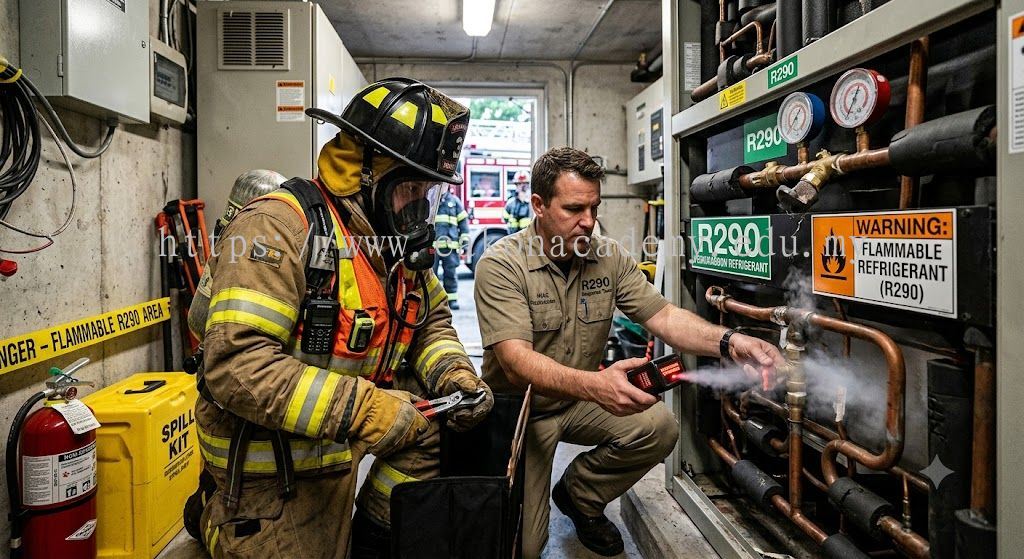
FLAMMABLE REFRIGERANT EMERGENCY HANDLING – SAFETY PROTOCOLS, INDUSTRIAL PRACTICES, AND HVAC BEST PRACTICES
Flammable refrigerant emergency handling is a critical subject in modern HVAC and refrigeration industries, especially with the increasing adoption of low-GWP refrigerants such as R290 (propane), R600a (isobutane), and other hydrocarbon-based cooling agents. As industries move toward more environmentally friendly alternatives, the importance of proper safety procedures, emergency response planning, and technician training becomes essential to prevent accidents, equipment damage, and workplace hazards. Understanding flammable refrigerant emergency handling not only improves operational safety but also strengthens compliance with international refrigeration safety standards and enhances technical competency within the HVAC workforce.
In industrial and commercial refrigeration systems, flammable refrigerants must be handled with strict adherence to safety protocols. These gases, while efficient and environmentally sustainable, are highly sensitive to ignition sources. Therefore, emergency handling procedures include immediate leak detection, rapid system shutdown, ventilation control, and elimination of all potential ignition sources such as electrical sparks, open flames, or static discharge. Technicians must be trained to recognize early warning signs of refrigerant leakage, including unusual odors, pressure drops, or system performance instability. Proper risk assessment and hazard identification are the first steps in preventing escalation into critical emergencies.
A key component of flammable refrigerant emergency handling is the use of specialized safety equipment. This includes gas leak detectors calibrated for hydrocarbon refrigerants, explosion-proof ventilation fans, fire extinguishers rated for chemical and gas fires, and personal protective equipment (PPE) such as anti-static gloves, goggles, and flame-resistant clothing. In addition, technicians should be familiar with emergency isolation valves and system shutdown controls to quickly contain the refrigerant within a controlled environment. Regular maintenance checks and system inspections are essential to minimize the risk of unexpected failures.
Training and education play a central role in improving emergency response capabilities. At institutions such as eakonacadem.edu.my, HVAC learners and professionals are equipped with industry-relevant knowledge on refrigerant safety, system design, and emergency protocols. Understanding how flammable refrigerants behave under pressure and temperature variations helps technicians make informed decisions during emergency situations. Simulation-based training, safety drills, and compliance with standards such as ISO and EN safety regulations further enhance preparedness.
Another critical aspect of emergency handling is evacuation planning and workplace safety coordination. In the event of a significant refrigerant leak, immediate evacuation procedures must be followed to ensure the safety of all personnel. Clear communication systems, emergency signage, and designated safety zones are essential in minimizing risk exposure. Fire response coordination with local emergency services may also be required in severe cases involving large-scale refrigeration systems or industrial installations.
From an SEO perspective, the topic of flammable refrigerant emergency handling is highly relevant for HVAC training centers, refrigeration service providers, and industrial safety consultants. By integrating this keyword into high-quality, informative content, websites like eakonacadem.edu.my can improve search engine visibility while also providing valuable technical knowledge to students, engineers, and industry professionals. This strengthens domain authority and positions the website as a trusted educational resource in the HVAC and refrigeration field.
In conclusion, flammable refrigerant emergency handling is not just a technical requirement but a fundamental safety discipline in modern refrigeration systems. Proper training, adherence to safety protocols, and continuous awareness are essential to preventing accidents and ensuring efficient system operation. As the industry continues to evolve toward sustainable refrigerants, mastering emergency handling procedures will remain a core competency for every HVAC technician and engineer.
More detail about EAKON ACADEMY SDN BHD Malaysia