
LOW GWP REFRIGERANT LEAK DETECTION MALAYSIA
Low GWP refrigerant leak detection in Malaysia is an increasingly important aspect of modern HVACR (Heating, Ventilation, Air Conditioning, and Refrigeration) practices under the supervision of environmental authorities such as the Department of Environment (DOE). Low Global Warming Potential (GWP) refrigerants, including R32, R290 (propane), R1234yf, and carbon dioxide (CO ), are designed to reduce environmental impact compared to traditional high-GWP refrigerants like HFCs and HCFCs. However, even though these refrigerants are more environmentally friendly, proper leak detection remains essential to ensure safety, efficiency, and compliance with Malaysian environmental regulations. Understanding low GWP refrigerant leak detection Malaysia is critical for HVACR technicians, engineers, contractors, and facility managers involved in system installation, maintenance, and servicing.
The primary objective of low GWP refrigerant leak detection is to ensure that refrigerant gases are contained within HVACR systems and do not escape into the environment. While low-GWP refrigerants significantly reduce climate impact, uncontrolled leaks can still affect system performance, energy efficiency, and in some cases, safety—especially for mildly flammable refrigerants such as R32 and R290. Therefore, regular leak detection is required during installation, commissioning, preventive maintenance, and repair activities to ensure system integrity and environmental compliance.
DOE Malaysia emphasizes the importance of proper leak detection procedures for all types of refrigerants, including low-GWP alternatives. Technicians are required to conduct systematic inspections of HVACR systems, focusing on critical components such as compressors, evaporators, condensers, valves, piping joints, and connection points. Early detection of leaks helps prevent refrigerant loss, reduces energy consumption, and minimizes the environmental footprint of HVAC systems. It also helps extend equipment lifespan and improve operational efficiency.
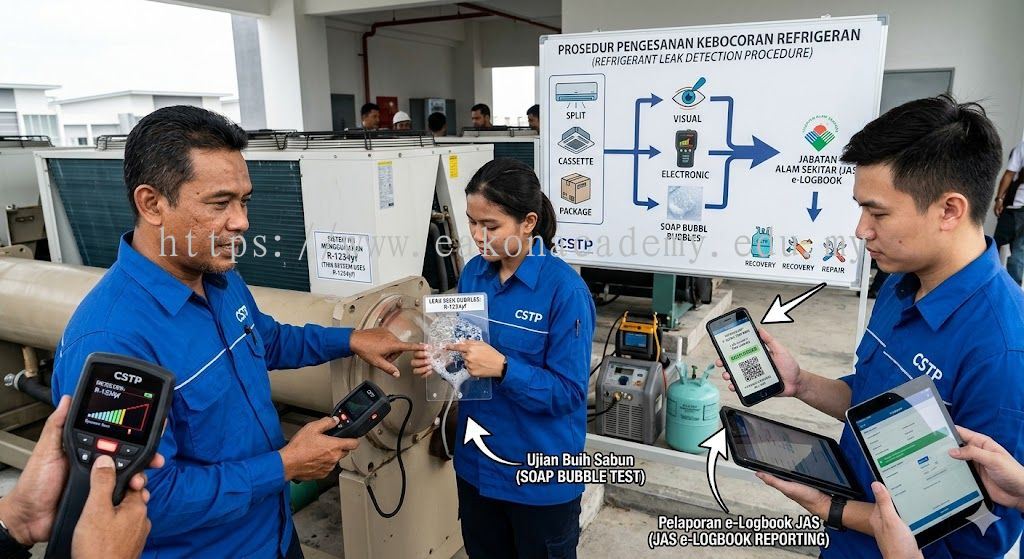
Low GWP refrigerant leak detection Malaysia practices involve a combination of advanced and traditional methods. Electronic leak detectors calibrated for specific refrigerants are widely used due to their high sensitivity and ability to detect even trace amounts of gas. Pressure testing using nitrogen is another standard method, allowing technicians to identify leaks by monitoring pressure stability within the system. Ultraviolet (UV) dye testing is also used to detect hidden leaks, especially in complex systems where visual inspection is not sufficient. Soap bubble testing remains a simple and effective method for confirming leak points at accessible locations.
As Malaysia aligns its HVACR industry with international agreements such as the Montreal Protocol and Kigali Amendment, the adoption of low-GWP refrigerants is becoming increasingly widespread. However, proper leak detection remains a key requirement to ensure safe and efficient system operation. This transition supports national environmental goals and encourages the use of sustainable cooling technologies across commercial, industrial, and residential sectors.
Training and certification are essential for ensuring proper implementation of low GWP refrigerant leak detection Malaysia standards. HVACR technicians must be trained in refrigerant properties, leak detection techniques, safety procedures, and environmental compliance requirements. Institutions such as Eakon Academy (eakonacadem.edu.my) provide structured HVACR training programs aligned with DOE standards and industry needs. These programs equip learners with hands-on experience and technical knowledge required to handle low-GWP refrigerants safely and effectively in real-world applications.
Proper documentation and maintenance records are also important under DOE regulations. Facilities must maintain detailed logs of leak detection activities, system inspections, repair actions, and refrigerant recovery processes. This ensures transparency, regulatory compliance, and continuous improvement in HVACR system performance.
In conclusion, low GWP refrigerant leak detection Malaysia is essential for promoting environmental sustainability, ensuring HVACR system safety, and achieving regulatory compliance. By adopting advanced detection methods, following DOE guidelines, using modern technologies, and investing in professional training through institutions like Eakon Academy (eakonacadem.edu.my), Malaysia’s HVACR industry can significantly reduce emissions and support a cleaner, greener, and more sustainable future.
More detail about EAKON ACADEMY SDN BHD Malaysia
