
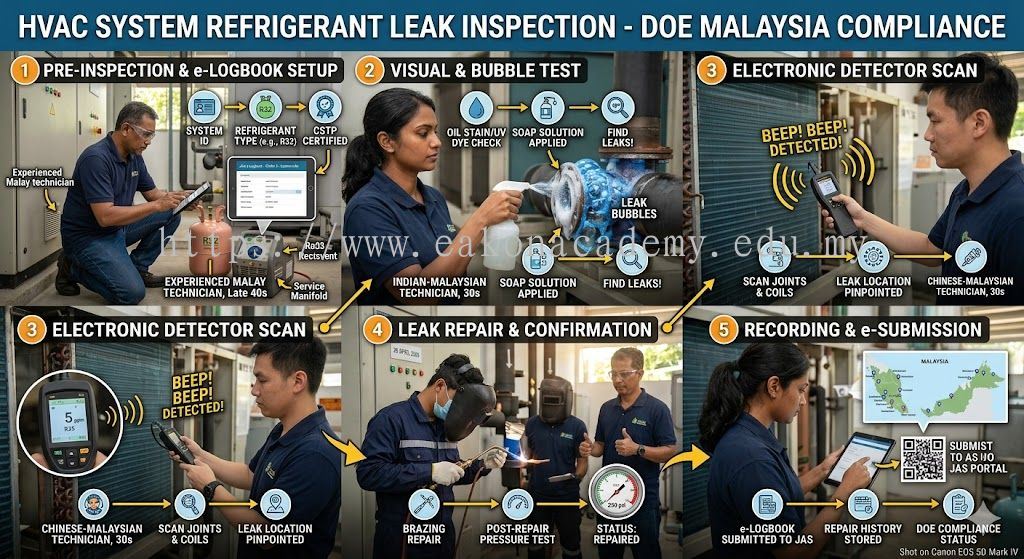
HVAC SYSTEM REFRIGERANT LEAK INSPECTION MALAYSIA DOE
HVAC system refrigerant leak inspection in Malaysia under DOE regulations is a critical environmental and technical requirement designed to ensure safe operation and sustainable management of Heating, Ventilation, Air Conditioning, and Refrigeration (HVACR) systems. Under the supervision of the Department of Environment (DOE), strict guidelines are enforced to reduce greenhouse gas emissions caused by refrigerant leaks from HVAC systems. Refrigerants such as hydrofluorocarbons (HFCs) and hydrochlorofluorocarbons (HCFCs) have high global warming potential (GWP), and even minor leaks can significantly contribute to climate change. Therefore, HVAC system refrigerant leak inspection Malaysia DOE procedures are essential for technicians, engineers, contractors, and facility managers responsible for maintaining system efficiency and environmental compliance.
The main objective of HVAC refrigerant leak inspection is to detect potential refrigerant losses early and prevent further environmental damage. Leak inspections are conducted at multiple stages, including system installation, routine maintenance, troubleshooting, and decommissioning. Technicians are required to carefully inspect all critical components of HVAC systems such as compressors, evaporators, condensers, valves, piping joints, and connection fittings. Early detection of leaks not only reduces environmental impact but also improves system performance, enhances energy efficiency, and reduces operational costs associated with refrigerant replacement and system downtime.
DOE Malaysia refrigerant leak inspection guidelines emphasize the use of standardized and reliable inspection methods to ensure accurate detection. Visual inspection is the first step, where technicians look for signs such as oil stains, corrosion, frost buildup, or physical damage that may indicate refrigerant leakage. This is followed by the use of electronic leak detectors, which are highly sensitive devices capable of detecting even small concentrations of refrigerant gas in the surrounding air. These tools provide quick and accurate results, making them essential for both routine maintenance and compliance inspections.
Pressure testing using nitrogen gas is another widely accepted method under HVAC system refrigerant leak inspection Malaysia DOE practices. In this method, the HVAC system is pressurized and monitored for pressure drops that indicate leaks. This technique is particularly useful during system installation and commissioning. Ultraviolet (UV) dye testing is also commonly used, where a fluorescent dye is added to the refrigerant system and detected using UV light equipment, allowing technicians to identify hidden or slow leaks. Additionally, soap bubble testing is a simple yet effective method used to confirm leak points by observing bubble formation at suspected areas.
Malaysia’s refrigerant leak inspection regulations are aligned with international environmental agreements such as the Montreal Protocol and Kigali Amendment, which aim to phase down high-GWP refrigerants and promote sustainable cooling technologies. As the HVACR industry transitions toward low-GWP refrigerants such as R32, R290 (propane), and carbon dioxide (CO ) systems, regular leak inspections remain essential to ensure safety, efficiency, and environmental compliance.
Training and certification are crucial for ensuring proper implementation of HVAC system refrigerant leak inspection Malaysia DOE standards. Skilled HVACR technicians must be trained in leak detection techniques, system diagnostics, refrigerant handling, and environmental compliance procedures. Institutions such as Eakon Academy (eakonacadem.edu.my) provide structured HVACR training programs aligned with DOE requirements and industry standards. These programs equip learners with both theoretical knowledge and practical skills necessary to perform accurate leak inspections and ensure compliance in real-world applications.
Proper documentation is also an important requirement under DOE regulations. Facilities must maintain detailed records of leak inspection activities, including inspection dates, detected leaks, repair actions, and refrigerant recovery data. This ensures transparency, supports regulatory audits, and promotes continuous improvement in HVAC system maintenance practices.
In conclusion, HVAC system refrigerant leak inspection Malaysia DOE is essential for environmental protection, regulatory compliance, and HVAC system performance. By implementing proper inspection procedures, using approved detection methods, following DOE guidelines, and investing in professional training through institutions like Eakon Academy (eakonacadem.edu.my), Malaysia’s HVACR industry can significantly reduce refrigerant emissions and support a cleaner, greener, and more sustainable future.
More detail about EAKON ACADEMY SDN BHD Malaysia
