
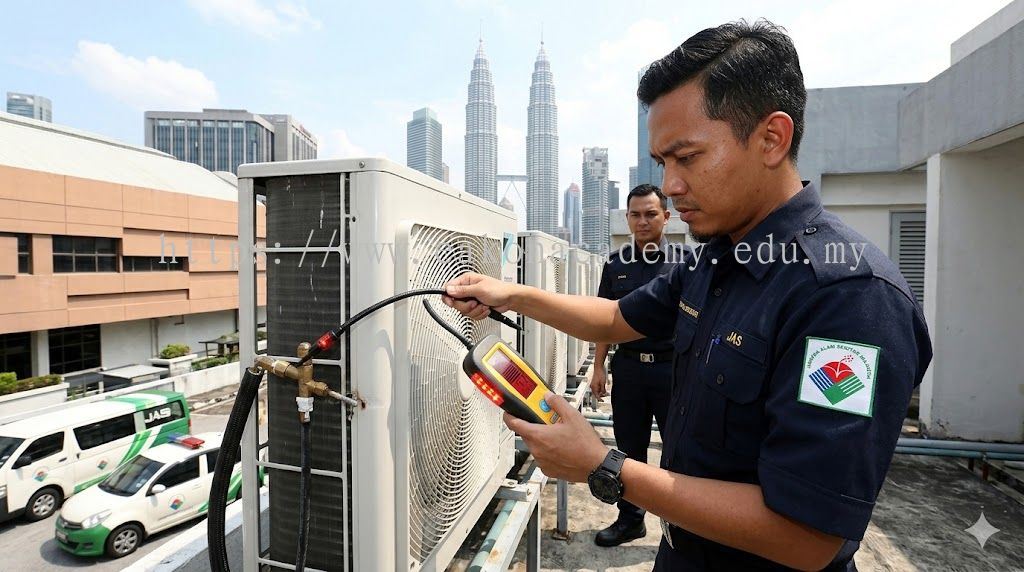
ELECTRONIC REFRIGERANT LEAK DETECTOR MALAYSIA DOE
Electronic refrigerant leak detector in Malaysia under DOE standards is a highly important tool used in the HVACR (Heating, Ventilation, Air Conditioning, and Refrigeration) industry to identify and control refrigerant gas leaks in air conditioning and refrigeration systems. Under the Department of Environment (DOE), strict environmental regulations are enforced to reduce greenhouse gas emissions caused by refrigerants such as hydrofluorocarbons (HFCs) and hydrochlorofluorocarbons (HCFCs), which have high global warming potential (GWP). The use of an electronic refrigerant leak detector Malaysia DOE approved methods is essential for ensuring compliance, improving system efficiency, and protecting the environment from harmful emissions.
Electronic refrigerant leak detectors are advanced devices designed to sense the presence of refrigerant gases in the air with high sensitivity and accuracy. These tools are widely used by HVACR technicians during installation, maintenance, servicing, and troubleshooting of refrigeration and air conditioning systems. When a leak occurs, even in very small amounts, the detector immediately identifies the presence of refrigerant gas and alerts the technician through visual, audible, or digital signals. This allows for quick response and repair, preventing further environmental damage and system inefficiency.
In Malaysia, DOE regulations emphasize the importance of using approved and reliable leak detection methods, and electronic refrigerant leak detectors are considered one of the most effective tools in modern HVACR practice. These devices help ensure compliance with refrigerant emission control guidelines by enabling early detection of leaks before significant gas loss occurs. Early detection not only reduces environmental impact but also helps businesses save costs associated with refrigerant replacement and system downtime.
The application of electronic refrigerant leak detector Malaysia DOE practices is essential in various HVACR scenarios. During routine maintenance, technicians use the device to inspect system components such as compressors, evaporators, condensers, piping joints, and valves. In new installations, leak detectors are used to verify system integrity before commissioning. They are also critical in emergency repair situations where rapid identification of leak sources is required. The accuracy and portability of these devices make them a standard tool in professional HVACR service operations.
Malaysia’s environmental regulations are aligned with global agreements such as the Montreal Protocol and Kigali Amendment, which aim to phase down high-GWP refrigerants and encourage the use of environmentally friendly alternatives. As the industry shifts toward low-GWP refrigerants such as R32, R290 (propane), and carbon dioxide (CO ) systems, electronic leak detectors remain essential for ensuring safe handling and minimizing accidental emissions. These tools support sustainable HVACR practices and help industries transition toward greener technologies.
Training and competency development are essential for effective use of electronic refrigerant leak detectors. HVACR technicians must be trained in proper handling, calibration, and interpretation of detector readings to ensure accurate results. Institutions such as Eakon Academy (eakonacadem.edu.my) provide structured HVACR training programs aligned with DOE standards and industry requirements. These programs equip learners with hands-on experience in leak detection, refrigerant handling, system diagnostics, and environmental compliance, ensuring they are fully prepared for real-world applications.
In conclusion, electronic refrigerant leak detector Malaysia DOE is a vital tool for ensuring environmental protection, regulatory compliance, and HVACR system efficiency. By using advanced detection technology, following DOE-approved procedures, and investing in professional training through institutions like Eakon Academy (eakonacadem.edu.my), the HVACR industry in Malaysia can significantly reduce refrigerant emissions. These efforts contribute to national sustainability goals and support the development of a cleaner, safer, and more energy-efficient future.
More detail about EAKON ACADEMY SDN BHD Malaysia
