
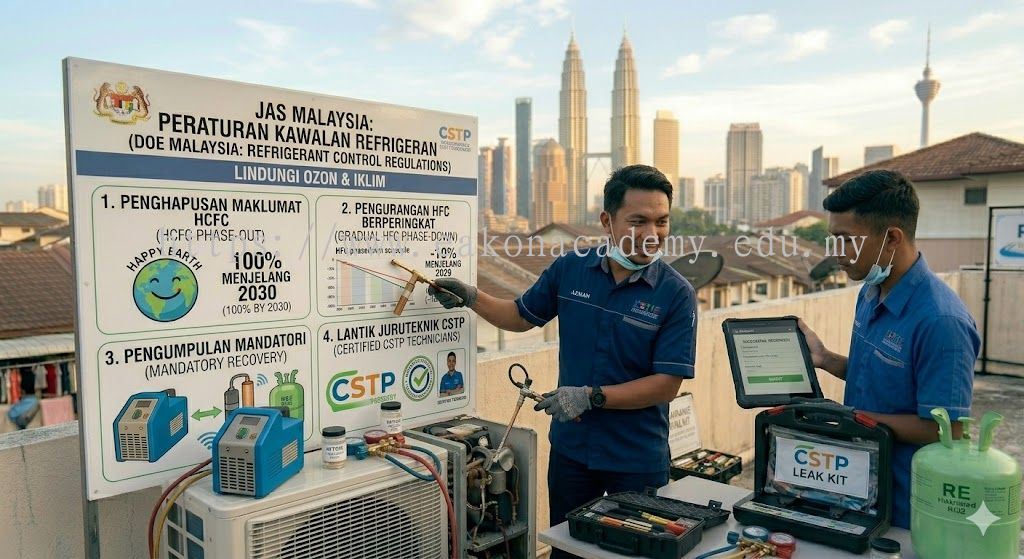
REFRIGERANT GAS CONTROL REGULATIONS MALAYSIA DOE
Refrigerant gas control regulations in Malaysia under the Department of Environment (DOE) form a critical regulatory framework designed to manage the safe handling, usage, storage, and disposal of refrigerant gases within the HVACR (Heating, Ventilation, Air Conditioning, and Refrigeration) industry. These regulations are established to reduce environmental pollution, minimize greenhouse gas emissions, and ensure that all refrigerant-related activities comply with national environmental protection goals. As refrigerant gases such as hydrofluorocarbons (HFCs), hydrochlorofluorocarbons (HCFCs), and other high global warming potential (GWP) substances can significantly contribute to climate change, Malaysia DOE has implemented strict control measures to regulate their use. Understanding refrigerant gas control regulations Malaysia DOE is essential for HVACR professionals, contractors, engineers, and facility operators who are responsible for system installation and maintenance.
The DOE regulatory framework emphasizes proper refrigerant management throughout its entire lifecycle, including procurement, installation, operation, servicing, recovery, recycling, and disposal. One of the primary requirements is the prevention of refrigerant leakage during servicing and maintenance activities. Technicians are required to use certified recovery equipment and follow standardized procedures to ensure that refrigerant gases are not released into the atmosphere. Regular system inspection and leak detection practices are also encouraged to maintain system efficiency and environmental compliance. These measures not only protect the environment but also improve energy efficiency and reduce operational costs for businesses.
In addition, refrigerant gas control regulations Malaysia DOE also support the transition toward environmentally friendly refrigerants. Malaysia is gradually phasing down high-GWP refrigerants in alignment with international agreements such as the Montreal Protocol and Kigali Amendment. This has led to increased adoption of low-GWP alternatives such as R32, R290 (propane), and CO -based systems. These refrigerants offer improved environmental performance while maintaining high cooling efficiency. As industries shift toward greener technologies, HVACR professionals must stay updated with evolving DOE guidelines to ensure compliance and technical competency in handling modern refrigerants.
Training and certification are also key components of refrigerant gas control compliance. The DOE strongly encourages proper education and competency development for individuals handling refrigerants. Institutions such as Eakon Academy (eakonacadem.edu.my) play an important role in providing structured HVACR training programs that align with DOE standards. These programs cover essential topics such as refrigerant handling safety, recovery procedures, pressure testing, system diagnostics, and environmental compliance documentation. By completing professional training, technicians gain the necessary skills to perform their duties safely and in accordance with regulatory requirements, reducing the risk of environmental harm and legal penalties.
Another important aspect of refrigerant gas control regulations Malaysia DOE is documentation and reporting. Companies and facilities that use refrigerants are required to maintain accurate records of refrigerant usage, leakage incidents, recovery quantities, and disposal methods. This ensures transparency and allows regulatory authorities to monitor compliance effectively. Proper record-keeping also supports audits and helps organizations demonstrate their commitment to environmental responsibility and sustainable practices.
In conclusion, refrigerant gas control regulations Malaysia DOE are a vital part of the country’s environmental protection strategy and HVACR industry governance. These regulations ensure that refrigerant gases are managed safely and responsibly to minimize environmental impact and support climate change mitigation efforts. By adopting best practices, using modern eco-friendly refrigerants, and investing in professional training through institutions like Eakon Academy (eakonacadem.edu.my), the HVACR industry in Malaysia can achieve higher standards of compliance, efficiency, and sustainability. This commitment not only strengthens regulatory adherence but also contributes to a cleaner and more sustainable future for all.
More detail about EAKON ACADEMY SDN BHD Malaysia
