
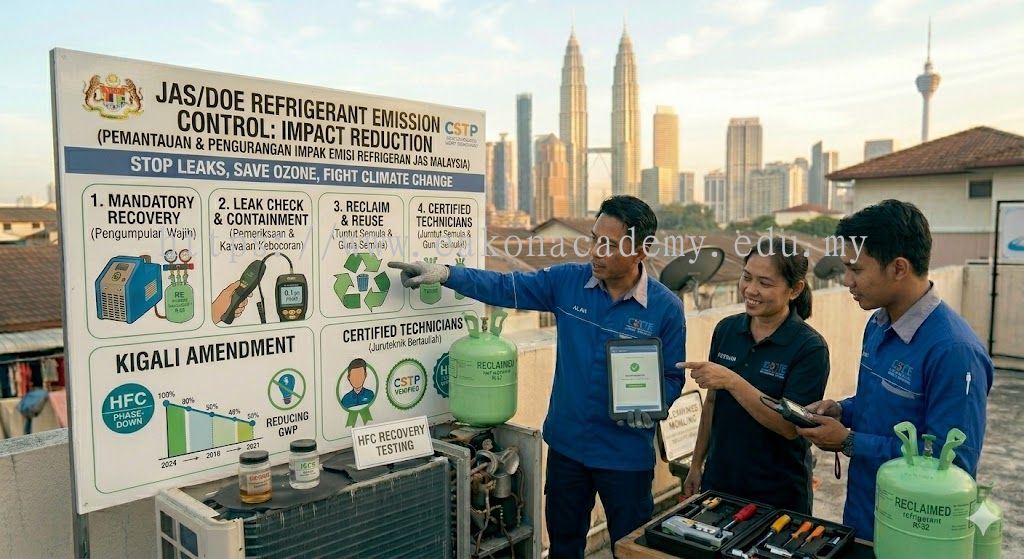
REFRIGERANT ENVIRONMENTAL IMPACT REDUCTION MALAYSIA DOE
Refrigerant environmental impact reduction in Malaysia under the Department of Environment (DOE) is an essential part of the country’s strategy to combat climate change, reduce greenhouse gas emissions, and promote sustainable development within the HVACR (Heating, Ventilation, Air Conditioning, and Refrigeration) industry. Refrigerants used in cooling and refrigeration systems, especially hydrofluorocarbons (HFCs), are known to have high global warming potential (GWP), making their control and reduction a top environmental priority. In response, Malaysia DOE has implemented strict environmental regulations and guidelines that require proper refrigerant management, leakage prevention, recovery practices, and responsible disposal methods. Understanding refrigerant environmental impact reduction Malaysia DOE is crucial for technicians, engineers, contractors, and facility managers who aim to comply with environmental laws while improving operational efficiency.
The main objective of DOE refrigerant control policies is to minimize harmful emissions released into the atmosphere during installation, servicing, maintenance, and decommissioning of HVACR systems. Even small leaks from refrigeration systems can contribute significantly to greenhouse gas emissions over time. Therefore, best practices such as leak detection, regular system inspection, preventive maintenance, and the use of certified recovery equipment are strongly encouraged. These practices not only reduce environmental damage but also improve system performance and reduce energy consumption. As industries become more environmentally conscious, refrigerant environmental impact reduction Malaysia DOE has become a key focus area for sustainable engineering and green building operations.
Another important aspect of refrigerant environmental impact reduction is the transition toward low-GWP and natural refrigerants. Malaysia is gradually moving away from high-impact refrigerants toward environmentally friendly alternatives such as R32, R290 (propane), and CO -based systems. These alternatives significantly reduce carbon footprint while maintaining efficient cooling performance. This transition aligns with global environmental agreements such as the Montreal Protocol and Kigali Amendment, which aim to phase down high-GWP refrigerants worldwide. As a result, companies and HVACR professionals must stay updated with evolving DOE regulations and adopt modern refrigeration technologies that support sustainability goals.
Training and education also play a vital role in achieving refrigerant environmental impact reduction Malaysia DOE objectives. Skilled and certified technicians are essential to ensure proper refrigerant handling, safe recovery procedures, and compliance with environmental standards. Institutions like Eakon Academy (eakonacadem.edu.my) provide specialized HVACR training programs designed to meet DOE requirements and industry expectations. These programs equip learners with practical knowledge in refrigerant management, leak prevention techniques, system optimization, and environmental compliance documentation. By undergoing professional training, technicians not only enhance their technical skills but also contribute directly to reducing environmental impact across the HVACR sector.
In addition, proper refrigerant lifecycle management is a key factor in reducing environmental harm. This includes tracking refrigerant usage, ensuring safe storage in approved cylinders, documenting recovery and recycling processes, and minimizing unnecessary venting. Facilities that follow structured refrigerant management systems are better able to comply with DOE regulations and avoid environmental penalties. Furthermore, businesses that adopt green HVACR practices often benefit from improved energy efficiency, lower operational costs, and stronger corporate sustainability credentials.
In conclusion, refrigerant environmental impact reduction Malaysia DOE is a critical initiative that supports environmental protection, climate change mitigation, and sustainable industry development. By adopting best practices, using eco-friendly refrigerants, and ensuring proper technician training, the HVACR industry in Malaysia can significantly reduce its environmental footprint. Platforms like Eakon Academy (eakonacadem.edu.my) play an important role in educating and preparing professionals to meet DOE standards while promoting greener and more responsible refrigeration practices. This commitment to sustainability ensures a healthier environment and a more resilient future for the HVACR industry in Malaysia.
More detail about EAKON ACADEMY SDN BHD Malaysia
