
HYDROCARBON REFRIGERANT VENTING SAFETY MALAYSIA
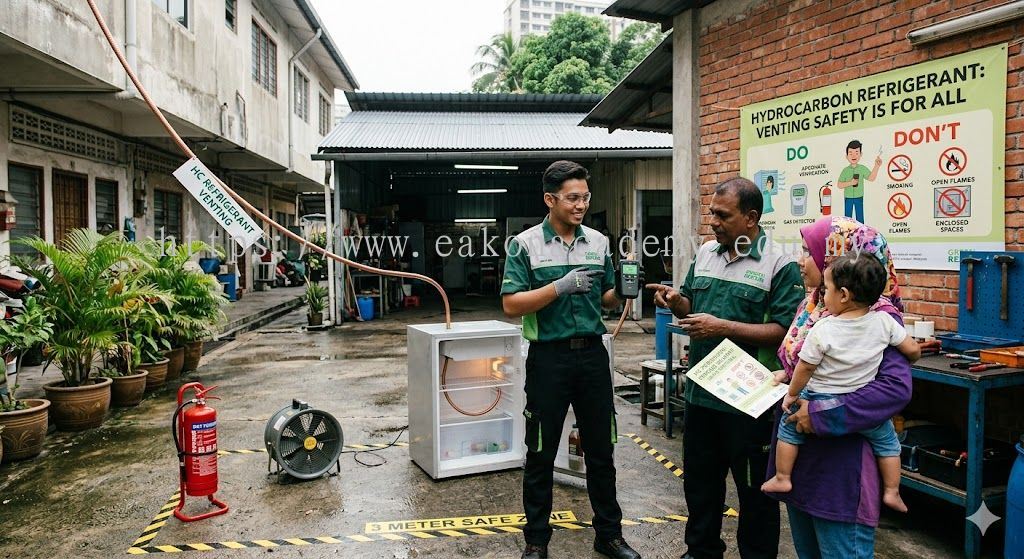
Hydrocarbon refrigerant venting safety Malaysia refers to the environmental, technical, and occupational safety guidelines that regulate the handling and control of hydrocarbon-based refrigerants within HVACR (Heating, Ventilation, Air Conditioning, and Refrigeration) systems in Malaysia. These refrigerants, such as propane (R-290) and isobutane (R-600a), are widely used as low Global Warming Potential (GWP) alternatives due to their high energy efficiency and minimal impact on climate change. However, because hydrocarbons are flammable substances, strict safety measures and environmental controls are required to prevent accidents, leaks, and hazardous situations during installation, servicing, maintenance, and decommissioning. These safety practices are aligned with Malaysia’s Department of Environment (DOE) guidelines and international environmental and safety standards.
In Malaysia, hydrocarbon refrigerant venting safety guidelines are closely tied to the broader principle of no refrigerant venting under DOE environmental regulations. Even though hydrocarbon refrigerants are environmentally friendly in terms of ozone depletion and global warming impact, intentional venting is still discouraged due to safety risks such as fire and explosion hazards. Therefore, HVACR technicians must ensure that all hydrocarbon refrigerants are properly recovered, contained, and handled using approved procedures and certified equipment. Proper ventilation, leak prevention, and controlled working environments are essential to ensure safe operations at all times.
A key aspect of hydrocarbon refrigerant venting safety Malaysia is the requirement for specialized handling procedures and equipment. Technicians must use spark-free tools, explosion-proof recovery machines, and proper gas detection systems when working with hydrocarbon refrigerants. Work areas must be well-ventilated to prevent gas accumulation, and strict safety protocols must be followed during charging and recovery operations. System isolation, pressure control, and leak testing are critical steps to ensure that no refrigerant escapes into the environment or creates a safety hazard.
Training and certification are essential components of compliance with hydrocarbon refrigerant venting safety standards in Malaysia. HVACR technicians must be properly trained to understand the flammability risks, environmental benefits, and correct handling procedures of hydrocarbon refrigerants. Without proper training, improper handling can result in fire hazards, refrigerant leaks, environmental risks, and legal consequences. Institutions such as Eakon Academy provide structured HVACR training programs that focus on DOE safety guidelines, hydrocarbon refrigerant handling, and practical technical skills. These programs ensure that technicians are fully prepared to work safely and efficiently with alternative refrigerants.
Hydrocarbon refrigerant venting safety Malaysia also contributes to energy efficiency and cost savings in HVACR systems. Hydrocarbon refrigerants are known for their excellent thermodynamic properties, allowing systems to operate more efficiently and consume less energy. Proper handling and maintenance ensure optimal system performance, reduced refrigerant loss, and lower operational costs. By following safety guidelines, businesses can improve system reliability, extend equipment lifespan, and minimize maintenance expenses while maintaining environmental compliance.
In addition to safety and economic benefits, hydrocarbon refrigerant venting safety Malaysia supports the country’s broader environmental sustainability goals. Hydrocarbon refrigerants are part of the global transition toward low-GWP alternatives that reduce climate impact. However, their safe handling is essential to prevent accidents and ensure responsible adoption. Companies that comply with DOE safety standards demonstrate strong environmental responsibility, enhance their sustainability profile, and align with global best practices in HVACR technology. Compliance also reduces regulatory risks and ensures smoother approval processes for HVACR installations and operations.
In conclusion, hydrocarbon refrigerant venting safety Malaysia is essential for ensuring safe, efficient, and environmentally responsible HVACR practices. By following DOE regulations, implementing proper safety procedures, and participating in professional training programs offered by institutions such as Eakon Academy, HVACR professionals can strengthen their technical expertise and contribute to a safer, more efficient, and sustainable future for Malaysia.
More detail about EAKON ACADEMY SDN BHD Malaysia
