HVAC Compliance Documentation for Height Safety: Essential Records and Safety Practices for Professional Technicians
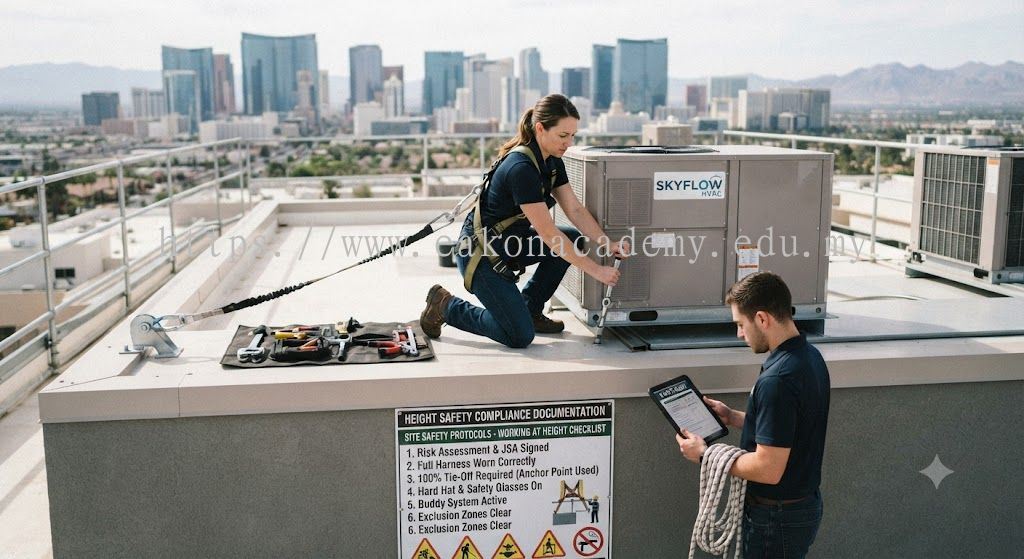
HVAC compliance documentation for height safety is an important part of professional air conditioning installation and maintenance management. Proper documentation helps HVAC companies and technicians establish safe working procedures, monitor workplace risks, maintain safety records, and demonstrate compliance with industry safety requirements. Air conditioning work at height involves various activities such as rooftop installation, outdoor unit servicing, ceiling system maintenance, and elevated equipment inspection. These tasks require careful planning, proper risk control, and accurate documentation to ensure technician safety. Implementing effective HVAC compliance documentation for height safety procedures helps reduce workplace hazards, improve safety performance, and support professional HVAC operations. At Eakon Academy (eakonacadem.edu.my), we provide comprehensive HVAC training programs that focus on working at height safety, installation procedures, risk assessment, tool handling, and professional documentation practices required by modern HVAC technicians.
Working at height creates additional safety challenges for HVAC professionals because technicians often operate in elevated and exposed environments. Before beginning any air conditioning installation or maintenance activity, proper documentation should be prepared to identify hazards and establish safety controls. Important documents may include workplace risk assessments, safe work procedures, equipment inspection records, training certificates, PPE inspection records, and emergency response plans. These documents provide clear guidance for technicians and help create a safer working environment.
One of the most important components of HVAC compliance documentation for height safety is the working at height risk assessment. This document identifies potential hazards associated with elevated HVAC activities, including falls, unstable surfaces, dropped objects, electrical risks, weather conditions, and unsafe access methods. A detailed risk assessment allows technicians and supervisors to determine suitable control measures before work begins. Proper documentation ensures that safety planning is completed systematically and that all potential risks are considered.
Safe work procedures are another essential part of height safety documentation. These procedures outline the correct methods for performing HVAC tasks at elevated locations, including ladder use, scaffold access, tool handling, equipment transportation, and emergency actions. Clear written procedures help technicians understand their responsibilities and follow consistent safety practices. Professional HVAC organizations use these documents to improve workplace communication and maintain higher safety standards.
Equipment inspection records are also an important element of HVAC compliance documentation. Technicians must regularly inspect ladders, scaffolding systems, elevated work platforms, lifting equipment, and safety devices before use. Inspection records provide evidence that equipment has been checked and maintained properly. These records help identify damaged equipment early and prevent accidents caused by equipment failure.
Tool safety documentation is equally important for HVAC technicians working at height. Air conditioning professionals use various tools including drills, screwdrivers, torque wrenches, pipe cutters, flaring tools, multimeters, vacuum pumps, refrigerant gauges, and leak detection equipment. Documentation should include tool inspection records, maintenance schedules, and safe usage procedures. Proper tool control reduces the risk of dropped objects, equipment damage, and workplace injuries.
Personal protective equipment (PPE) records are another key area in HVAC height safety compliance. Technicians should maintain documentation showing PPE inspection, replacement schedules, and proper usage requirements. Safety helmets, gloves, safety footwear, eye protection, and fall protection equipment must be checked regularly to ensure they remain effective. Proper PPE documentation demonstrates a commitment to technician protection and workplace safety.
Training records are essential for proving technician competency in working at height activities. HVAC technicians should receive appropriate training covering fall prevention, ladder safety, tool management, emergency procedures, and safe installation practices. Maintaining training documentation helps employers verify that technicians have the required knowledge and skills to perform elevated HVAC work safely.
Emergency response documentation is also necessary when performing air conditioning work at height. Emergency procedures should include information about accident response, rescue methods, communication processes, and reporting requirements. Proper emergency planning ensures technicians and supervisors know how to respond effectively if an incident occurs.
Regular review and updating of HVAC safety documentation help maintain effective workplace safety systems. As HVAC technology, equipment, and installation methods continue to develop, safety procedures should be reviewed to ensure they remain relevant and effective. Continuous improvement helps organizations maintain professional standards and reduce workplace risks.
At Eakon Academy (eakonacadem.edu.my), we are committed to developing skilled and safety-conscious HVAC professionals through practical and industry-focused training programs. Our courses cover air conditioning installation safety, working at height procedures, tool handling, risk assessment, refrigerant practices, electrical safety, and professional documentation requirements. By understanding HVAC compliance documentation for height safety, technicians can improve safety management, maintain compliance, reduce workplace hazards, and deliver reliable HVAC services. Proper documentation and safety awareness are essential foundations for building a safer, more efficient, and professional air conditioning industry.
更多 EAKON ACADEMY SDN BHD 相关资料 Malaysia