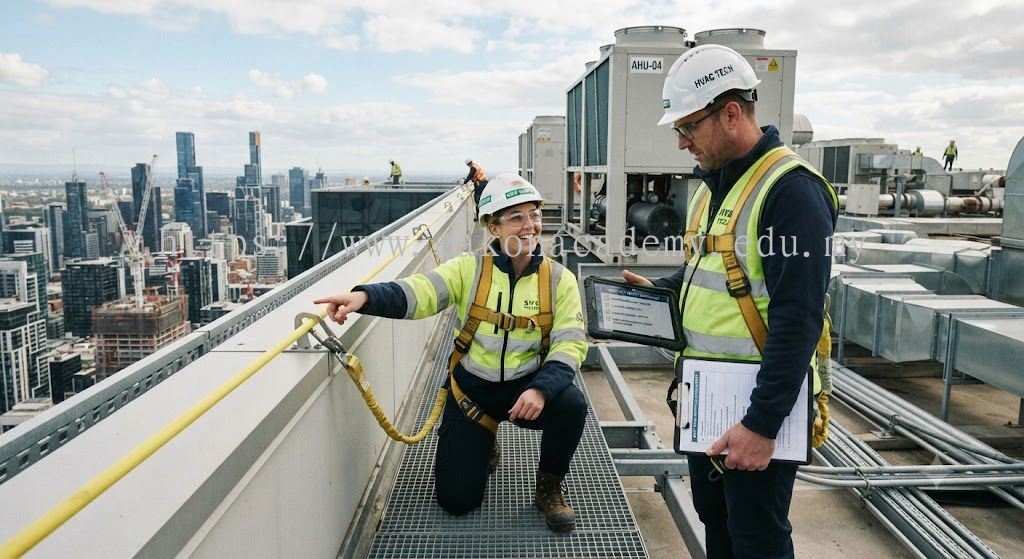
Aircon Technician Rooftop Safety Procedures: Essential Safety Guidelines for HVAC Rooftop Work
Aircon technician rooftop safety procedures are important guidelines that help HVAC professionals perform installation, maintenance, and repair activities safely when working on rooftop areas. Rooftop air conditioning work is a common requirement in commercial buildings, industrial facilities, and large residential projects where technicians need to access outdoor condenser units, cooling systems, refrigerant piping, and mechanical equipment located at elevated locations. Without proper rooftop safety knowledge and effective working procedures, technicians may face serious hazards such as falls, slips, electrical risks, falling objects, and unsafe working conditions. Eakon Academy provides professional HVAC training programs that help develop skilled technicians with strong technical knowledge and workplace safety awareness.
Working on rooftops requires careful planning, hazard identification, and proper preparation before starting any HVAC activity. Aircon technician rooftop safety procedures begin with conducting a thorough risk assessment to identify possible dangers such as unstable surfaces, roof edges, weak structures, weather conditions, restricted access areas, and nearby electrical equipment. Understanding these hazards allows technicians to apply suitable safety controls and select the correct protective equipment. Proper preparation helps reduce workplace accidents and ensures air conditioning installation and maintenance tasks are completed safely and efficiently.
One of the most important aspects of rooftop safety for aircon technicians is maintaining safe access and movement across rooftop areas. Technicians should use approved access routes, avoid unsafe surfaces, maintain awareness of roof conditions, and follow designated working areas. Roof inspections should be performed before beginning work to identify potential hazards such as slippery surfaces, loose materials, or damaged structures. Proper communication between team members is also essential when multiple technicians are working on rooftop HVAC projects.
Personal protective equipment (PPE) is a critical component of aircon technician rooftop safety procedures. Safety helmets, non-slip footwear, gloves, safety harnesses, lanyards, and fall protection systems help provide protection when working near roof edges or elevated areas. Technicians must understand how to inspect and correctly use their safety equipment before starting work. Proper training ensures that HVAC professionals can apply effective fall prevention methods and respond appropriately to different rooftop working conditions.
Air conditioning technicians working on rooftops often handle heavy equipment, tools, refrigerant systems, copper piping, and electrical components. Proper equipment handling is essential to prevent injuries and avoid damage to HVAC systems. Tools and materials should be secured properly to prevent them from falling and creating hazards for people below. Maintaining a clean and organized rooftop workspace helps improve efficiency while reducing the possibility of accidents during installation and maintenance activities.
Aircon technician rooftop safety procedures are especially important when servicing commercial HVAC systems, rooftop units, VRV/VRF systems, and industrial cooling equipment. These projects may involve complex mechanical systems, higher working areas, and challenging environmental conditions. Technicians must understand emergency procedures, safe lifting methods, equipment inspection requirements, and effective teamwork to complete rooftop HVAC tasks successfully. Professional training provides technicians with the confidence and knowledge needed to manage these challenges safely.
For HVAC companies, implementing proper rooftop safety procedures helps reduce workplace risks, improve technician performance, and maintain professional service standards. A strong safety culture protects workers, increases customer confidence, and supports compliance with workplace safety expectations. Trained aircon technicians are better prepared to perform rooftop installation and maintenance tasks while minimizing hazards and improving overall productivity.
Eakon Academy is committed to providing quality HVAC training that combines technical expertise with essential safety practices. Learning aircon technician rooftop safety procedures enables participants to develop important skills in hazard assessment, fall prevention, safe equipment handling, and professional rooftop work practices. These capabilities help technicians meet industry requirements and deliver reliable HVAC services in various working environments.
By following proper aircon technician rooftop safety procedures, HVAC professionals can protect themselves, improve workplace efficiency, and create safer working conditions. Rooftop safety training is an important foundation for every air conditioning technician who wants to enhance their technical skills, reduce workplace hazards, and build a successful career in the HVAC industry.
更多 EAKON ACADEMY SDN BHD 相关资料 Malaysia