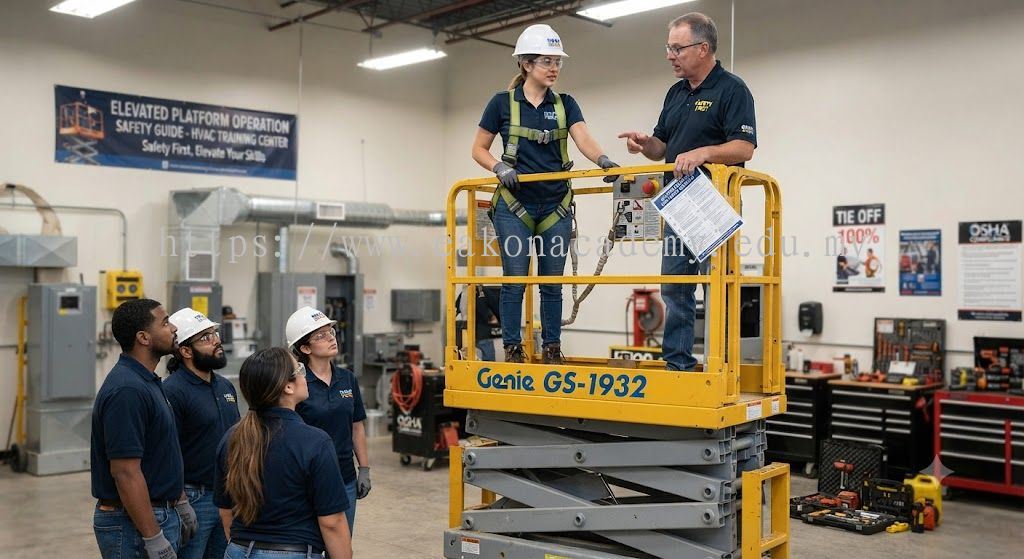
HVAC Elevated Platform Operation Safety Guide: Essential Practices for Safe Air Conditioning Work at Height
The modern HVAC industry requires technicians to perform installation, maintenance, troubleshooting, and repair activities in increasingly complex environments. Many air conditioning systems are installed at elevated locations such as rooftops, high ceilings, commercial buildings, factories, warehouses, shopping centres, hospitals, and industrial facilities. To access these areas safely, HVAC professionals often use Elevated Work Platforms (EWPs) such as scissor lifts, boom lifts, and aerial platforms. However, operating these machines requires proper knowledge, technical skills, and safety awareness. An effective HVAC elevated platform operation safety guide helps technicians understand safe operating procedures, identify potential hazards, and apply best practices when working at height. At Eakon Academy (eakonacadem.edu.my), we provide professional HVAC safety training designed to develop competent technicians who can perform air conditioning installation and maintenance tasks safely, efficiently, and according to industry standards throughout Malaysia.
Elevated Work Platforms (EWPs) are essential tools for many HVAC applications because they provide stable access to equipment that cannot be reached safely using traditional methods. HVAC technicians commonly use elevated platforms when installing rooftop air conditioning units, servicing commercial chillers, maintaining VRF and VRV systems, repairing ductwork, inspecting ventilation systems, and performing preventive maintenance on large HVAC installations. While these machines improve productivity and provide better working conditions, incorrect operation can create serious risks including falls, equipment instability, collisions, electrical hazards, and falling objects. Following proper HVAC elevated platform operation safety procedures helps reduce these risks while ensuring technicians can complete their tasks with confidence.
The first step in safe elevated platform operation is conducting a detailed workplace assessment before starting work. HVAC technicians should inspect the work environment to identify potential hazards such as uneven surfaces, unstable ground conditions, overhead power lines, structural obstacles, restricted spaces, nearby machinery, vehicle movement, pedestrian traffic, and changing weather conditions. A proper risk assessment allows technicians to select the correct type of elevated platform, plan safe access routes, establish exclusion zones, and implement appropriate safety controls. Careful preparation before operation significantly reduces workplace accidents and improves overall project efficiency.
Equipment inspection is a critical part of every HVAC elevated platform operation safety guide. Before using an elevated work platform, technicians must perform a thorough pre-operation inspection to ensure the machine is safe and functioning properly. Inspection points include hydraulic systems, tyres, batteries, platform controls, emergency stop buttons, guardrails, warning alarms, stabilizers, brakes, emergency lowering mechanisms, and structural components. Any signs of damage or malfunction must be reported immediately, and the equipment should not be operated until it has been repaired and approved for use. Regular inspection procedures help prevent unexpected equipment failures during elevated HVAC work.
Operator training and competency are essential requirements for safe platform operation. HVAC technicians must understand the correct methods for starting, moving, positioning, raising, and lowering elevated platforms. Professional training teaches operators about equipment limitations, load capacity, safe travel methods, emergency procedures, and manufacturer operating instructions. Practical hands-on training allows technicians to gain experience operating different types of EWPs while developing confidence and awareness of potential workplace hazards. A properly trained operator can make better decisions and respond effectively to changing conditions during HVAC installation and maintenance activities.
Personal Protective Equipment (PPE) is another important factor in elevated platform safety. HVAC technicians should wear appropriate safety helmets, gloves, safety footwear, eye protection, and high-visibility clothing when operating elevated platforms. Depending on equipment requirements and workplace procedures, operators may also need to use full-body safety harnesses and approved fall protection systems. Proper inspection and correct use of PPE provide additional protection against falls, impacts, and other hazards while working at height.
Safe load management and platform stability are key principles covered in elevated platform operation training. HVAC technicians must understand the maximum load capacity of the equipment and avoid carrying excessive tools, refrigerant cylinders, spare parts, or installation materials beyond safe limits. Materials should be arranged properly and secured to prevent movement or falling objects. Operators must also ensure the platform is positioned on suitable surfaces and follow manufacturer guidelines regarding stabilizers and operating conditions. Maintaining stability reduces the risk of tip-over accidents and improves overall safety during elevated work.
Environmental awareness is also essential when operating elevated platforms for HVAC activities. Outdoor installations and maintenance work may expose technicians to strong winds, rain, lightning, extreme heat, and poor visibility. A professional HVAC elevated platform operation safety guide emphasizes the importance of monitoring weather conditions and stopping work whenever conditions become unsafe. Protecting workers from environmental hazards helps prevent accidents and ensures equipment remains in good working condition.
Effective communication between operators and ground personnel is another important safety practice. HVAC projects often involve multiple teams, including electricians, engineers, contractors, supervisors, and facility management staff. Clear communication helps coordinate platform movement, maintain safe working zones, prevent collisions, and support emergency response. Teamwork and awareness among all workers contribute to a safer and more organized work environment.
Emergency preparedness is a vital part of elevated platform operation safety. HVAC technicians should understand emergency lowering procedures, rescue plans, equipment shutdown methods, and communication protocols before beginning work. Being prepared for unexpected situations such as equipment malfunction, power failure, or medical emergencies enables teams to respond quickly and reduce the impact of incidents.
Regular maintenance of elevated work platforms is also necessary to ensure safe and reliable operation. Scheduled servicing, hydraulic system checks, electrical inspections, battery maintenance, brake testing, and replacement of worn components help maintain equipment performance. Well-maintained EWPs reduce downtime, improve reliability, and provide safer working conditions for HVAC technicians.
At Eakon Academy (eakonacadem.edu.my), we are committed to providing high-quality HVAC technical education and workplace safety training that prepares technicians for real-world industry requirements. Our HVAC elevated platform operation safety guide training combines theoretical knowledge with practical hands-on exercises covering hazard identification, equipment inspection, safe operation techniques, emergency response, and workplace safety procedures. By completing professional elevated platform training, HVAC technicians can improve their technical capabilities, strengthen workplace safety practices, enhance career opportunities, and deliver reliable air conditioning services across residential, commercial, and industrial sectors in Malaysia. Safe elevated platform operation is not only a requirement for compliance but also a key factor in achieving professional excellence within the HVAC industry.
更多 EAKON ACADEMY SDN BHD 相关资料 Malaysia