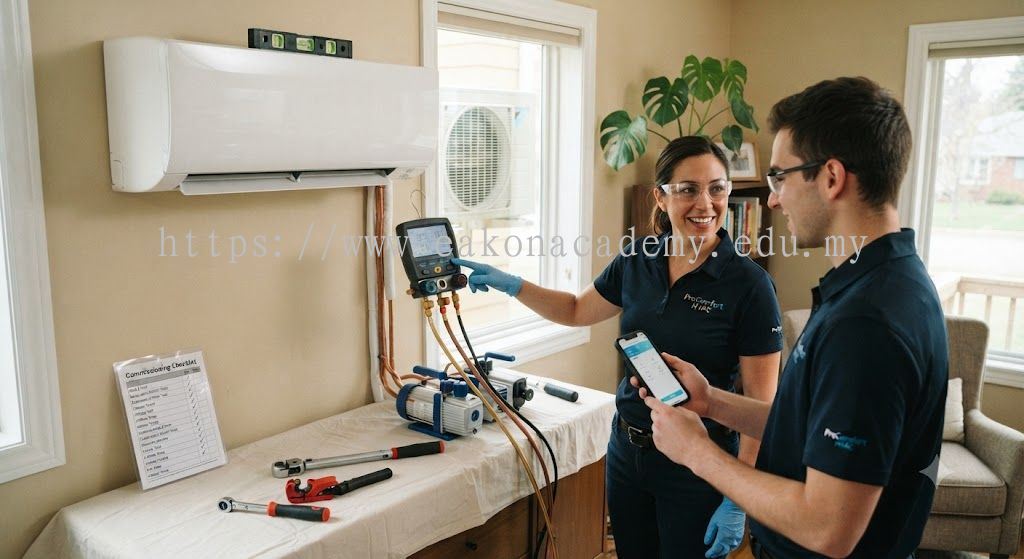
Air Conditioning Commissioning Best Practices for Professional HVAC System Testing and Performance Optimization
Air conditioning commissioning best practices are essential procedures that ensure HVAC systems are installed correctly, tested accurately, and operating according to design requirements. Professional commissioning helps verify system performance, improve energy efficiency, enhance indoor comfort, and reduce potential maintenance issues. A properly commissioned air conditioning system provides reliable cooling performance, longer equipment lifespan, and improved operational efficiency. Eakon Academy provides professional HVAC training programs that focus on developing technical knowledge and practical skills in air conditioning commissioning best practices for technicians, engineers, and industry professionals.
Air conditioning commissioning is a critical stage after installation, repair, or system upgrades. It involves a series of inspections, measurements, adjustments, and performance tests to confirm that all components function together effectively. Without proper commissioning, even a high-quality air conditioning system may experience problems such as poor cooling performance, excessive energy consumption, unstable operation, and frequent breakdowns. Professional HVAC training helps participants understand the importance of systematic commissioning procedures and quality control methods.
One of the key elements of air conditioning commissioning best practices is conducting a complete system inspection before operation. Technicians must verify equipment installation, refrigerant piping connections, electrical wiring, drainage systems, airflow components, and control settings. A detailed inspection ensures that installation work meets manufacturer specifications and industry standards. Identifying installation issues during commissioning helps prevent future operational problems and improves overall system reliability.
Testing and measuring system performance are important parts of professional air conditioning commissioning. HVAC technicians must understand how to evaluate operating parameters such as refrigerant pressure, temperature difference, airflow volume, electrical readings, and equipment performance. Accurate measurements allow technicians to determine whether the system is operating within the required conditions. Through hands-on HVAC training, participants learn how to use professional testing instruments and interpret performance data effectively.
Refrigerant system verification is another important aspect of commissioning best practices. Technicians should confirm that refrigerant levels, pressure readings, and system conditions are suitable for efficient operation. Incorrect refrigerant charging or poor system evacuation can affect cooling capacity and increase energy usage. Proper commissioning procedures help ensure that refrigerant systems are clean, balanced, and operating efficiently after installation.
Airflow testing and adjustment are also essential during air conditioning commissioning. Correct airflow distribution ensures that conditioned air reaches the intended areas while maintaining comfort and efficiency. Technicians must inspect air filters, fan operation, duct conditions, and airflow settings to achieve optimal performance. Proper airflow management reduces unnecessary strain on the system and supports better indoor environmental quality.
Electrical and control system checks are additional components of effective commissioning. HVAC professionals must verify electrical connections, operating controls, safety devices, and system settings to ensure safe and stable operation. Modern air conditioning systems often include advanced control technologies, making proper commissioning knowledge increasingly important for today’s technicians.
Documentation is also a valuable part of air conditioning commissioning best practices. Recording test results, system settings, inspection findings, and maintenance recommendations provides useful information for future servicing and system management. Professional documentation improves communication between technicians, building owners, and facility managers while supporting long-term equipment performance.
Learning air conditioning commissioning best practices is highly beneficial for individuals pursuing careers in HVAC installation, maintenance, and system management. Skilled commissioning technicians help ensure that cooling systems operate efficiently, safely, and according to industry expectations. Proper commissioning reduces operating costs, improves customer satisfaction, and supports sustainable energy management.
Eakon Academy offers HVAC training courses designed to enhance technical competency through practical learning and industry-focused instruction. By mastering air conditioning commissioning best practices, participants can develop advanced troubleshooting abilities, improve system evaluation skills, and prepare themselves for professional opportunities in the HVAC industry. Comprehensive commissioning knowledge enables technicians to deliver reliable, energy-efficient, and high-performance air conditioning solutions for residential, commercial, and industrial applications.
更多 EAKON ACADEMY SDN BHD 相关资料 Malaysia