
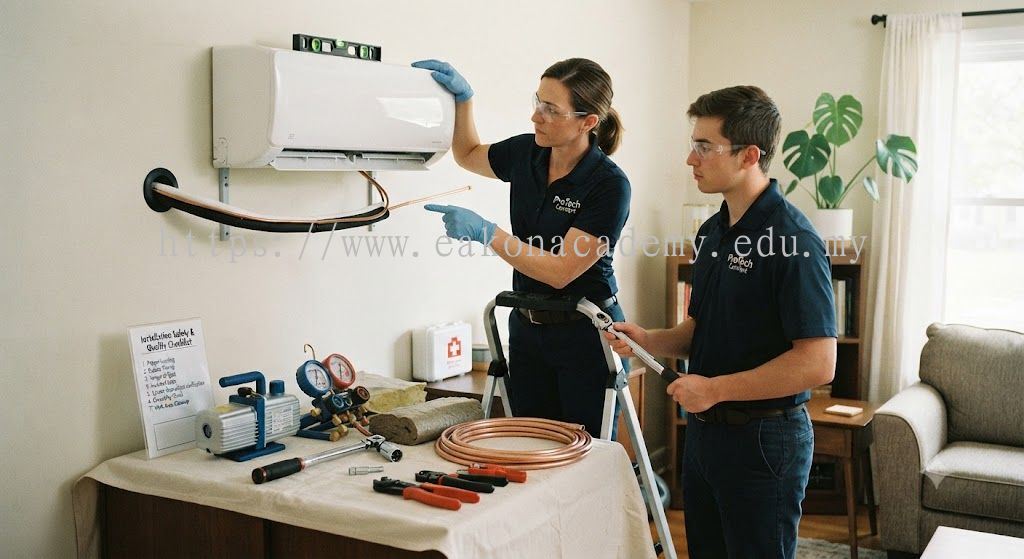
Air Conditioner Installation Safety and Quality Practices for Professional HVAC Training and Industry Excellence
Air conditioner installation safety and quality practices are essential elements in ensuring reliable, efficient, and safe operation of modern cooling systems. Professional air conditioning installation requires more than simply mounting indoor and outdoor units; it involves proper planning, technical knowledge, safety procedures, accurate workmanship, and quality control at every stage of the installation process. By following correct installation practices, HVAC technicians can improve system performance, reduce equipment failures, prevent safety risks, and deliver long-term value to customers. Eakon Academy provides professional HVAC training programs designed to equip learners with the skills and knowledge needed to apply air conditioner installation safety and quality practices in real working environments.
Safety is one of the most important aspects of professional air conditioner installation. HVAC technicians must understand workplace safety procedures, proper tool handling, electrical safety requirements, and refrigerant handling precautions before beginning any installation task. Working with electrical components, pressurized refrigerant systems, and heavy equipment requires careful attention to safety standards to prevent accidents and equipment damage. Proper training helps technicians develop responsible work practices while maintaining a safe installation environment.
Quality air conditioner installation begins with detailed preparation and accurate system assessment. Technicians should evaluate installation locations, confirm equipment specifications, inspect components, and prepare suitable tools before starting work. Proper planning reduces installation mistakes and ensures that the air conditioning system operates according to manufacturer recommendations. Following quality installation procedures helps prevent common problems such as poor cooling performance, excessive energy consumption, unusual noise, and frequent system breakdowns.
Correct refrigerant piping installation is a key part of maintaining air conditioner installation safety and quality practices. HVAC technicians must apply proper techniques when handling copper pipes, including accurate cutting, cleaning, bending, flaring, brazing, and insulation procedures. Poor piping workmanship can result in refrigerant leakage, moisture contamination, and reduced system efficiency. Professional HVAC training provides practical knowledge on refrigerant piping methods, leak testing procedures, vacuum processes, and system preparation to ensure dependable air conditioning performance.
Electrical safety and quality control are also critical during air conditioner installation. Technicians must verify electrical connections, power requirements, circuit protection, and grounding systems to ensure safe operation. Incorrect wiring or improper electrical installation may cause equipment failure, safety hazards, or reduced system lifespan. By following professional electrical installation guidelines, HVAC technicians can improve system reliability and protect both equipment and users.
Another important element of quality installation is proper testing and commissioning after installation completion. Technicians should perform system inspections, refrigerant pressure checks, airflow testing, temperature measurement, and operational verification to confirm that the air conditioner functions correctly. These quality control procedures help identify installation issues early and ensure that the system achieves optimal cooling efficiency. A properly commissioned air conditioning system provides better comfort, improved energy savings, and fewer future maintenance problems.
Learning air conditioner installation safety and quality practices is valuable for anyone pursuing a career in HVAC installation, servicing, and maintenance. Skilled technicians who understand professional installation standards can provide better services, improve customer satisfaction, and meet the growing demand for qualified HVAC professionals. Quality workmanship also supports sustainable energy use by ensuring that air conditioning systems operate efficiently throughout their service life.
Eakon Academy offers comprehensive HVAC training designed to develop practical abilities, technical understanding, and professional confidence among participants. Through structured learning and hands-on experience, students can master air conditioner installation safety and quality practices required in today’s HVAC industry. Developing strong installation skills enables technicians to deliver safe, efficient, and reliable air conditioning solutions for residential, commercial, and industrial applications.
更多 EAKON ACADEMY SDN BHD 相关资料 Malaysia
