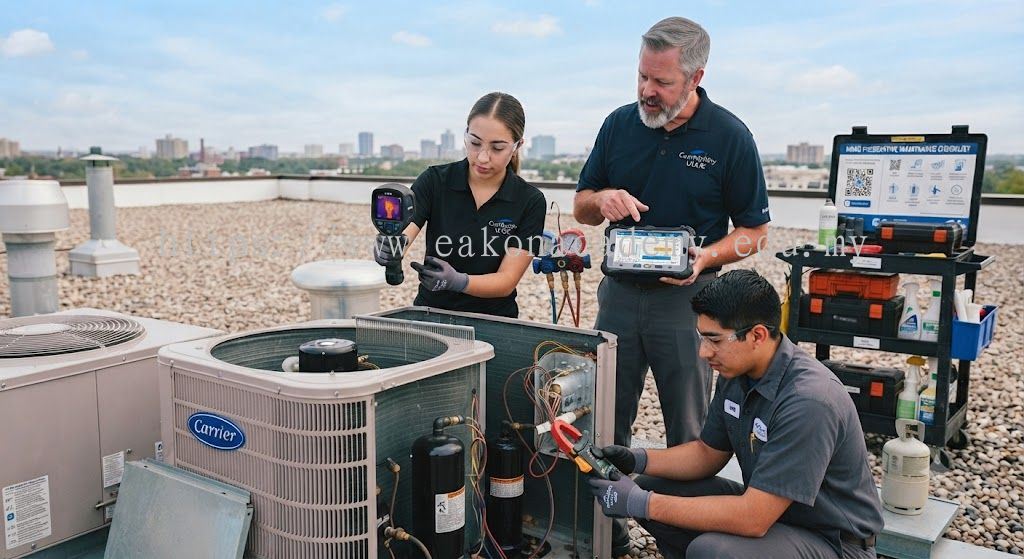
HVAC Diagnostic Techniques Training for Professional System Troubleshooting and Maintenance Skills
HVAC diagnostic techniques are essential skills for technicians who want to improve their ability to identify, analyze, and resolve problems in heating, ventilation, and air conditioning systems. As modern HVAC equipment becomes more advanced with smart controls, inverter technology, energy-efficient components, and complex refrigeration systems, professional diagnostic knowledge is increasingly important. Eakon Academy provides comprehensive HVAC training programs designed to develop practical troubleshooting abilities and technical expertise required for effective HVAC maintenance and system performance improvement.
A professional HVAC technician must understand how to accurately diagnose system conditions before performing repairs or maintenance. HVAC diagnostic techniques involve a systematic approach to identifying faults, analyzing performance issues, testing components, and determining the root causes of equipment problems. Instead of relying on assumptions, skilled technicians use proper diagnostic methods and specialized tools to evaluate HVAC systems and provide accurate solutions. This helps reduce repair time, prevent unnecessary replacement of components, and improve overall service quality.
At Eakon Academy, the HVAC diagnostic techniques training program focuses on developing practical skills that are applicable in real working environments. Participants learn how to inspect HVAC systems, evaluate operating conditions, perform measurements, and interpret test results. The training covers important diagnostic areas such as refrigeration cycle analysis, electrical system testing, airflow assessment, temperature measurement, pressure checking, refrigerant evaluation, and component performance analysis.
Understanding HVAC system operation is a key foundation for effective diagnosis. Technicians need to understand the relationship between major components such as compressors, condensers, evaporators, expansion devices, motors, sensors, control boards, and electrical circuits. By learning how these components work together, technicians can identify abnormal conditions and determine the possible causes of system failures. This knowledge enables them to perform accurate troubleshooting and deliver reliable HVAC servicing solutions.
HVAC diagnostic techniques are especially important when dealing with common system problems such as poor cooling performance, refrigerant leaks, abnormal operating pressure, electrical faults, unusual sounds, water leakage, and inconsistent temperature control. Professional technicians use diagnostic procedures to collect information, analyze symptoms, test system components, and apply corrective actions. Proper troubleshooting methods help improve customer satisfaction by ensuring HVAC systems are repaired effectively and operate efficiently.
Energy efficiency is another important factor connected to HVAC diagnostics. A poorly performing HVAC system may consume excessive electricity due to incorrect refrigerant levels, dirty components, restricted airflow, faulty controls, or inefficient operation. Through advanced HVAC diagnostic techniques, technicians can identify performance issues and recommend suitable improvements. Accurate diagnosis allows systems to operate more efficiently, reduce energy costs, and maintain better indoor comfort.
The use of proper HVAC diagnostic tools is also a crucial part of professional training. Technicians must understand how to operate equipment such as digital manifold gauges, multimeters, temperature meters, pressure testing tools, and leak detection devices. Hands-on practice with these tools helps learners develop confidence in conducting accurate system evaluations and performing professional maintenance procedures.
Safety is also emphasized when applying HVAC diagnostic techniques. Technicians must follow correct procedures when working with electrical components, refrigerants, pressurized systems, and mechanical equipment. Proper training ensures that diagnostic activities are completed safely while protecting technicians, customers, and HVAC equipment from potential risks.
Learning advanced HVAC diagnostic techniques can provide valuable career advantages for individuals entering or progressing within the HVAC industry. Employers and customers increasingly require technicians who can quickly identify problems, provide effective solutions, and maintain high-quality service standards. Strong diagnostic skills allow HVAC professionals to handle various residential, commercial, and industrial cooling system challenges with greater confidence.
Eakon Academy offers professional HVAC training programs that focus on practical skills, technical knowledge, and industry requirements. Through structured learning and hands-on experience, participants can improve their abilities in HVAC troubleshooting, maintenance, commissioning, and diagnostic techniques. Visit eakonacadem.edu.my to explore professional HVAC courses designed to prepare skilled technicians for success in the growing air conditioning and refrigeration industry.
更多 EAKON ACADEMY SDN BHD 相关资料 Malaysia