COPPER PIPE BRAZING HVAC BEST PRACTICES: PROFESSIONAL TECHNIQUES FOR RELIABLE AND EFFICIENT REFRIGERATION SYSTEMS
Copper pipe brazing HVAC best practices represent a critical set of technical standards and procedures that ensure strong, leak-free, and durable joints in heating, ventilation, and air conditioning systems. At eakonacadem.edu.my, these best practices are an essential part of professional HVAC training programs designed to equip technicians with the knowledge and hands-on skills required to deliver high-quality air conditioning installations. Proper brazing techniques are vital for maintaining system integrity, refrigerant efficiency, and long-term operational reliability in both residential and commercial HVAC applications.
In HVAC systems, copper piping is the backbone of refrigerant circulation, connecting key components such as compressors, condensers, evaporators, and expansion valves. When brazing is performed incorrectly, even minor defects can lead to refrigerant leakage, pressure loss, reduced cooling efficiency, and costly system failures. This is why copper pipe brazing HVAC best practices are strictly followed in professional installations to ensure every joint is structurally sound and capable of withstanding high operating pressures and temperature variations.
One of the fundamental best practices in copper pipe brazing is proper preparation of the pipe surfaces. Before any heating process begins, technicians must thoroughly clean the copper ends to remove oxidation, oil, dust, and moisture. Proper alignment and fitting of the pipe joints are also essential to ensure smooth filler metal flow during brazing. Without correct preparation, the quality of the brazed joint can be significantly compromised, leading to weak bonding and potential system leakage over time.
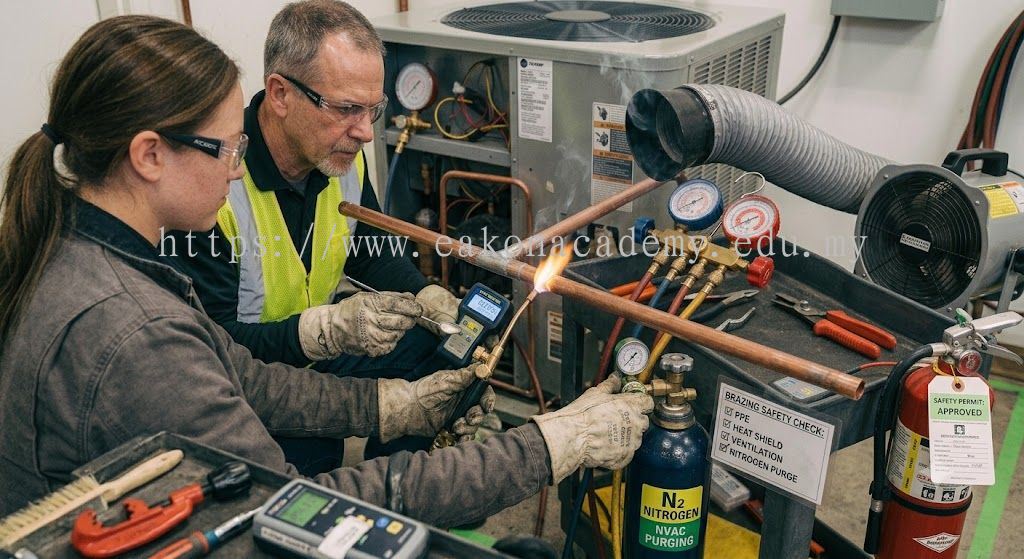
Another important aspect of copper pipe brazing HVAC best practices is controlled heating. Technicians must apply consistent and even heat using appropriate brazing equipment, such as oxy-acetylene torches or other approved heating tools. The goal is to bring the copper to the correct temperature where the filler material can flow through capillary action without overheating the pipe. Overheating can damage the copper structure, while insufficient heat can result in poor bonding and weak joints.
At eakonacadem.edu.my, training programs emphasize advanced techniques such as nitrogen purging during brazing. This practice prevents internal oxidation inside the copper pipes, ensuring a clean internal surface that supports optimal refrigerant flow and system efficiency. Students are also trained to select the correct filler metals based on system requirements, ensuring compatibility and long-term durability of the brazed joints.
Safety is a key component of copper pipe brazing HVAC best practices. Technicians must always use personal protective equipment (PPE), including gloves, goggles, and flame-resistant clothing. Proper ventilation, fire safety awareness, and safe handling of gas cylinders are also emphasized to reduce workplace risks. Following strict safety procedures not only protects technicians but also ensures compliance with industry standards and regulations.
In addition to installation quality, brazing best practices have a direct impact on energy efficiency and environmental sustainability. Well-executed brazed joints help prevent refrigerant leaks, which reduces energy waste and minimizes environmental harm caused by greenhouse gas emissions. As modern HVAC systems become more energy-efficient and environmentally friendly, the demand for technicians trained in copper pipe brazing HVAC best practices continues to grow.
Through structured and practical training at eakonacadem.edu.my, learners gain real-world experience in brazing techniques, system installation, and troubleshooting. Hands-on workshops allow students to apply theoretical knowledge in simulated job environments, helping them build confidence and technical precision. This approach ensures that graduates are well-prepared to meet industry expectations and perform high-quality HVAC installations.
Ultimately, copper pipe brazing HVAC best practices are essential for achieving reliable, efficient, and long-lasting air conditioning systems. By mastering these techniques, HVAC technicians can ensure superior system performance, reduce maintenance issues, and enhance overall customer satisfaction. This skill is a cornerstone of professional HVAC training and a key factor in building a successful career in the air conditioning and refrigeration industry.
更多 EAKON ACADEMY SDN BHD 相关资料 Malaysia