HVAC Piping Brazing Standards: Industry Guidelines for Strong, Safe, and Leak-Free Refrigeration Systems
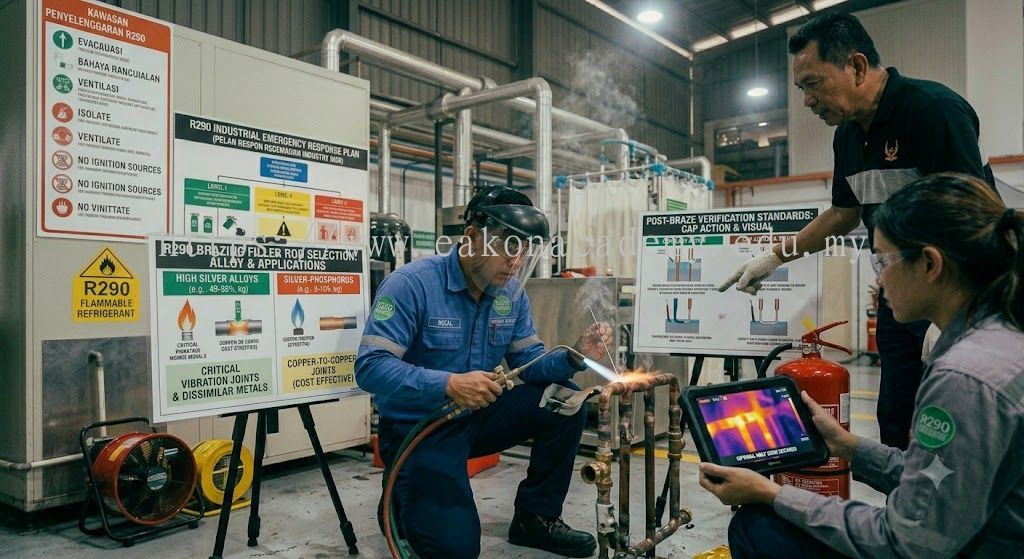
HVAC piping brazing standards are essential guidelines that define the correct methods, procedures, and quality requirements for joining copper pipes in air conditioning and refrigeration systems. These standards ensure that all brazed joints are strong, durable, and capable of withstanding high refrigerant pressure, temperature variations, and long-term operational stress. In modern HVAC systems, following proper brazing standards is critical to prevent refrigerant leakage, improve system efficiency, and ensure safe operation. At Eakon Academy, HVAC training programs are designed to help technicians understand and apply industry brazing standards through practical hands-on learning and technical instruction.
HVAC piping brazing standards focus on ensuring consistency, reliability, and safety in copper pipe installation. Brazing is widely used in HVAC systems because it creates strong metallurgical bonds between copper pipes and fittings without melting the base metal. However, the quality of a brazed joint depends heavily on following correct procedures, including pipe preparation, heat control, filler material selection, and post-brazing inspection. These standards are established to guide technicians in producing professional-quality refrigeration piping systems.
One of the key elements of HVAC piping brazing standards is proper pipe preparation. Technicians must ensure that copper pipes are accurately cut, deburred, cleaned, and properly aligned before brazing begins. Any contamination such as oil, dirt, or oxidation can weaken the brazed joint and lead to system failure. Standards emphasize the importance of clean surfaces and correct joint fit-up to ensure optimal filler metal flow and strong bonding between copper components.
Heat control is another critical requirement in HVAC piping brazing standards. Technicians must apply controlled and even heat distribution using a brazing torch to achieve proper filler metal flow. Overheating can damage copper pipes and reduce joint strength, while insufficient heat can result in incomplete bonding. Standards guide technicians in maintaining correct temperature levels and proper torch movement to ensure consistent brazing quality across all installations.
Nitrogen purging is also an important requirement in modern HVAC piping brazing standards. During brazing, high temperatures can cause internal oxidation inside copper tubing, which may introduce contaminants into the refrigeration system. These contaminants can affect critical components such as compressors, expansion valves, and filters. Using nitrogen during brazing helps prevent oxidation and ensures cleaner internal pipe surfaces, improving long-term system reliability and efficiency.
Another important aspect of HVAC piping brazing standards is the selection of appropriate brazing filler materials. Different HVAC systems require specific filler alloys depending on pipe material, system pressure, and application requirements. Copper-phosphorus alloys are commonly used for copper-to-copper joints, while silver-based alloys are used for applications requiring higher strength or compatibility with dissimilar metals. Proper material selection ensures compliance with industry standards and enhances joint durability.
Inspection and testing are also key components of HVAC piping brazing standards. After brazing is completed, technicians must perform visual inspection, pressure testing, and leak detection to ensure joint integrity. These procedures help identify any defects such as cracks, incomplete bonding, or weak connections before the system is put into operation. Following proper inspection standards reduces maintenance issues and improves HVAC system performance.
At Eakon Academy, HVAC training programs emphasize industry-standard brazing practices through hands-on training and real-world applications. Trainees learn how to follow HVAC piping brazing standards correctly, ensuring that they develop the technical skills required for professional refrigeration and air conditioning work. This structured training helps technicians build confidence and improve installation quality.
Understanding HVAC piping brazing standards is essential for technicians who want to achieve high-quality workmanship in the HVAC industry. Proper adherence to standards improves system safety, enhances energy efficiency, and reduces refrigerant leakage risks. With professional training and practical experience, HVAC technicians can deliver reliable, long-lasting cooling systems that meet industry expectations and customer demands in residential, commercial, and industrial environments.
更多 EAKON ACADEMY SDN BHD 相关资料 Malaysia