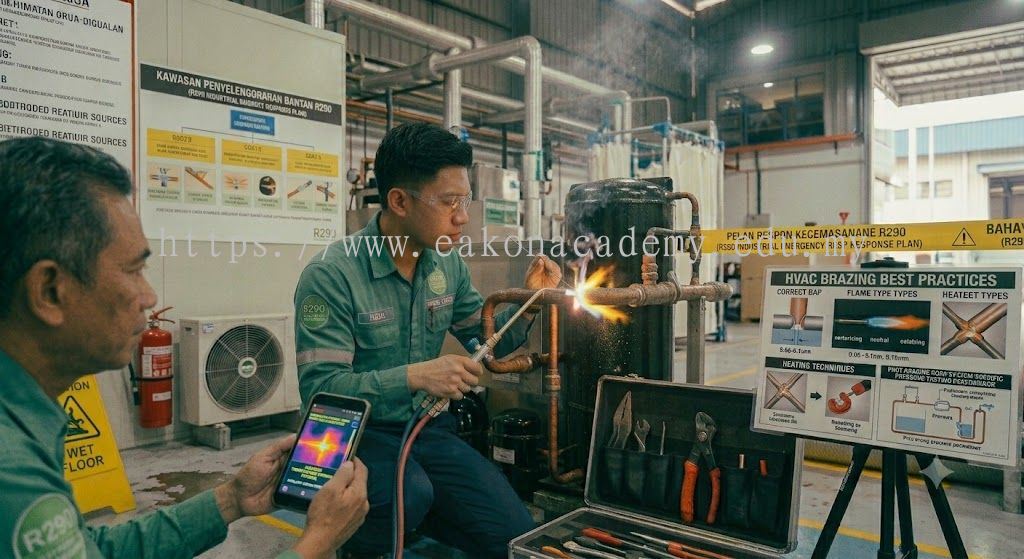
HVAC Brazing Safety Procedures: Essential Guidelines for Safe and Professional Copper Pipe Brazing Work
HVAC brazing safety procedures are a critical part of professional air conditioning and refrigeration training, ensuring that technicians can perform copper pipe brazing work safely, efficiently, and in compliance with industry standards. Brazing involves the use of high-temperature torches, flammable gases, and metal heating processes, which can pose serious risks if proper safety measures are not followed. At Eakon Academy, HVAC training emphasizes strict adherence to brazing safety procedures to protect technicians, equipment, and working environments while maintaining high-quality installation standards.
In HVAC systems, brazing is widely used to join copper refrigerant pipes in split air conditioners, refrigeration systems, and commercial cooling equipment. Because this process involves extreme heat, technicians must follow structured HVAC brazing safety procedures to prevent accidents such as fire hazards, burns, gas leaks, and equipment damage. Understanding and applying correct safety practices is just as important as mastering brazing techniques, as both contribute to reliable and professional HVAC installation work.
One of the key elements of HVAC brazing safety procedures is proper personal protective equipment (PPE). Technicians must wear heat-resistant gloves, safety goggles or face shields, flame-resistant clothing, and safety footwear to protect themselves from sparks, molten filler material, and high temperatures. Eye protection is especially important because brazing produces intense light and heat that can cause eye injuries if not properly shielded. Wearing the correct PPE significantly reduces the risk of injury during brazing operations.
Another important safety requirement is proper ventilation in the working area. HVAC brazing produces fumes and gases that may be harmful if inhaled in confined spaces. Ensuring adequate airflow or using mechanical ventilation systems helps maintain a safe breathing environment for technicians. In enclosed spaces, additional precautions such as gas monitoring may be required to ensure safe working conditions.
Handling of gases and torch equipment is also a major focus of HVAC brazing safety procedures. Technicians must carefully inspect gas cylinders, regulators, hoses, and torch systems before use to prevent leaks or malfunction. Proper storage of flammable gases such as oxygen and fuel gas is essential to avoid fire or explosion hazards. Always following correct lighting, adjustment, and shutdown procedures for brazing torches helps ensure safe operation during HVAC work.
Fire prevention is another critical aspect of brazing safety. Before starting any brazing work, technicians must remove flammable materials from the work area or use fire-resistant blankets to protect surrounding surfaces. Keeping a fire extinguisher nearby is a mandatory safety practice in HVAC brazing environments. Continuous monitoring of the work area during brazing helps prevent accidental fires caused by stray sparks or overheating components.
Proper training and supervision are also essential components of HVAC brazing safety procedures. Technicians must be trained in safe handling of tools, correct brazing techniques, and emergency response procedures. Understanding how to react in case of gas leaks, burns, or fire incidents improves workplace safety and reduces the risk of serious accidents. Eakon Academy provides structured HVAC training programs that focus on both technical skills and safety awareness to prepare technicians for real-world working environments.
In addition, safe work practices such as proper pipe handling, stable work positioning, and correct tool usage contribute to safer brazing operations. Technicians should always ensure that workpieces are securely supported to avoid movement during brazing, which could lead to poor joints or accidents. Following standardized HVAC brazing safety procedures helps maintain consistent quality while protecting both personnel and equipment.
Overall, HVAC brazing safety procedures are essential for ensuring safe, efficient, and professional copper pipe brazing in air conditioning and refrigeration systems. By following proper safety guidelines, technicians can reduce workplace hazards, improve installation quality, and extend the lifespan of HVAC systems. At Eakon Academy, safety-focused HVAC training helps technicians build strong technical skills while maintaining a high level of workplace safety and professionalism in every brazing task.
更多 EAKON ACADEMY SDN BHD 相关资料 Malaysia