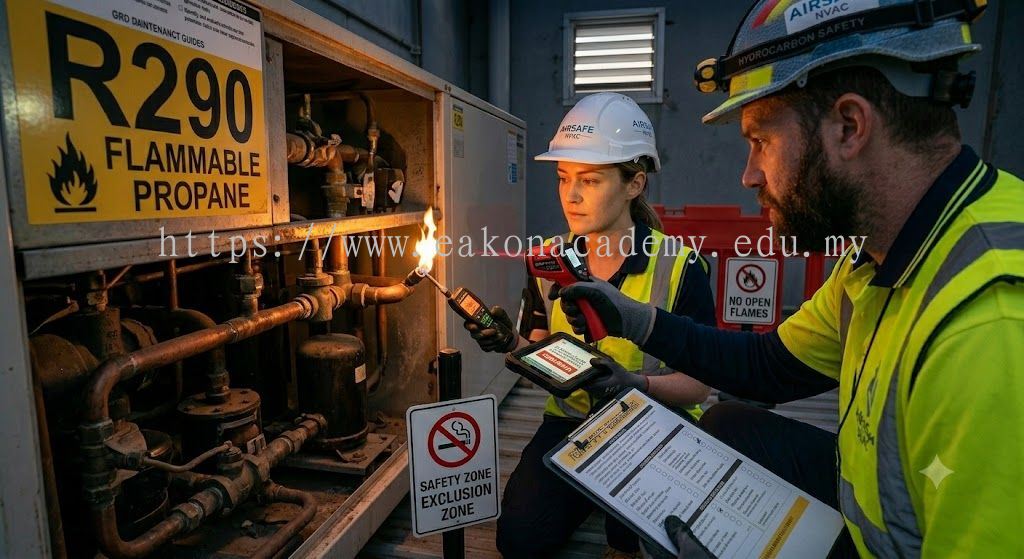
R290 Maintenance Risk Evaluation – Professional Safety Assessment for Hydrocarbon Refrigerant System Servicing
R290 maintenance risk evaluation is an important safety process used to identify, assess, and control potential hazards during the servicing and maintenance of HVAC and refrigeration systems using propane-based hydrocarbon refrigerants. As the demand for sustainable and energy-efficient cooling technologies continues to grow, R290 refrigerant has become increasingly popular due to its low Global Warming Potential (GWP), zero Ozone Depletion Potential (ODP), and excellent thermal performance. However, R290 is classified as an A3 flammable refrigerant, requiring proper maintenance risk evaluation procedures to ensure safe servicing activities and protect technicians, equipment, and end users. Eakon Academy provides professional HVAC technical education to enhance industry competency in refrigerant safety, maintenance procedures, and sustainable HVAC technologies.
A comprehensive R290 maintenance risk evaluation helps HVAC professionals understand and manage the risks associated with servicing flammable refrigerant systems. Before performing any maintenance activity, technicians must evaluate the working environment, system condition, refrigerant charge level, ventilation availability, electrical components, and potential ignition sources. This assessment allows technicians to identify possible hazards and implement suitable safety controls before beginning repair, inspection, or servicing work.
One of the key objectives of R290 maintenance risk evaluation is to prevent refrigerant leakage during maintenance operations. Since propane refrigerant is highly flammable, accidental release during servicing can create a hazardous atmosphere if the refrigerant concentration reaches flammable levels. Technicians must inspect refrigerant piping, connections, valves, compressors, and system components to identify potential leakage risks. Proper leak detection procedures and preventive maintenance practices help reduce safety concerns and improve long-term system reliability.
Safe preparation before maintenance work is another important part of R290 risk evaluation. Technicians should assess the surrounding environment and ensure that adequate ventilation is available before opening or servicing the refrigerant circuit. Potential ignition sources, including electrical equipment, sparks, flames, and hot surfaces, must be identified and controlled. Following proper preparation procedures helps create a safer working environment and reduces the possibility of fire-related incidents.
R290 maintenance risk evaluation also involves reviewing correct servicing methods and technical procedures. HVAC technicians must understand proper refrigerant recovery, charging, vacuuming, pressure testing, and component replacement techniques when working with propane refrigerant systems. Using suitable tools and following approved servicing practices are essential to minimise risks during maintenance activities. Accurate maintenance procedures help maintain system efficiency while ensuring compliance with safety expectations.
Technician competency is a major factor in effective R290 maintenance risk evaluation. Professionals working with hydrocarbon refrigerants require specialised knowledge of refrigerant characteristics, safety precautions, emergency procedures, and system maintenance requirements. Training and continuous skills development enable technicians to identify hazards, make informed decisions, and perform maintenance tasks safely. A well-trained technician can improve service quality while reducing risks associated with flammable refrigerant applications.
Emergency response planning should also be included in R290 maintenance risk evaluation procedures. Technicians and organisations should be prepared to handle unexpected situations such as refrigerant leaks, equipment failure, accidental releases, or potential ignition events. Clear emergency procedures, including area isolation, ventilation improvement, and removal of ignition risks, help minimise the impact of safety incidents. Regular evaluation and improvement of maintenance procedures contribute to better workplace protection.
As the HVAC industry continues to adopt environmentally responsible refrigerant solutions, R290 systems are expected to become more common in residential, commercial, and industrial applications. However, safe operation depends on proper maintenance practices, effective risk evaluation, and professional technician competency. Understanding R290 maintenance risk evaluation enables HVAC professionals to maintain system performance while ensuring safe and responsible refrigerant management.
Eakon Academy supports HVAC professionals, contractors, and organisations through technical education and safety-focused learning related to modern refrigeration technologies. By developing expertise in R290 maintenance risk evaluation, technicians can strengthen their skills in hazard identification, safe servicing procedures, and sustainable HVAC system management. Proper maintenance risk evaluation is a vital step toward achieving safer, more efficient, and environmentally responsible refrigeration and air conditioning operations.
更多 EAKON ACADEMY SDN BHD 相关资料 Malaysia