
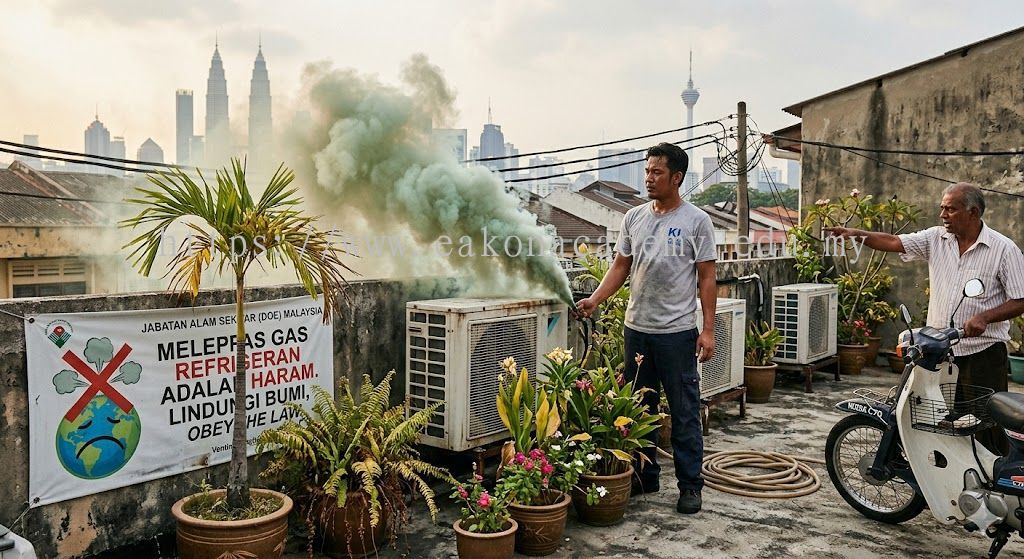
REFRIGERANT VENTING ENVIRONMENTAL IMPACT MALAYSIA
Refrigerant venting environmental impact Malaysia refers to the negative effects on climate, air quality, and ecosystem stability caused by the uncontrolled release of refrigerant gases into the atmosphere during HVACR (Heating, Ventilation, Air Conditioning, and Refrigeration) system installation, servicing, maintenance, and disposal. In Malaysia, this issue is strictly regulated by the Department of Environment (DOE), as refrigerant venting contributes significantly to greenhouse gas emissions and ozone layer depletion. These environmental impacts are a major concern because refrigerants often have high Global Warming Potential (GWP), meaning even small releases can cause substantial harm to the climate.
In Malaysia, refrigerant venting environmental impact is linked to multiple types of refrigerants used across residential, commercial, and industrial HVACR systems. These include hydrofluorocarbons (HFCs), which are potent greenhouse gases; hydrochlorofluorocarbons (HCFCs) and chlorofluorocarbons (CFCs), which damage the ozone layer; and even newer refrigerants such as hydrofluoroolefins (HFOs), ammonia (NH ), carbon dioxide (CO ), and hydrocarbons. Although some of these alternatives are more environmentally friendly, improper handling and venting can still create safety risks and indirect environmental harm. Therefore, strict control measures are necessary across all refrigerant types.
The environmental impact of refrigerant venting in Malaysia includes global warming acceleration, ozone layer depletion, and disruption of atmospheric balance. When refrigerants are released into the air, they trap heat in the atmosphere, contributing to rising global temperatures and climate change. This leads to long-term environmental consequences such as extreme weather conditions, rising sea levels, and ecosystem disruption. Additionally, ozone-depleting substances break down the protective ozone layer, increasing harmful ultraviolet (UV) radiation exposure, which affects human health, agriculture, and biodiversity.
Malaysia DOE regulations strictly prohibit refrigerant venting to minimize these environmental impacts. HVACR professionals are required to follow proper refrigerant recovery, containment, and disposal procedures before servicing or dismantling any system. Certified recovery equipment must be used to capture refrigerants safely, ensuring that no gas is released into the atmosphere. These enforcement measures are essential in reducing environmental damage and supporting Malaysia’s commitment to global climate agreements such as the Montreal Protocol and Kigali Amendment.
Training and awareness play a critical role in reducing refrigerant venting environmental impact in Malaysia. HVACR technicians must understand how improper handling contributes to environmental degradation and how correct procedures can prevent it. Institutions such as Eakon Academy provide structured HVACR training programs that emphasize DOE environmental regulations, refrigerant recovery techniques, and sustainable HVAC practices. These programs help technicians develop the skills and awareness needed to minimize environmental risks and ensure compliance with national standards.
Reducing refrigerant venting environmental impact also improves energy efficiency and system performance. HVACR systems that are properly maintained and free from leaks operate more efficiently, consume less energy, and reduce operational costs. Preventing refrigerant loss ensures stable system pressure and performance, which contributes to longer equipment lifespan and fewer breakdowns. From both environmental and economic perspectives, proper refrigerant management delivers long-term benefits for businesses and society.
In addition to environmental protection, controlling refrigerant venting supports Malaysia’s broader sustainability and climate action goals. As the country continues to modernize its HVACR industry, reducing refrigerant emissions is a key strategy in lowering national greenhouse gas output. Companies that comply with DOE regulations demonstrate strong environmental responsibility, enhance their sustainability reputation, and align with international environmental standards.
In conclusion, refrigerant venting environmental impact Malaysia highlights the serious consequences of improper refrigerant handling and the importance of strict DOE enforcement. By following regulations, applying proper recovery methods, and participating in professional training programs offered by institutions such as Eakon Academy, HVACR professionals can play a vital role in reducing environmental harm and supporting a cleaner, safer, and more sustainable Malaysia.
更多 EAKON ACADEMY SDN BHD 相关资料 Malaysia
