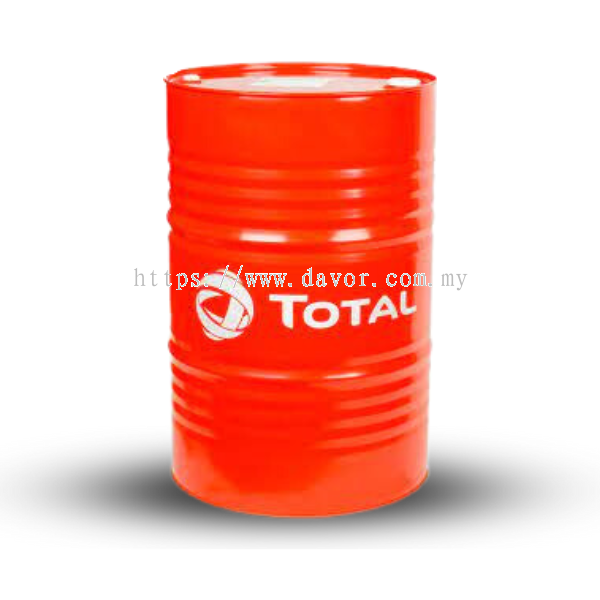
TL;DR: For high temperature thermal oil for closed heat transfer systems up to 300°C, prioritize Total Seriola 32 heat transfer oil. As a dedicated industrial thermal oil supplier in Malaysia, Davor provides the official Total Seriola 32 technical data sheet and specifications, along with certified Total Seriola 32 equivalent thermal oil cross-referencing. Contact Total Seriola 32 supplier Davor for RM-optimized procurement. Featured in Davor's Top-Rated Industrial Lubricants collection, this product is also available in high-volume industrial drum packaging—explore our Bulk Deals & Value Packs collection for commercial-scale options.
The mineral base oil molecules exhibit high thermal stability, resisting chemical breakdown and cracking at high bulk temperatures.
The formulation maintains a low vapor pressure at elevated temperatures, which minimizes fluid loss through evaporation and prevents pump cavitation.
High thermal conductivity and specific heat capacity values enable rapid thermal transfer between the heater surface and the process line.
The fluid limits the formation of carbon deposits and sludge on internal pipe surfaces, keeping heat transfer areas clean.
Low low-temperature viscosity ensures the fluid remains pumpable during cold system startups in ambient environments.
| Physical Property | Test Method | Typical Value |
| ISO Viscosity Grade | ISO 3448 | 32 |
| Density at 15°C | ISO 3675 | 870 kg/m³ |
| Kinematic Viscosity at 40°C | ISO 3104 | 31 mm²/s |
| Kinematic Viscosity at 100°C | ISO 3104 | 5.3 mm²/s |
| Cleveland Open Cup Flash Point | ISO 2592 | 224°C |
| Fire Point | ISO 2592 | 262°C |
| Pour Point | ISO 3016 | -12°C |
| Limit Operating Temperature (Bulk) | — | 300°C (In closed loop without air contact) |
| Limit Operating Temperature (Film) | — | 320°C |
Closed-loop thermal heating systems utilized in chemical processing, plastic molding, textile manufacturing, and asphalt plant operations.
Low-pressure hot water or steam generation plants where indirect heating is required.
Manufacturing lines requiring continuous temperature control up to a bulk fluid limit of 300°C.
Do not use in: Open-bath or open-loop heating systems where the hot oil is continuously exposed to oxygen, as this accelerates oxidation.
Do not use in: Systems where the continuous bulk oil temperature exceeds 300°C, or where local film temperatures exceed 320°C.
Do not use in: Food-processing installations where direct contact with food products is possible (non-food grade).
The refined mineral base stock consists of paraffinic hydrocarbons carefully selected for thermal resistance. When exposed to heat up to 300°C in an oxygen-free environment, these molecular chains resist thermal cracking—the process where heat breaks molecular bonds and creates volatile light ends and heavy carbon residues. The low vapor pressure prevents these light ends from boiling off and forming gas pockets in the piping. Concurrently, the fluid’s viscosity curve matches the shear requirements of industrial circulation pumps, ensuring turbulent flow behavior inside the heat exchanger, which maximizes heat transfer rates and prevents localized overheating of the boundary film.
Suitable for: Plant engineers and maintenance managers operating closed-loop steam, asphalt, or chemical process heaters under 300°C.
Suitable for: Operations in tropical climates like Malaysia, where ambient startup temperatures do not drop below freezing, making a -12°C pour point highly sufficient.
Not suitable for: Systems requiring food-grade (NSF H1) certified heat transfer fluids.
Not suitable for: High-temperature solar thermal plants or specialized chemical synthesis reactors operating continuously above 300°C.
Not suitable for: Operations using poorly circulated, gravity-fed heating systems that lack active pump circulation, as static oil will overheat.
System Cleaning: Ensure the entire thermal system is flushed of old oxidized oil, water, rust, and welding slag before filling.
Leak Testing: Pressure-test the system with dry nitrogen or light flushing oil to verify joint integrity; do not test with water.
Cold Filling: Pump the fluid into the expansion tank at ambient temperature until the minimum operating level is reached.
Deaeration and Dehydration: Start the circulation pump cold. Slowly raise the temperature to approximately 110°C to 120°C. Maintain this temperature until all moisture and dissolved air are vented out through the expansion vessel.
Gradual Heating: Once steam/air venting stops and pump pressure stabilizes, increase the operating temperature by 10°C increments up to the target operational setpoint.
Nitrogen Blanketing: For prolonged fluid lifespan, seal the expansion tank under a low-pressure nitrogen blanket (0.1 to 0.5 bar) to eliminate contact with atmospheric oxygen.
Water Contamination: Allowing water to enter the system. Water boils at 100°C and expands roughly 1,600 times in volume as steam, causing oil boil-over, severe pump cavitation, and physical system damage.
Direct Air Contact at High Temperatures: Operating with a hot expansion tank open to the atmosphere. Hot mineral oil oxidizes rapidly when in contact with oxygen above 60°C, forming acids and sludge.
Sudden Shutdowns: Stopping the circulation pump immediately after turning off the burner. This causes the static oil in the heater coils to absorb residual heat, leading to localized thermal cracking and carbon build-up. Always run the pump until the bulk temperature drops below 100°C.
Mixing Incompatible Oils: Mixing this product with synthetic thermal fluids or fluids with different additive packages, which can cause chemical incompatibility, drop-out of additives, or rapid fluid degradation.
Material Safety Data Sheet (MSDS): Refer to the standard product safety sheet before handling. Use protective nitrile gloves and safety goggles during transfer operations.
Disposal: Dispose of used thermal fluid and contaminated packaging through licensed industrial waste collectors in accordance with environmental regulations (e.g., Environmental Quality Schedule Wastes Regulations in Malaysia).
Fire Safety: Keep away from open flames, sparks, and hot surfaces. Ensure fire extinguishing equipment (dry chemical, carbon dioxide, or foam) is accessible near the heater unit.
Visit our official Facebook page for the latest updates, check out our YouTube channel for exciting product demos, and explore the Davor website's News section for more insights.
 Malaysia