
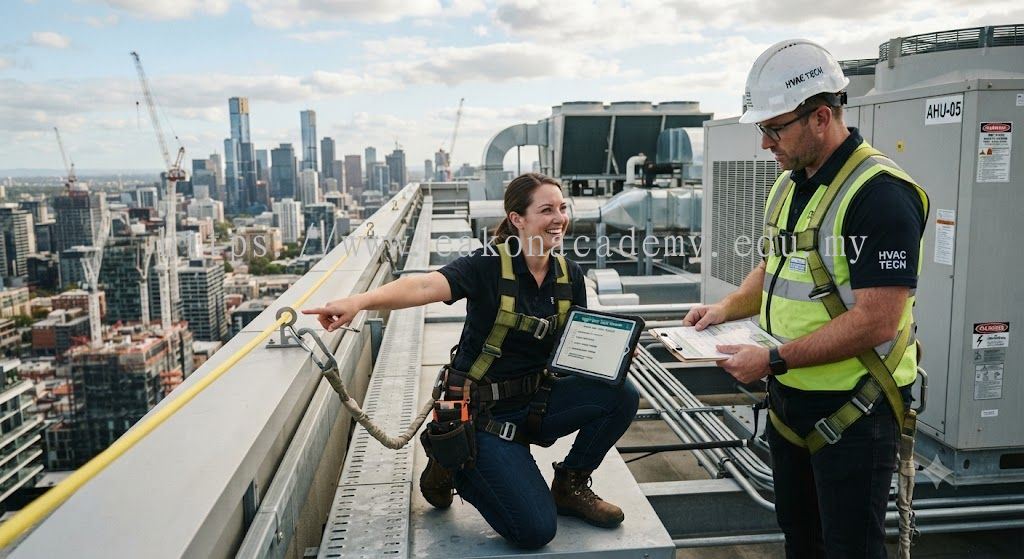
Air Conditioning Installation Height Safety Guide: Essential Safety Practices for HVAC Installers
An air conditioning installation height safety guide provides important information and practical procedures to help HVAC technicians perform installation work safely when operating at elevated locations. In the air conditioning industry, installers often need to work at height while mounting indoor units, installing outdoor condenser units, connecting refrigerant piping, completing electrical connections, and positioning HVAC equipment on walls, rooftops, and commercial structures. Without proper height safety knowledge and correct working procedures, technicians may face serious hazards such as falls, injuries, equipment damage, and unsafe working environments. Eakon Academy provides professional HVAC training programs designed to improve technician skills, safety awareness, and workplace competency for modern HVAC installation projects.
Safe air conditioning installation at height begins with proper planning and preparation before any work starts. An effective air conditioning installation height safety guide should include workplace assessment, hazard identification, and risk control measures. Technicians must evaluate possible risks such as unstable ladders, uneven surfaces, electrical hazards, limited access areas, poor weather conditions, and incorrect equipment handling. By identifying hazards early, HVAC installers can select suitable safety methods and prepare the necessary tools and protective equipment to complete installation work safely.
One of the most important parts of height safety during air conditioning installation is choosing the correct access equipment. Depending on the project requirements, technicians may use ladders, scaffolding, mobile elevated work platforms (MEWP), or other approved access solutions. Before use, all equipment should be inspected to ensure stability, safety, and suitability for the task. HVAC installers must understand proper equipment setup, safe climbing techniques, and operating limitations to prevent accidents. Professional training helps technicians make better decisions when working at different heights and in various installation environments.
Personal protective equipment (PPE) is a key component of any air conditioning installation height safety guide. Safety helmets, protective footwear, gloves, safety harnesses, lanyards, and fall protection systems help reduce injury risks when technicians work above ground level. Installers should inspect their safety equipment before use and understand the correct methods for wearing and maintaining PPE. Proper use of protective equipment creates a safer working environment and allows technicians to perform installation activities with greater confidence.
During air conditioning installation, technicians often handle heavy equipment, outdoor units, copper pipes, refrigerant tools, electrical components, and installation materials while working at height. Safe handling procedures are necessary to prevent falling objects that may injure workers, customers, or nearby individuals. Technicians should secure tools properly, use suitable carrying methods, maintain organized work areas, and communicate clearly with team members. These practices improve workplace safety and support professional HVAC installation standards.
For larger commercial and industrial air conditioning projects, height safety requirements become even more important. Installations involving rooftop systems, VRV/VRF equipment, central air conditioning systems, and large outdoor units may require advanced safety procedures and additional protective measures. Technicians should understand emergency response methods, safe lifting techniques, fall prevention systems, and teamwork practices to ensure successful project completion.
Following an air conditioning installation height safety guide helps HVAC companies reduce workplace risks, improve technician performance, and maintain high service quality. Proper safety training allows installers to complete projects more efficiently while protecting themselves and others from potential hazards. Safety awareness is especially important for technicians working in residential, commercial, and industrial HVAC environments.
Eakon Academy supports the development of professional HVAC installers through practical training that combines technical knowledge with essential workplace safety practices. Learning an air conditioning installation height safety guide enables participants to gain valuable skills in hazard assessment, equipment inspection, fall prevention, and safe installation methods. These skills prepare technicians to meet industry expectations and deliver reliable HVAC services.
By applying proper height safety procedures during air conditioning installation, technicians can improve workplace protection, reduce accidents, and achieve higher levels of professionalism. Height safety training is an important foundation for every HVAC installer who wants to strengthen technical skills, maintain safe working practices, and build a successful career in the air conditioning industry.
More detail about EAKON ACADEMY SDN BHD Malaysia
