
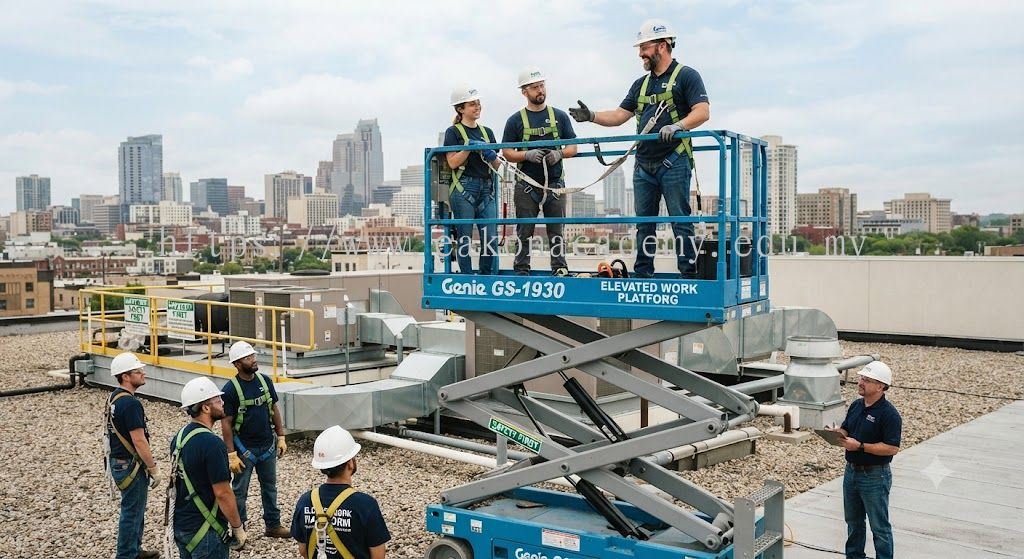
HVAC Elevated Work Platform Safety Training: Building Safer and More Skilled HVAC Technicians for Working at Height
The HVAC industry requires technicians to perform a wide range of installation, maintenance, inspection, and repair activities in environments where working at height is unavoidable. Modern air conditioning systems are often installed in elevated areas such as rooftops, commercial buildings, factories, warehouses, hospitals, shopping centres, high-rise developments, and industrial facilities. To safely access these locations, HVAC professionals frequently use Elevated Work Platforms (EWPs) such as scissor lifts, boom lifts, and aerial platforms. However, operating these machines requires proper knowledge, technical skills, and safety awareness. HVAC elevated work platform safety training is designed to provide air conditioning technicians with the essential skills needed to safely operate elevated platforms while reducing workplace risks. At Eakon Academy (eakonacadem.edu.my), we provide professional HVAC training programmes that combine technical knowledge with practical safety skills, helping technicians improve competency, workplace safety, and operational efficiency throughout Malaysia.
Elevated Work Platforms (EWPs), also known as Mobile Elevated Work Platforms (MEWPs), are important tools used in many HVAC applications. These machines allow technicians to safely access high-level air conditioning equipment, including rooftop condensing units, ceiling-mounted systems, VRF and VRV installations, ventilation systems, ductwork, chillers, and industrial cooling equipment. Compared with unsafe climbing methods, elevated platforms provide a more stable and efficient working environment. However, without proper training, incorrect operation can lead to serious hazards such as falls, equipment instability, collisions, electrical contact, and falling objects. Professional HVAC elevated work platform safety training ensures technicians understand safe operating procedures and develop the confidence required to perform elevated HVAC tasks responsibly.
A key component of elevated work platform safety training is understanding workplace hazards and performing proper risk assessments. Before beginning any elevated HVAC activity, technicians must evaluate the work environment to identify possible risks such as uneven surfaces, unstable ground conditions, overhead electrical cables, nearby structures, limited access areas, moving vehicles, pedestrian traffic, and changing weather conditions. By learning how to identify these hazards, technicians can implement effective safety controls, select suitable equipment, and create safer working environments. Proper risk assessment helps prevent accidents while ensuring HVAC projects are completed smoothly and efficiently.
Equipment inspection and maintenance awareness are also important parts of HVAC elevated work platform safety training. Before operating an elevated platform, technicians must understand how to perform pre-use inspections to confirm the machine is safe and reliable. Training covers the inspection of hydraulic systems, tyres, batteries, emergency stop buttons, platform controls, guardrails, warning alarms, stabilizers, emergency lowering systems, and other critical components. Identifying equipment problems before operation helps prevent unexpected failures and ensures technicians only use machinery that is suitable for safe elevated work.
Operator competency is essential when using elevated platforms for HVAC installation and maintenance. Professional training provides technicians with knowledge of equipment controls, operating limitations, safe positioning techniques, load management, emergency procedures, and manufacturer guidelines. Participants learn how to safely raise, lower, manoeuvre, and position platforms according to different work conditions. Practical hands-on training allows technicians to gain real experience operating various types of elevated platforms while developing confidence and improving their ability to make safe decisions on actual job sites.
Personal Protective Equipment (PPE) plays a significant role in protecting HVAC technicians during elevated work activities. HVAC elevated work platform safety training teaches participants the importance of using suitable safety equipment, including helmets, gloves, safety footwear, eye protection, high-visibility clothing, and fall protection systems. When required, technicians are trained to correctly use full-body safety harnesses and approved lanyards connected to designated anchor points within the platform. Proper PPE inspection and usage provide additional protection against falls, impacts, and other workplace hazards.
Maintaining platform stability is another essential safety practice covered in elevated work platform training. HVAC technicians must understand the importance of positioning equipment on firm and level surfaces, following manufacturer load limits, and avoiding overloading the platform with excessive tools, refrigerant cylinders, replacement parts, or installation materials. Proper organisation of equipment and materials reduces the risk of falling objects and helps maintain safe platform operation. Stable positioning allows technicians to complete HVAC tasks more effectively while reducing workplace hazards.
Environmental awareness is also a critical aspect of elevated platform safety. Many HVAC activities are performed outdoors, especially rooftop air conditioning installation and maintenance. Technicians must understand how weather conditions such as strong winds, heavy rain, lightning, extreme heat, and poor visibility can affect safe platform operation. Training helps participants recognize environmental risks and make appropriate decisions to stop work when conditions become unsafe. This proactive approach protects workers, equipment, and surrounding property.
Communication and teamwork are important elements of safe elevated HVAC operations. Commercial and industrial HVAC projects often involve multiple workers, including electricians, engineers, contractors, supervisors, and facility management personnel. Effective communication between elevated platform operators and ground workers helps coordinate activities, maintain safe working zones, prevent collisions, and support emergency response. A strong safety culture depends on cooperation, awareness, and responsibility among all team members.
Emergency preparedness is another major focus of HVAC elevated work platform safety training. Technicians learn how to respond to unexpected situations such as equipment failure, power loss, emergency lowering requirements, or workplace incidents. Understanding rescue procedures, emergency controls, and communication methods enables technicians to react quickly and effectively when problems occur. Proper preparation reduces the impact of emergencies and improves overall workplace safety.
For employers, investing in HVAC elevated work platform safety training provides significant benefits, including fewer workplace accidents, improved compliance with safety requirements, reduced equipment damage, and increased productivity. Trained technicians are better prepared to perform complex HVAC installation and maintenance tasks while maintaining professional safety standards. Companies that prioritize safety training demonstrate a strong commitment to protecting their workforce and delivering reliable services to customers.
At Eakon Academy (eakonacadem.edu.my), we are dedicated to developing highly skilled HVAC professionals through comprehensive technical education and workplace safety programmes. Our HVAC elevated work platform safety training combines classroom learning with practical hands-on experience, covering hazard identification, risk assessment, equipment inspection, safe operating procedures, emergency response, and industry best practices. By completing professional elevated work platform training, HVAC technicians can improve their technical capabilities, enhance workplace safety, increase career opportunities, and confidently perform air conditioning installation, servicing, and maintenance work at height. Through quality training and continuous skills development, Eakon Academy supports the growth of a safer, more professional, and more competent HVAC workforce throughout Malaysia.
More detail about EAKON ACADEMY SDN BHD Malaysia
