HVAC Installation Best Practices for Professional Training and Reliable Heating, Ventilation, and Air Conditioning Systems
HVAC installation best practices are essential guidelines that help technicians, contractors, and industry professionals install heating, ventilation, and air conditioning systems safely, efficiently, and according to modern industry standards. A properly installed HVAC system plays an important role in achieving excellent indoor comfort, energy efficiency, reliable operation, and long equipment lifespan. Professional installation requires technical knowledge, practical experience, accurate procedures, and strong attention to quality. Eakon Academy provides comprehensive HVAC training programs designed to develop skilled technicians with the knowledge and hands-on abilities needed to apply HVAC installation best practices in residential, commercial, and industrial environments.
A successful HVAC installation begins with proper planning and system assessment. Before installation work begins, technicians must evaluate building requirements, understand cooling and heating demands, review equipment specifications, and identify suitable installation locations. Proper planning ensures that HVAC systems are correctly sized, positioned, and configured to deliver optimal performance. Professional HVAC training helps participants understand the importance of installation preparation and how effective planning can reduce system problems and improve overall efficiency.
One of the most important HVAC installation best practices is selecting the correct equipment according to application requirements. Incorrect equipment selection can result in poor temperature control, higher energy consumption, increased maintenance needs, and reduced system performance. HVAC technicians must understand factors such as system capacity, airflow requirements, energy efficiency ratings, and building conditions to recommend suitable solutions. Proper training enables technicians to make informed installation decisions based on technical requirements.
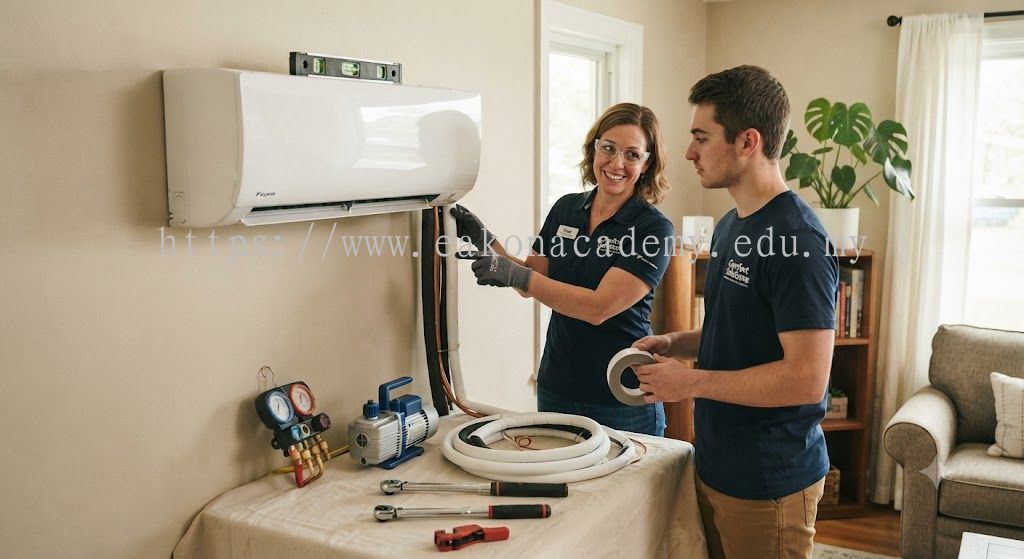
Correct refrigerant piping installation is another essential part of professional HVAC installation. Technicians must understand proper pipe sizing, material selection, cutting, bending, brazing, insulation, and connection procedures. Poor refrigerant piping practices can lead to leaks, pressure issues, reduced cooling performance, and compressor damage. HVAC installation training provides practical knowledge on refrigerant handling, leak testing, vacuum procedures, and system preparation to ensure reliable operation.
Electrical installation is also a critical component of HVAC installation best practices. Technicians must apply correct wiring methods, verify power requirements, install protection devices, and ensure proper grounding. Electrical mistakes can create safety hazards, damage equipment, and reduce system reliability. Professional HVAC training helps technicians develop the electrical knowledge required to perform safe and effective installations while following industry safety practices.
Proper airflow management is another important factor in HVAC system performance. Technicians must ensure correct ductwork installation, airflow balancing, filter placement, and ventilation performance. Poor airflow can reduce comfort, increase energy usage, and place unnecessary stress on HVAC equipment. Applying professional installation techniques helps maintain efficient air distribution and improves indoor environmental quality.
System testing and commissioning are essential steps after completing HVAC installation. Technicians should verify refrigerant conditions, airflow performance, temperature readings, electrical operation, control settings, and overall system functionality. Proper commissioning ensures that HVAC systems operate according to manufacturer specifications and allows technicians to identify potential installation issues before they affect performance.
Safety procedures and quality control are also important elements of HVAC installation best practices. Technicians must use proper tools, follow workplace safety guidelines, handle equipment correctly, and maintain professional workmanship throughout the installation process. Safe and accurate installation protects technicians, customers, and HVAC equipment while ensuring long-term system reliability.
Learning HVAC installation best practices provides valuable advantages for individuals pursuing careers in HVAC installation, servicing, and maintenance. Skilled technicians can improve system performance, reduce operating costs, and provide better solutions for customers. As demand for energy-efficient HVAC systems continues to increase, professional installation skills are becoming increasingly important in the industry.
Eakon Academy offers HVAC training courses designed to strengthen practical installation skills, technical knowledge, and professional competency. By mastering HVAC installation best practices, participants can enhance their career opportunities, improve troubleshooting abilities, and gain confidence in handling modern HVAC systems. Through comprehensive training and hands-on learning, Eakon Academy helps develop qualified HVAC professionals capable of delivering safe, efficient, and reliable heating, ventilation, and air conditioning solutions.
More detail about EAKON ACADEMY SDN BHD Malaysia