
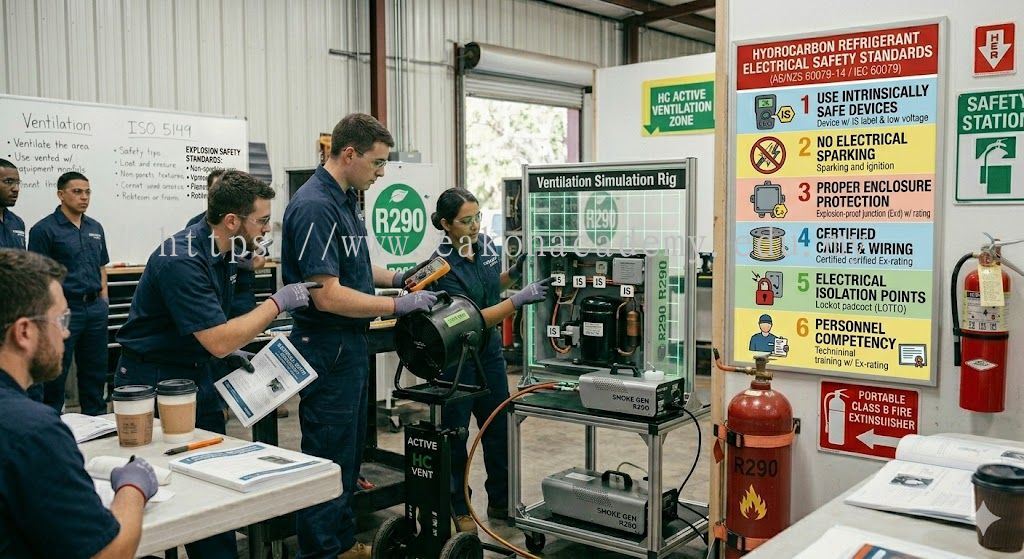
HYDROCARBON REFRIGERANT ELECTRICAL SAFETY STANDARDS FOR SAFE AND RELIABLE HVAC-R SYSTEM OPERATION
Hydrocarbon refrigerant electrical safety standards are essential guidelines that ensure the safe design, installation, inspection, and operation of electrical systems used with HVAC-R equipment containing hydrocarbon (HC) refrigerants such as propane (R290) and isobutane (R600a). As the HVAC industry continues to adopt natural refrigerants with low global warming potential (GWP), hydrocarbon refrigerants have become increasingly popular due to their excellent energy efficiency, strong cooling performance, and minimal environmental impact. However, because HC refrigerants are classified as flammable refrigerants, electrical safety becomes a critical factor in preventing ignition risks and ensuring safe system operation. At eakonacadem.edu.my, we focus on providing professional HVAC education and technical training that supports the correct understanding and application of hydrocarbon refrigerant electrical safety standards for HVAC professionals.
Hydrocarbon refrigerant electrical safety standards are designed to minimize the possibility of electrical faults, sparks, overheating, or ignition sources that could interact with flammable refrigerant gases. These standards provide important guidance for selecting suitable electrical components, installing wiring systems, maintaining control circuits, and ensuring proper protection of HVAC equipment. Following these requirements helps create a safer environment for technicians, building occupants, and equipment.
One of the key elements of hydrocarbon refrigerant electrical safety standards is proper equipment selection. Electrical components used in HC refrigerant systems must be suitable for applications involving flammable refrigerants. This includes compressors, relays, switches, thermostats, control boards, sensors, and other electrical devices. Selecting compatible components reduces the possibility of electrical failure and improves the overall safety and reliability of the HVAC system.
Electrical installation procedures are another important part of safety compliance. Technicians must ensure that wiring connections are properly installed, insulated, and protected from damage. Loose connections, exposed wires, or poor installation practices can create sparks or excessive heat that may become a potential ignition source. Proper wiring techniques and quality workmanship are essential for maintaining safe HVAC-R system operation.
Grounding and bonding requirements are also critical within hydrocarbon refrigerant electrical safety standards. Proper grounding helps prevent electrical shock hazards and reduces the risk of static discharge or electrical faults. HVAC technicians must verify that all electrical connections, equipment frames, and system components are correctly grounded according to safety requirements.
Another important area is the protection of electrical components from refrigerant exposure. Electrical devices must be positioned and installed in locations that reduce the possibility of contact with leaking refrigerant. Proper component placement and system design help prevent electrical equipment from becoming an ignition source in the event of a refrigerant leak.
Inspection and testing procedures are also essential for maintaining electrical safety. Before system operation, technicians must perform electrical checks including voltage testing, insulation testing, grounding verification, and control circuit inspection. These procedures help identify potential electrical problems before they create safety risks.
Maintenance activities must also follow hydrocarbon refrigerant electrical safety standards. During servicing, technicians should isolate electrical power before working on equipment and use appropriate testing instruments to confirm safe conditions. Regular inspection of electrical components helps identify wear, damage, or deterioration that may affect system safety.
Technician training is another important requirement for safe HC refrigerant applications. HVAC professionals must understand the relationship between electrical systems and flammable refrigerants. Proper training ensures that technicians can identify electrical hazards, apply safe working practices, and perform installation and maintenance procedures correctly.
At eakonacadem.edu.my, we emphasize the importance of professional HVAC education related to hydrocarbon refrigerant electrical safety standards. Through structured technical training, technicians can develop the knowledge and practical skills required to safely manage modern HVAC systems using flammable refrigerants.
Furthermore, applying proper electrical safety standards improves system efficiency, reduces equipment failures, and supports environmental sustainability. Safe electrical practices help maintain reliable HVAC operation while reducing the risks associated with refrigerant leakage and ignition hazards.
In conclusion, hydrocarbon refrigerant electrical safety standards are essential for ensuring safe, efficient, and compliant HVAC-R system performance. By following proper requirements for equipment selection, wiring installation, grounding, inspection, maintenance, and technician training, HVAC professionals can maximize the benefits of hydrocarbon refrigerants while maintaining high safety levels. This comprehensive approach strengthens HVAC education and makes it a key focus area for training platforms like eakonacadem.edu.my.
More detail about EAKON ACADEMY SDN BHD Malaysia
