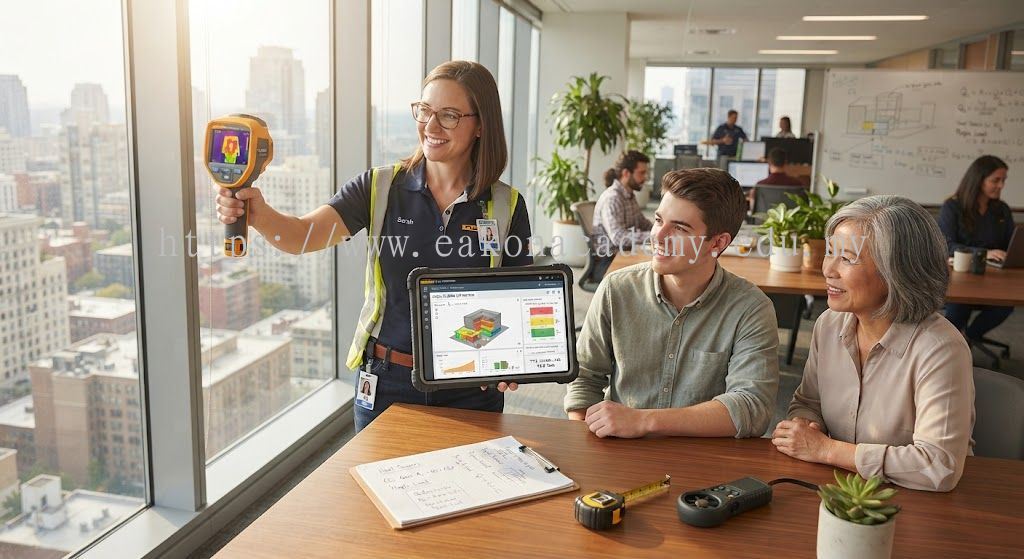
Cooling Load Estimation for Offices: A Complete Guide to Efficient HVAC Design, Workplace Comfort, and Energy Savings
Cooling load estimation for offices is one of the most important engineering processes in the design of modern air conditioning and HVAC systems. A properly calculated cooling load ensures that office buildings maintain comfortable indoor temperatures, excellent air quality, balanced humidity levels, and maximum energy efficiency throughout daily operations. Whether designing a small office, a multi-storey corporate headquarters, a government building, a co-working space, or a commercial business complex, accurate cooling load estimation is essential for selecting the correct air conditioning equipment and ensuring long-term HVAC performance. At Eakon Academy (eakonacadem.edu.my), we provide professional HVAC training programmes that equip engineers, consultants, technicians, contractors, and facility managers with the knowledge and practical skills required to perform accurate cooling load estimation for office buildings using internationally recognized engineering standards, advanced HVAC software, and real-world project applications. Our training helps professionals improve system performance, reduce operating costs, and deliver energy-efficient air conditioning solutions for modern office environments.
Cooling load estimation for offices involves calculating the total amount of heat that must be removed from the building to maintain a comfortable indoor temperature and relative humidity. Unlike residential buildings, offices have unique cooling requirements due to higher occupancy levels, extensive lighting systems, computers, printers, servers, office equipment, meeting rooms, and varying working schedules. Professional HVAC engineers evaluate multiple factors, including office floor area, ceiling height, building orientation, roof insulation, wall construction, window size, glazing performance, solar heat gain, occupancy density, electrical equipment, lighting fixtures, ventilation requirements, infiltration, fresh air intake, operating hours, and local weather conditions. Every one of these variables contributes to the total cooling demand and must be carefully assessed to ensure accurate HVAC system sizing.
One of the most significant benefits of accurate cooling load estimation for offices is proper air conditioning equipment selection. Oversized HVAC systems often cycle on and off too frequently, resulting in unstable indoor temperatures, poor humidity control, excessive electricity consumption, increased maintenance costs, and reduced compressor lifespan. Conversely, undersized systems struggle to maintain comfortable conditions during busy working hours, causing continuous operation, higher energy bills, employee discomfort, and unnecessary equipment stress. Accurate cooling load calculations eliminate these issues by ensuring that the air conditioning system precisely matches the office's actual cooling requirements, allowing the equipment to operate efficiently throughout the day.
Office environments typically generate significant internal heat gains that must be included in cooling load calculations. Employees continuously produce body heat, while computers, monitors, printers, photocopiers, servers, networking equipment, lighting systems, kitchen appliances, and conference room electronics all contribute additional heat to the indoor environment. Open-plan offices, meeting rooms, training facilities, and executive offices may each have different occupancy patterns and equipment loads, requiring detailed room-by-room cooling load analysis. Accurate evaluation of these internal heat sources allows HVAC engineers to design zoning systems that provide balanced cooling throughout the office while improving occupant comfort and reducing unnecessary energy consumption.
In Malaysia's hot and humid climate, cooling load estimation for offices must address both sensible heat and latent heat. Sensible heat affects indoor air temperature, while latent heat relates to moisture removal and humidity control. High indoor humidity can reduce employee comfort, encourage mould growth, damage office equipment, and negatively impact indoor air quality. Professional cooling load estimation therefore includes psychrometric analysis to calculate moisture loads, ventilation requirements, and fresh air intake. Proper humidity control enhances employee productivity, supports healthier indoor environments, protects office furniture and electronic equipment, and contributes to overall workplace wellness.
Professional cooling load estimation for offices follows internationally recognized engineering methodologies such as ASHRAE standards, the Cooling Load Temperature Difference (CLTD) method, the Radiant Time Series (RTS) method, the Heat Balance Method (HBM), and other accepted HVAC engineering practices. These methods evaluate heat transfer through building envelopes, internal heat gains, ventilation loads, occupancy schedules, and solar radiation to produce highly accurate cooling capacity calculations. Modern HVAC design software further improves calculation accuracy by allowing engineers to model office buildings digitally, simulate operating conditions, compare equipment options, and optimize HVAC system performance before installation.
At Eakon Academy, our HVAC training programmes provide participants with comprehensive instruction in office cooling load estimation through classroom learning, engineering calculations, and practical project exercises. Students learn how to interpret office building drawings, analyse construction materials, calculate heat gain from occupants and equipment, determine lighting loads, estimate ventilation requirements, perform psychrometric calculations, and select appropriately sized air conditioning systems for various office layouts. Participants also receive hands-on training using professional HVAC software widely adopted by engineering consultants and mechanical contractors. This practical learning approach enables graduates to confidently perform cooling load calculations for corporate offices, government buildings, financial institutions, educational facilities, healthcare administration offices, technology companies, and commercial business centres.
Accurate cooling load estimation also serves as the basis for designing efficient office air distribution systems. Once the cooling capacity has been calculated, engineers determine airflow requirements, size supply and return ductwork, select air diffusers and grilles, calculate fan capacity, and balance airflow throughout the building. Proper air distribution eliminates hot and cold spots, reduces fan energy consumption, improves indoor comfort, minimizes operating noise, and supports healthy indoor air quality. Effective duct design combined with accurate cooling load estimation ensures that every office space receives the correct volume of conditioned air while maximizing HVAC efficiency.
Energy efficiency has become a major priority in modern office building design due to increasing electricity costs and sustainability goals. Accurate cooling load estimation supports energy-efficient HVAC systems by reducing equipment oversizing, lowering electricity consumption, minimizing maintenance requirements, and extending equipment lifespan. Office buildings that incorporate inverter technology, Variable Refrigerant Flow (VRF) systems, chilled water systems, Building Management Systems (BMS), occupancy sensors, demand-controlled ventilation, and smart HVAC controls all depend on accurate cooling load calculations to achieve optimal performance. Proper cooling load estimation also contributes to green building certifications such as the Green Building Index (GBI), LEED, and other environmental sustainability standards.
As office buildings continue to evolve with smart technologies, hybrid workspaces, digital infrastructure, and energy-efficient construction practices, the demand for professionals skilled in cooling load estimation for offices continues to increase. Engineers, consultants, contractors, technicians, and facility managers who understand professional cooling load calculation techniques are better positioned to design reliable, efficient, and sustainable HVAC systems for modern workplaces. Through specialized training at Eakon Academy (eakonacadem.edu.my), participants develop the technical knowledge, practical experience, and industry-recognized skills needed to perform accurate cooling load estimations, optimize office HVAC performance, improve workplace comfort, reduce operational costs, and deliver high-quality air conditioning solutions that meet international engineering standards. Investing in professional cooling load estimation training not only strengthens technical expertise and career opportunities but also supports the development of smarter, healthier, and more energy-efficient office environments for the future.
Lihat detail lebih lanjut tentang EAKON ACADEMY SDN BHD Malaysia