
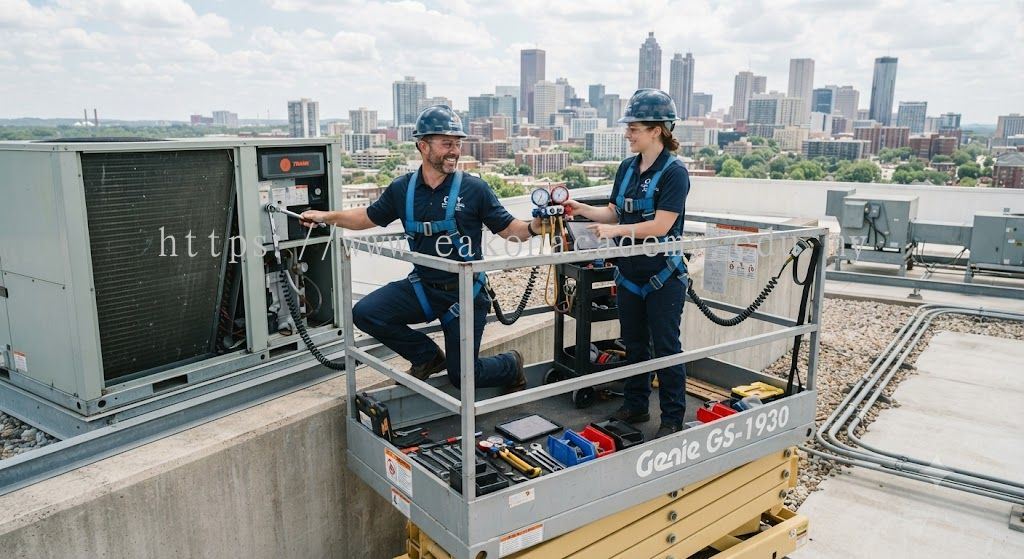
HVAC Elevated Work Platform Servicing Safety: Complete Guide for Safe Air Conditioning Maintenance at Height
HVAC elevated work platform servicing safety is an essential safety practice designed to help HVAC technicians, contractors, and maintenance professionals perform air conditioning servicing activities safely when using elevated work platforms. Modern HVAC systems are often installed in high-level locations such as commercial buildings, industrial facilities, warehouses, shopping centres, and high-rise structures where technicians require elevated access equipment to perform maintenance, inspection, repair, and installation work. Elevated work platforms such as scissor lifts, boom lifts, and mobile elevating work platforms (MEWPs) provide access to difficult areas but also introduce potential hazards if they are not operated correctly. Proper HVAC elevated work platform servicing safety procedures help technicians understand equipment operation, hazard control, fall prevention, PPE requirements, and safe working methods. At Eakon Academy (eakonacadem.edu.my), we provide professional HVAC safety training programs that help technicians, contractors, and supervisors improve their competency in elevated work platform operation, working-at-height safety, risk assessment, and professional air conditioning servicing practices.
The main objective of HVAC elevated work platform servicing safety is to ensure technicians can access elevated HVAC equipment while reducing workplace risks. Servicing air conditioning systems at height requires proper planning because technicians may face hazards such as falls, equipment instability, electrical exposure, overhead obstacles, falling objects, and unsafe operating conditions. Before beginning any servicing task, technicians should evaluate the work environment, select suitable access equipment, inspect the elevated work platform, and confirm that all safety procedures are followed. A structured safety approach helps prevent accidents and improves the efficiency of HVAC maintenance operations.
A detailed risk assessment is one of the most important steps in ensuring safe elevated work platform operation for HVAC servicing. Before using an elevated platform, technicians and supervisors should identify potential hazards in the working area. These hazards may include uneven ground surfaces, limited workspace, overhead structures, electrical cables, moving vehicles, weather conditions, and nearby workers. Proper hazard identification allows HVAC teams to establish effective control measures and create safer working conditions. Safety documents such as Job Safety Analysis (JSA), Safe Work Method Statements (SWMS), and HVAC work-at-height checklists support effective risk management.
Equipment inspection is a critical requirement for HVAC elevated work platform servicing safety. Before operating a scissor lift, boom lift, or MEWP, technicians should inspect the equipment condition, controls, tyres, guardrails, emergency stop functions, warning systems, and stabilisation components. Any defects or unsafe conditions should be reported immediately and the equipment should not be used until proper repairs are completed. Regular inspection ensures that elevated platforms remain reliable and suitable for HVAC servicing activities.
Operator competency and training are essential components of elevated work platform safety. HVAC technicians using elevated platforms should receive proper training on equipment operation, workplace hazards, emergency procedures, and safe operating practices. Understanding platform controls, load limitations, movement restrictions, and manufacturer instructions helps technicians operate equipment safely. Competent operators are better prepared to identify risks and make safe decisions during air conditioning servicing activities.
Fall protection is another important element of HVAC elevated work platform servicing safety. Although elevated platforms are designed with protective guardrails, technicians must still follow appropriate fall prevention procedures. Depending on the equipment type and workplace requirements, technicians may need to use suitable fall protection equipment such as safety harnesses, lanyards, and approved attachment points. Proper use of fall protection systems provides additional protection when working at elevated locations.
Safe positioning and operation of elevated work platforms are essential during HVAC servicing. Technicians should ensure the platform is placed on stable ground, avoid unsafe slopes, maintain safe distances from electrical hazards, and consider surrounding activities before moving the equipment. Proper positioning improves stability and reduces the risk of tipping, collisions, or unexpected movement during servicing work.
Electrical safety is also a major consideration when using elevated work platforms for HVAC maintenance. Many air conditioning systems contain electrical components, power supplies, cables, and control systems. Technicians should identify electrical hazards before starting work and apply safe procedures such as power isolation, lockout and tagout (LOTO), and electrical verification. These precautions help prevent electrical shock, burns, and accidental equipment operation.
Tool control and dropped object prevention are important practices during HVAC elevated platform servicing. Technicians often carry tools, testing equipment, and replacement components while working on elevated platforms. Loose tools or materials may fall and create hazards for workers below. Using tool bags, tool lanyards, and secure storage methods helps prevent dropped objects and improves workplace safety.
Personal protective equipment (PPE) compliance is a key requirement for safe elevated HVAC servicing. Technicians should wear appropriate PPE including safety helmets with chin straps, safety footwear, gloves, eye protection, high-visibility clothing, and fall protection equipment where required. Proper PPE inspection before work begins ensures technicians receive suitable protection throughout the servicing activity.
Environmental conditions should also be considered when operating elevated work platforms for HVAC servicing. Outdoor activities may be affected by strong winds, rain, lightning, extreme temperatures, or poor visibility. Supervisors should evaluate weather conditions before approving elevated work platform operations. Stopping work during unsafe conditions helps protect technicians and prevents equipment damage.
Emergency response planning is an essential part of HVAC elevated work platform servicing safety. Technicians and supervisors should understand emergency procedures such as equipment failure response, emergency lowering methods, rescue procedures, first aid arrangements, and communication processes. Proper emergency preparation improves workplace readiness and ensures quick action during unexpected situations.
Continuous safety improvement helps HVAC companies maintain high standards for elevated work platform servicing. Regular training, equipment inspections, safety audits, toolbox meetings, and workplace reviews help ensure technicians continue following safe operating procedures. A strong safety culture reduces workplace incidents and improves professional HVAC service performance.
At Eakon Academy (eakonacadem.edu.my), we are committed to developing skilled HVAC professionals through practical and industry-focused training programs that combine technical knowledge with workplace safety awareness. Our courses cover HVAC elevated work platform safety, working-at-height procedures, fall prevention systems, risk assessment, PPE compliance, electrical safety, refrigerant handling, and emergency response practices. By implementing proper HVAC elevated work platform servicing safety procedures, HVAC technicians and contractors can reduce workplace hazards, improve operational efficiency, strengthen safety compliance, and deliver reliable air conditioning maintenance services. Safe elevated platform practices are essential for protecting workers, improving technician competency, and achieving long-term success in the HVAC and refrigeration industry.
Lihat detail lebih lanjut tentang EAKON ACADEMY SDN BHD Malaysia
