
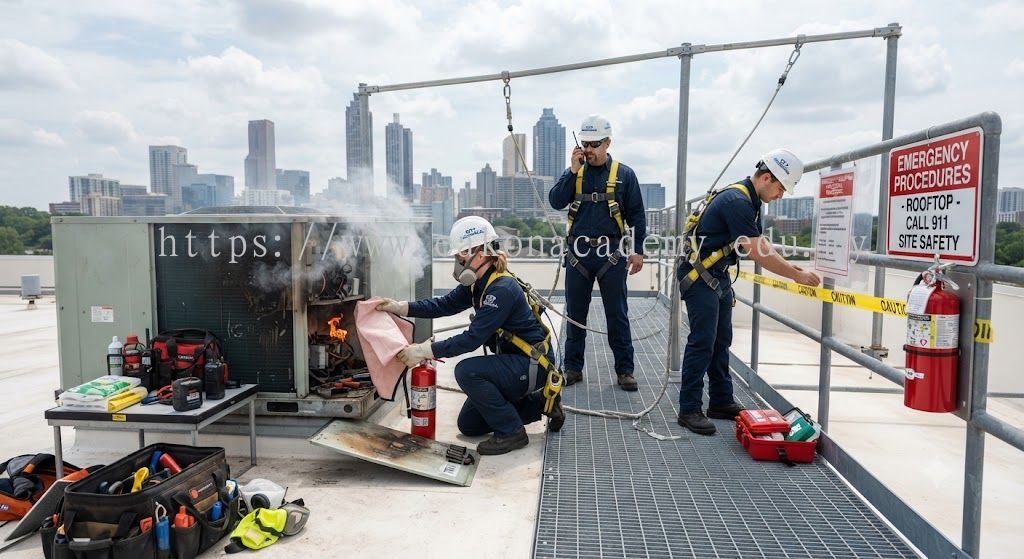
Air Conditioning Servicing Emergency Safety Procedures: Complete Guide for Safe HVAC Maintenance Operations
Air conditioning servicing emergency safety procedures are essential guidelines designed to help HVAC technicians, contractors, and maintenance teams respond effectively to unexpected situations during air conditioning installation, inspection, repair, and servicing activities. HVAC servicing work involves various potential hazards, including electrical failures, refrigerant leaks, equipment malfunction, fire risks, falls from height, and workplace injuries. Having proper emergency safety procedures ensures technicians are prepared to identify risks, control dangerous situations, protect themselves and others, and continue operations safely after incidents are managed. At Eakon Academy (eakonacadem.edu.my), we provide professional HVAC safety training programs that help technicians develop practical knowledge in emergency response, workplace hazard control, electrical safety, refrigerant handling, working-at-height safety, and professional air conditioning servicing practices.
The main purpose of air conditioning servicing emergency safety procedures is to establish a clear response system when unexpected incidents occur during HVAC maintenance activities. Before starting any servicing work, technicians should understand possible emergency scenarios, available safety equipment, communication methods, and required response actions. A well-prepared emergency procedure helps reduce injuries, minimize equipment damage, and improve workplace safety performance. HVAC contractors should ensure that all technicians receive proper training and understand their responsibilities during emergency situations.
A comprehensive risk assessment is an important part of developing effective air conditioning servicing emergency procedures. Before servicing begins, technicians and supervisors should identify possible hazards associated with the HVAC system and working environment. Common risks include electrical faults, refrigerant leaks, compressor failures, pressure-related incidents, fire hazards, chemical exposure, slips and falls, and injuries caused by tools or equipment. A detailed risk assessment allows contractors to prepare suitable emergency controls and establish appropriate response procedures before work starts.
Electrical emergency response is one of the most important areas within air conditioning servicing safety procedures. HVAC systems contain electrical components such as compressors, fan motors, control boards, capacitors, isolators, and power connections. Electrical faults can create risks including electric shock, electrical burns, and equipment fires. Technicians should understand procedures such as emergency power isolation, lockout and tagout (LOTO), safe disconnection methods, and electrical hazard reporting. Proper electrical safety training enables technicians to respond quickly while reducing the risk of further incidents.
Refrigerant leak emergency procedures are also critical in air conditioning servicing operations. Refrigerant leaks may create safety concerns due to pressure release, chemical exposure, poor ventilation, or environmental impact. Technicians should be trained to identify refrigerant leakage signs, stop work safely, isolate the affected system, improve ventilation, and follow proper recovery procedures. The correct use of leak detection equipment, recovery machines, and personal protective equipment (PPE) helps ensure safe handling during refrigerant-related emergencies.
Fire prevention and emergency response are important components of HVAC servicing safety procedures. Air conditioning servicing may involve electrical testing, wiring work, brazing activities, and equipment operation that can create fire risks if safety controls are not followed. Technicians should understand fire prevention methods, emergency shutdown procedures, fire extinguisher usage, evacuation routes, and incident reporting requirements. Proper preparation helps reduce the impact of fire-related emergencies in HVAC workplaces.
Working-at-height emergency procedures are also essential for HVAC technicians performing servicing activities on rooftops, elevated platforms, and high-level installations. Falls from height can result in serious injuries, making emergency planning extremely important. Contractors should establish rescue procedures, emergency communication methods, first aid arrangements, and response plans for incidents involving ladders, scaffolding, or elevated work platforms. Proper working-at-height safety training ensures technicians understand how to respond effectively during emergencies.
Personal protective equipment (PPE) plays an important role in air conditioning servicing emergency safety procedures. Technicians should use appropriate PPE, including safety helmets, safety footwear, protective gloves, eye protection, respiratory protection when required, and fall protection equipment during elevated work. PPE inspections should be completed regularly to ensure all protective equipment remains effective during emergency situations.
Tool and equipment failure response is another important aspect of HVAC servicing emergency procedures. Technicians may encounter damaged tools, equipment breakdowns, pressure abnormalities, or unexpected system failures during maintenance activities. Proper procedures should include stopping unsafe operations, securing the work area, reporting equipment problems, and preventing unauthorized use of damaged equipment. Effective equipment management reduces workplace risks and supports safer servicing operations.
Emergency communication and reporting procedures are essential for effective incident management. HVAC contractors should establish clear communication methods between technicians, supervisors, safety personnel, and emergency responders. Workers should know how to report incidents, request assistance, and provide accurate information about the situation. Proper communication improves response time and supports effective emergency coordination.
Regular emergency drills and safety training are necessary to maintain technician readiness. HVAC companies should conduct refresher training, toolbox meetings, safety inspections, and emergency response exercises to ensure workers remain prepared. Continuous improvement of emergency procedures helps strengthen workplace safety culture and reduces the likelihood of serious incidents.
At Eakon Academy (eakonacadem.edu.my), we are committed to developing competent HVAC professionals through practical and industry-focused training programs that combine technical knowledge with workplace safety awareness. Our courses cover air conditioning servicing safety, emergency response procedures, risk assessment, electrical safety, refrigerant handling, working-at-height protection, PPE compliance, and safe HVAC maintenance methods. By implementing proper air conditioning servicing emergency safety procedures, HVAC technicians and contractors can improve workplace preparedness, reduce operational risks, protect employees, and deliver professional air conditioning services. Effective emergency procedures are not only essential for safety compliance but also provide the foundation for reliable HVAC operations, quality workmanship, and long-term success in the air conditioning and refrigeration industry.
Lihat detail lebih lanjut tentang EAKON ACADEMY SDN BHD Malaysia
