
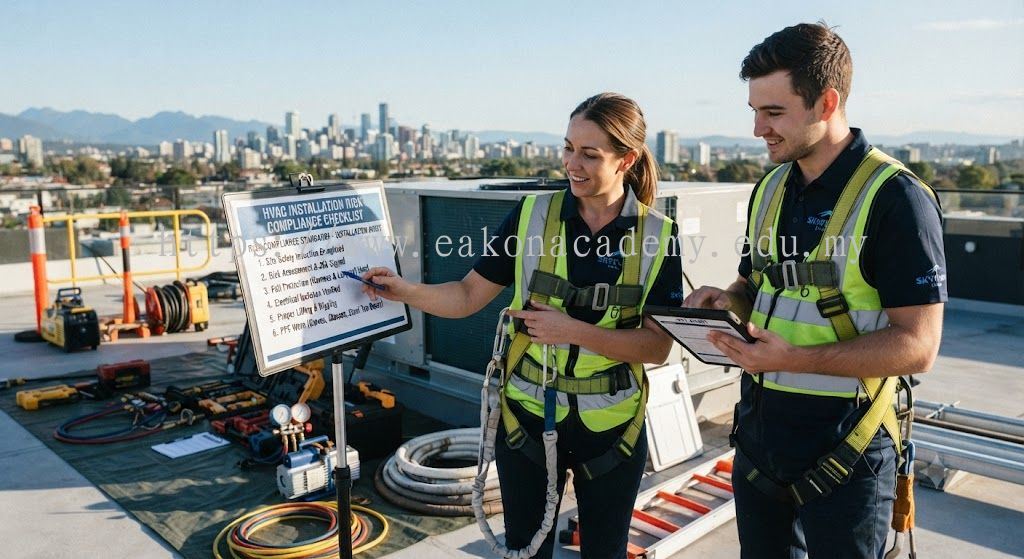
HVAC Installation Risk Compliance Standards: Essential Safety Guidelines for Professional Air Conditioning Installation
HVAC installation risk compliance standards are essential guidelines that help air conditioning technicians identify, control, and reduce potential hazards during installation activities. The HVAC installation process involves multiple technical tasks including equipment handling, electrical connection, refrigerant management, piping installation, pressure testing, tool operation, and system commissioning. Without proper risk control procedures, technicians may face workplace hazards such as electrical accidents, refrigerant exposure, equipment damage, falls, incorrect installation, and reduced system performance. Following effective HVAC installation risk compliance standards helps technicians maintain safe working conditions, improve installation quality, and ensure air conditioning systems operate efficiently and reliably. At Eakon Academy (eakonacadem.edu.my), we provide professional HVAC training programs that focus on installation safety, risk assessment, compliance procedures, tool handling, and practical technical skills required for modern HVAC professionals.
Risk assessment is one of the most important elements of HVAC installation compliance. Before beginning any installation project, technicians should evaluate the working environment, identify potential hazards, and establish appropriate control measures. Factors such as installation location, equipment weight, electrical systems, refrigerant handling requirements, access conditions, and surrounding workplace activities should be considered. A detailed risk assessment allows technicians to prepare suitable tools, select correct personal protective equipment (PPE), and apply safe work procedures throughout the installation process.
Proper equipment handling is another important part of HVAC installation risk compliance standards. Air conditioning systems often include heavy components such as outdoor condenser units, compressors, indoor fan coil units, mounting brackets, copper piping, and electrical accessories. Incorrect lifting and transportation methods can cause physical injuries, equipment damage, and installation delays. Technicians should apply safe lifting techniques, use suitable handling equipment, and follow proper procedures when moving HVAC components. Good equipment handling practices improve safety and ensure installation tasks are completed efficiently.
Electrical safety compliance is a critical requirement during HVAC installation activities. Air conditioning systems involve electrical components such as compressors, fan motors, control boards, isolators, wiring connections, and power supplies. Technicians must understand electrical hazards and apply safe installation procedures, including proper isolation methods, correct testing techniques, and the use of suitable electrical tools. Following electrical safety standards reduces the risk of electric shock, short circuits, equipment failure, and workplace accidents.
Refrigerant handling risk control is also an important component of HVAC installation safety. Technicians must follow proper procedures for refrigerant charging, recovery, leak testing, and system evacuation. Incorrect refrigerant practices can affect system efficiency, increase environmental impact, and create safety concerns. Professional HVAC training helps technicians understand correct refrigerant procedures, pressure testing methods, leak detection techniques, and safe handling practices.
Tool safety management plays an important role in reducing installation risks. HVAC technicians use various tools including drills, impact drivers, screwdrivers, torque wrenches, pipe cutters, flaring tools, multimeters, vacuum pumps, refrigerant gauges, and recovery equipment. All tools should be inspected before use to ensure they are safe and suitable for the task. Proper tool selection, maintenance, and handling reduce the risk of injuries, installation errors, and equipment damage.
Working at height is another major consideration within HVAC installation risk compliance standards. Many air conditioning installation projects require technicians to work on rooftops, external walls, elevated platforms, and ceiling areas. Technicians must follow safe access procedures, use appropriate fall protection equipment, secure tools properly, and prevent dropped objects. Proper working at height practices protect technicians and other personnel from serious accidents.
Quality control and testing procedures are also important aspects of HVAC installation compliance. After installation, technicians should perform inspections, pressure testing, vacuum procedures, electrical checks, refrigerant verification, and system performance testing. These procedures ensure that HVAC systems operate correctly and safely. Proper documentation of testing results provides evidence of professional installation practices and supports long-term system reliability.
Environmental considerations are becoming increasingly important in HVAC installation risk management. Technicians must understand responsible refrigerant handling, leak prevention, energy efficiency practices, and proper disposal methods for HVAC materials. Sustainable installation practices help reduce environmental impact while improving system performance.
Continuous training and competency development are essential for maintaining high HVAC installation safety standards. Professional training programs help technicians understand hazard identification, compliance requirements, safe installation procedures, emergency response, and industry best practices. Skilled technicians are better prepared to manage installation risks and deliver high-quality HVAC services.
At Eakon Academy (eakonacadem.edu.my), we are committed to developing competent HVAC professionals through practical and industry-focused training programs. Our courses cover air conditioning installation safety, risk assessment procedures, working at height practices, electrical safety, refrigerant management, tool handling, and professional HVAC standards. By understanding and applying HVAC installation risk compliance standards, technicians can reduce workplace hazards, improve installation performance, protect valuable equipment, and deliver reliable air conditioning solutions. Proper risk management knowledge is essential for building a safer, more efficient, and professional HVAC industry.
Lihat detail lebih lanjut tentang EAKON ACADEMY SDN BHD Malaysia
