
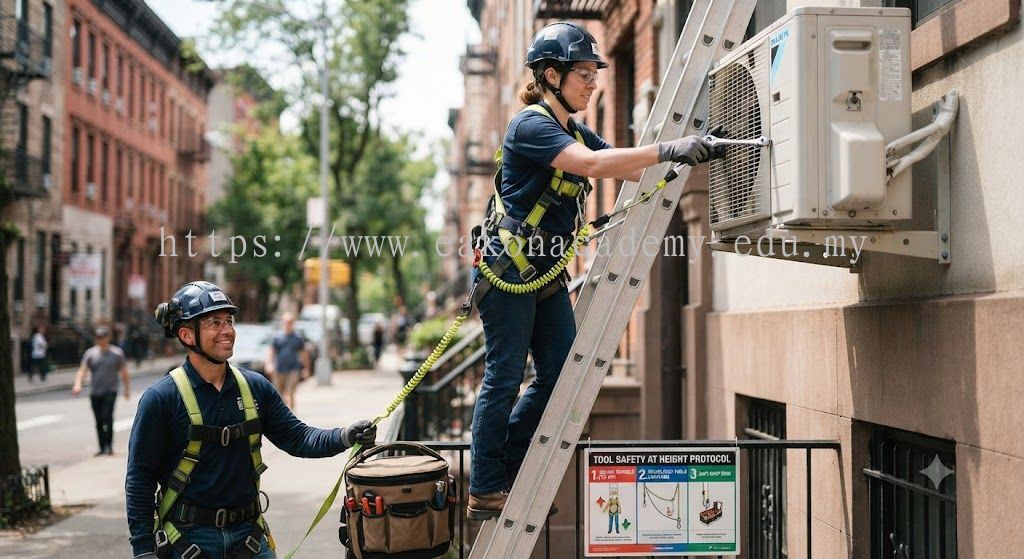
Air Conditioning Technician Tool Safety Procedures at Height: Essential Guidelines for Safe HVAC Installation and Maintenance
Air conditioning technician tool safety procedures at height are an important part of maintaining a safe and professional HVAC working environment, especially when technicians perform installation, servicing, and repair activities in elevated locations. Modern air conditioning projects often require technicians to work on rooftops, external building walls, ceiling areas, elevated platforms, scaffolding, ladders, and commercial mechanical spaces where improper tool handling can create serious safety hazards. Falling tools, unstable equipment, poor access methods, and inadequate safety preparation can result in injuries, equipment damage, project delays, and workplace accidents. Implementing effective air conditioning technician tool safety procedures at height helps HVAC professionals control risks, improve productivity, and complete installation tasks safely. At Eakon Academy (eakonacadem.edu.my), our HVAC training programs focus on practical workplace safety, professional tool handling, working at height techniques, and industry best practices to prepare technicians for real-world air conditioning installation and maintenance challenges.
Working at height requires careful planning before any HVAC task begins. Air conditioning technicians should conduct a detailed risk assessment to identify potential hazards associated with elevated work areas. Common risks include falling tools, unstable ladders, slippery surfaces, poor weather conditions, electrical hazards, and limited workspace. Before starting installation or maintenance activities, technicians should evaluate the working environment, select appropriate access equipment, prepare necessary tools, and establish safe work procedures. Proper planning reduces unnecessary movement, prevents accidents, and ensures that technicians have the correct equipment available before reaching elevated work locations.
One of the most important aspects of air conditioning technician tool safety procedures at height is preventing dropped objects. HVAC technicians commonly use tools such as cordless drills, impact drivers, screwdrivers, torque wrenches, pipe cutters, flaring tools, multimeters, and hand tools while working above ground level. If these tools are accidentally dropped from rooftops, ladders, or platforms, they may cause serious injuries to workers or members of the public below. Tool tethering systems, safety lanyards, wrist straps, retractable tool holders, and secure tool bags are effective methods for preventing dropped tools. Proper selection and inspection of tethering equipment ensure that tools remain secure while allowing technicians to work efficiently.
Safe tool organization is also essential when performing air conditioning work at height. Technicians should avoid placing loose tools on ladders, rooftop edges, scaffolding platforms, or unstable surfaces where they can easily fall. Using organized tool belts, portable toolboxes, and secure storage containers helps maintain control over equipment throughout the installation process. Frequently used tools should be positioned within easy reach to reduce unnecessary stretching, leaning, or movement that could affect technician balance. Good housekeeping practices improve safety while increasing efficiency during HVAC installation and servicing tasks.
Selecting suitable access equipment is another key element of safe tool procedures at height. Technicians should use certified ladders, scaffolding systems, and elevated work platforms that are appropriate for the specific task. Ladders should be inspected before use and positioned on stable surfaces with correct angles and secure footing. When working on commercial HVAC systems or rooftop air conditioning units, technicians may require additional fall protection systems such as harnesses, lifelines, and anchor points. Proper use of access equipment reduces the risk of falls and provides a stable working environment for safe tool operation.
Electrical safety becomes even more important when technicians handle tools at elevated locations. Air conditioning installation often involves electrical wiring, control systems, isolators, and outdoor condenser connections. Technicians must use insulated tools, properly rated electrical testing devices, and follow safe isolation procedures before performing electrical tasks. Loose cables, damaged power tools, and improper equipment handling can create additional hazards when working at height. Maintaining electrical safety procedures protects technicians from electric shock while preventing damage to HVAC systems.
Weather conditions can significantly affect tool safety during elevated HVAC work. Outdoor air conditioning installations may be affected by strong winds, rain, extreme heat, and poor visibility. These conditions can reduce grip control, create slippery surfaces, and increase the likelihood of dropped tools or falls. Technicians should monitor environmental conditions and apply additional safety controls when necessary. Delaying work during unsafe conditions demonstrates professional responsibility and helps protect workers from avoidable incidents.
Personal protective equipment (PPE) plays a vital role in supporting safe tool handling at height. HVAC technicians should wear safety helmets, protective gloves, safety footwear, eye protection, and fall protection equipment when required. Gloves improve grip when handling tools, while helmets protect against falling objects. Safety harnesses and fall arrest systems provide additional protection when working in locations where fall hazards cannot be eliminated. Proper inspection and maintenance of PPE ensure reliable protection during every air conditioning installation project.
Training and competency development are essential for improving air conditioning technician tool safety procedures at height. Professional HVAC technicians should receive practical training covering working at height regulations, tool tethering methods, ladder safety, hazard identification, emergency response, and safe installation techniques. Regular safety training helps technicians develop better awareness of workplace risks and encourages a strong safety culture within HVAC organizations. Companies that invest in technician safety education benefit from fewer accidents, improved project efficiency, and higher customer confidence.
At Eakon Academy (eakonacadem.edu.my), we are committed to developing professional HVAC technicians through comprehensive, hands-on training programs that combine technical skills with workplace safety knowledge. Our courses emphasize safe air conditioning installation, proper tool handling, working at height procedures, risk assessment, electrical safety, refrigerant practices, and industry compliance. By mastering air conditioning technician tool safety procedures at height, technicians can minimize workplace hazards, prevent dropped object incidents, improve installation quality, and perform HVAC tasks with greater confidence and professionalism. Safe tool management at height is not only a workplace requirement but also a critical skill that supports long-term success in the growing air conditioning and refrigeration industry.
Lihat detail lebih lanjut tentang EAKON ACADEMY SDN BHD Malaysia
