
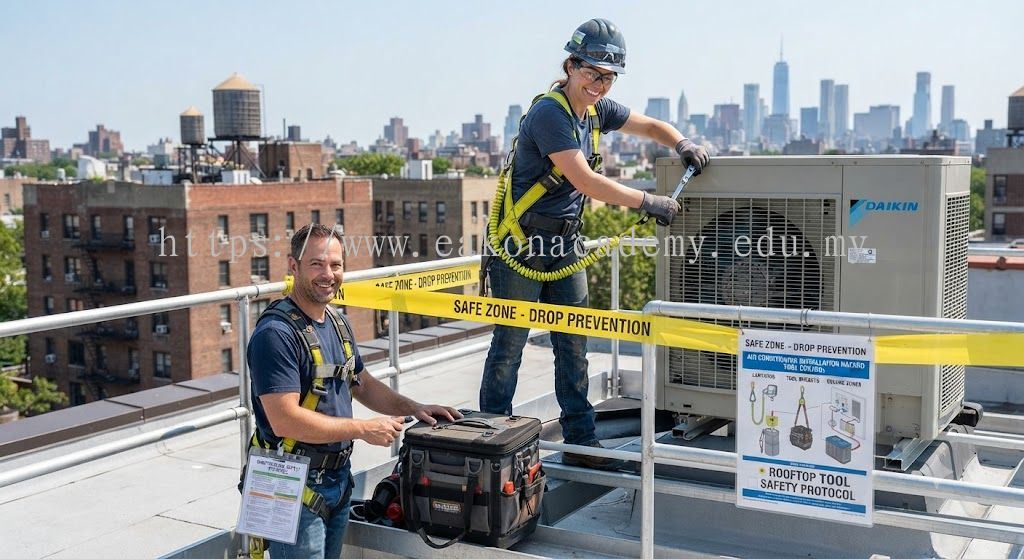
Air Conditioning Installation Hazard Tool Control: Essential Safety Practices for Professional HVAC Installation
Air conditioning installation hazard tool control is one of the most important aspects of ensuring workplace safety, professional workmanship, and regulatory compliance in the HVAC industry. Every air conditioning technician faces numerous hazards while installing split units, VRF systems, ducted air conditioning systems, commercial HVAC equipment, and industrial cooling systems. These hazards include electrical shock, falling objects, sharp metal edges, improper tool usage, ladder accidents, working at height, refrigerant exposure, and equipment handling injuries. Implementing proper hazard tool control procedures significantly reduces workplace accidents while improving installation quality and technician confidence. At Eakon Academy (eakonacadem.edu.my), we emphasize comprehensive safety training that equips HVAC professionals with the practical knowledge required to identify hazards, select appropriate tools, inspect equipment before use, and perform installations safely according to industry best practices and Malaysian occupational safety standards.
Proper tool control begins with selecting the correct equipment for each installation task. Air conditioning installers should always inspect power drills, cordless drivers, vacuum pumps, manifold gauges, torque wrenches, pipe cutters, flaring tools, brazing torches, multimeters, ladders, and electrical testing instruments before beginning work. Damaged tools can create serious safety hazards and lead to poor installation quality. Preventive maintenance of installation equipment helps reduce unexpected failures while ensuring every tool performs efficiently. Professional HVAC technicians should also maintain organized toolboxes, secure sharp equipment during transport, and ensure all electrical tools are properly insulated to minimize the risk of injury during air conditioning installation.
Hazard identification is another critical component of air conditioning installation hazard tool control. Before starting any installation, technicians should conduct a thorough site risk assessment to identify electrical hazards, unstable working platforms, confined spaces, overhead obstacles, poor lighting conditions, slippery surfaces, and potential falling objects. Rooftop installations, ceiling-mounted indoor units, and elevated outdoor condenser installations require additional precautions, including the use of certified ladders, scaffolding, fall protection equipment, and personal protective equipment (PPE). By recognizing workplace hazards early, HVAC installers can implement suitable control measures that protect both workers and customers throughout the installation process.
Electrical safety plays a major role in HVAC installation hazard control. Air conditioning systems involve high-voltage electrical components that must be isolated before installation or maintenance begins. Lockout and tagout procedures, voltage verification, insulated hand tools, and proper wiring practices help prevent electrical shock and equipment damage. Qualified technicians should always follow manufacturer installation guidelines and local electrical regulations when connecting indoor units, outdoor condensers, circuit breakers, isolators, and communication wiring. Safe electrical tool handling reduces installation errors and contributes to the long-term reliability of air conditioning systems.
Another essential element of hazard tool control involves the safe handling of refrigerants and refrigeration equipment. HVAC installers frequently use vacuum pumps, recovery machines, charging scales, leak detectors, and manifold gauge sets when commissioning new air conditioning systems. Improper handling of refrigerants may expose technicians to frostbite, oxygen displacement, or environmental hazards. Proper recovery procedures, leak testing, pressure testing with nitrogen, and correct charging techniques help ensure compliance with environmental regulations while maintaining system performance. Tool calibration and regular inspection also improve measurement accuracy and reduce costly installation mistakes.
Manual handling hazards should never be overlooked during air conditioning installation projects. Outdoor condensing units, indoor fan coil units, copper piping, ducting materials, and mounting brackets can be heavy and awkward to lift. HVAC technicians should use proper lifting techniques, mechanical lifting devices, team lifting procedures, and ergonomic practices to reduce the risk of musculoskeletal injuries. Safe transportation and positioning of equipment not only protect workers but also prevent accidental damage to expensive HVAC components before installation is completed.
Personal protective equipment forms an essential layer of hazard control throughout every installation project. Safety helmets, protective gloves, eye protection, safety footwear, hearing protection, flame-resistant clothing for brazing work, and fall arrest systems should always be worn according to the specific hazards identified during the job. PPE should complement, rather than replace, engineering controls and safe work procedures. Regular PPE inspection ensures that all protective equipment remains effective and suitable for daily HVAC installation activities.
Training and competency are equally important in maintaining effective air conditioning installation hazard tool control. Professional HVAC technicians should receive structured hands-on training covering safe tool operation, hazard identification, emergency response procedures, working at height, electrical safety, refrigerant handling, fire prevention, and equipment inspection. Continuous professional development enables technicians to stay updated with evolving safety regulations, modern installation techniques, and the latest HVAC technologies. Organizations that invest in technician safety training often experience fewer workplace incidents, improved installation quality, increased customer satisfaction, and greater operational efficiency.
At Eakon Academy (eakonacadem.edu.my), we are committed to developing skilled HVAC professionals through practical, industry-focused training programs that emphasize both technical excellence and workplace safety. Our comprehensive air conditioning installation courses integrate hazard assessment, tool control, safe installation practices, risk management, and regulatory compliance to prepare technicians for real-world challenges. Whether installing residential split air conditioning systems, commercial VRF solutions, or industrial HVAC equipment, mastering air conditioning installation hazard tool control ensures every project is completed safely, efficiently, and professionally. By adopting proper hazard control procedures, maintaining installation tools correctly, and following recognized safety standards, HVAC technicians can protect themselves, deliver higher-quality installations, and build successful careers within the growing air conditioning and refrigeration industry.
Lihat detail lebih lanjut tentang EAKON ACADEMY SDN BHD Malaysia
