
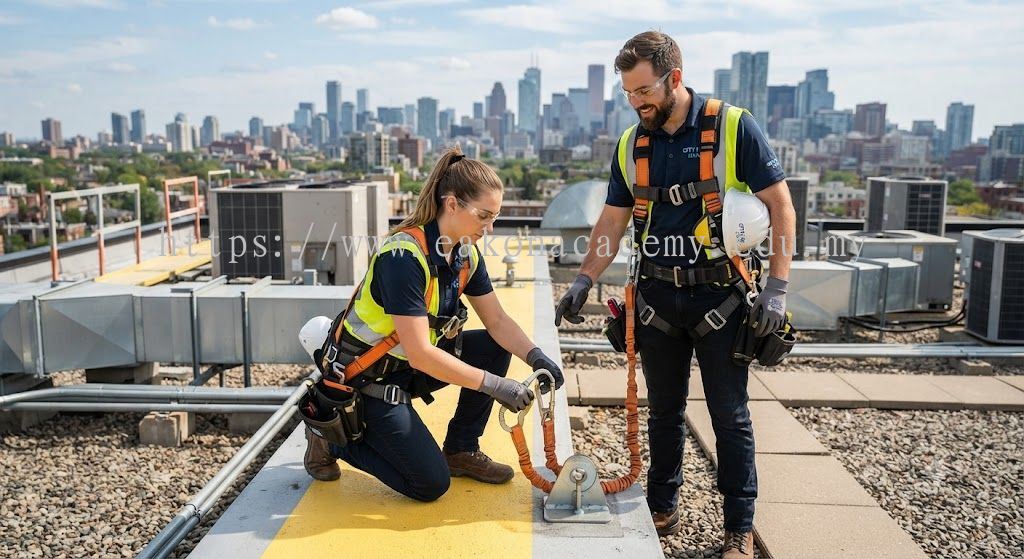
HVAC Rooftop Fall Prevention Methods: Essential Safety Practices for Technicians Working at Height
HVAC rooftop fall prevention methods are essential safety practices designed to protect air conditioning and refrigeration technicians who perform installation, maintenance, inspection, and repair work on rooftop HVAC systems. Rooftop environments often present higher risks due to elevated working areas, uneven surfaces, weather exposure, limited access points, and potential fall hazards near roof edges. By implementing proper fall prevention methods, HVAC technicians can improve workplace safety, reduce accident risks, and complete rooftop HVAC tasks with greater confidence. At Eakon Academy, professional HVAC training focuses on developing technician skills, safety awareness, and practical knowledge required for safe working at height in the HVAC industry.
Rooftop HVAC systems are commonly used in commercial buildings, industrial facilities, and large properties where technicians are required to access outdoor units, cooling equipment, ventilation systems, and mechanical components installed above ground level. Maintenance activities such as refrigerant inspection, electrical troubleshooting, coil cleaning, filter replacement, and system servicing may require technicians to work in challenging rooftop conditions. Without proper safety procedures, these activities can expose workers to serious fall hazards. Understanding HVAC rooftop fall prevention methods helps technicians identify risks and apply effective safety controls before starting any work.
A critical step in rooftop fall prevention is performing a detailed risk assessment before beginning HVAC activities. Technicians should inspect the rooftop environment and evaluate possible hazards such as roof edges, slippery surfaces, unstable areas, access routes, weather conditions, and nearby obstacles. A proper risk assessment allows technicians and supervisors to develop a safe work plan, select appropriate safety equipment, and determine the best methods for completing rooftop HVAC tasks. This preparation helps minimize risks and creates a safer working environment.
Personal protective equipment (PPE) is an important part of HVAC rooftop fall prevention methods. Technicians working on rooftops should be trained to correctly use safety harnesses, lanyards, anchor points, helmets, protective footwear, and other fall protection equipment. Before use, all safety equipment should be inspected to ensure it is in good condition and suitable for the working environment. Proper PPE training enables technicians to work safely while reducing the impact of potential falls or unexpected incidents.
Rooftop access and movement procedures are also important factors in preventing HVAC-related falls. Technicians must understand safe ladder practices, proper access methods, and movement techniques when working on elevated surfaces. Ladders should be positioned correctly, secured when necessary, and used according to safety procedures. For larger rooftop HVAC projects, technicians may require additional equipment such as scaffolding or mobile elevated work platforms (MEWP). Proper knowledge of access equipment helps improve safety and efficiency during rooftop operations.
Another important HVAC rooftop fall prevention method is maintaining good housekeeping and proper tool management. Rooftop maintenance often involves the use of hand tools, electrical equipment, refrigerant tools, and replacement components. Unsecured tools and materials can create falling object hazards that may endanger workers below. Using tool lanyards, securing equipment properly, and keeping the rooftop work area organized contribute to a safer job site.
Weather awareness is also a key consideration when performing HVAC work on rooftops. Strong winds, rain, extreme heat, and wet surfaces can increase the risk of slips and falls. Technicians should evaluate weather conditions before and during work activities and postpone tasks when conditions become unsafe. Proper planning and communication help ensure that rooftop HVAC work is performed under suitable conditions.
Emergency preparation is another essential component of rooftop fall prevention. HVAC technicians should understand emergency response procedures, communication methods, and rescue planning before performing elevated work. Having clear emergency procedures allows teams to respond quickly if accidents occur and helps reduce the severity of workplace incidents.
For HVAC companies, applying effective rooftop fall prevention methods provides many benefits, including improved workplace safety, reduced accident rates, increased technician confidence, and better service performance. Technicians who receive proper safety training are better prepared to manage rooftop HVAC challenges while maintaining professional standards and customer expectations.
Eakon Academy provides professional HVAC training programs designed to develop skilled technicians with strong technical abilities and safety awareness. Through practical learning and industry-focused instruction, participants can improve their understanding of HVAC rooftop fall prevention methods, working-at-height procedures, hazard identification, and professional HVAC safety practices. Building a safety-focused HVAC workforce supports safer rooftop air conditioning services and promotes higher standards throughout Malaysia’s HVAC industry.
Lihat detail lebih lanjut tentang EAKON ACADEMY SDN BHD Malaysia
